TL;DR: Professional odor control and deodorization removes the source of a smell at the molecular level, using HEPA air scrubbing, thermal fogging, hydroxyl generators, and enzyme or sealant treatments matched to the odor’s cause. Candles and plug-ins only mask odors temporarily because they don’t reach soot particles trapped in drywall, sewage residue in subfloor, or smoke compounds bonded to fabric fibers. A proper job starts with identifying the source, then treating every surface the odor has touched, not just the room where you notice it.
If you had a kitchen fire three weeks ago and the smoke smell is somehow stronger on humid days, or a basement sewage backup got cleaned up but the sour smell never fully left, you’re dealing with an odor problem that outlived the visible damage. That’s common in Pittsburgh’s older housing stock, where plaster walls, cellar-style basements, and original hardwood soak up smoke and moisture in ways newer construction doesn’t. Febreze and a window fan won’t fix it. The odor is physically embedded in porous materials, and it needs to be chemically neutralized or physically removed.
What is professional odor control and deodorization?
Professional deodorization is the process of locating and neutralizing the source of an odor, not covering it with a stronger scent. It combines source removal (pulling out ruined carpet pad, scrubbing soot from framing, discarding unsalvageable contents) with equipment that breaks down odor-causing molecules in the air and on remaining surfaces.
This matters because smoke, sewage, decomposition, and mold all leave behind different chemical residues, and each one needs a different treatment approach. A technician who just runs an ozone machine in every job regardless of cause is skipping the diagnostic step that actually solves the problem.
Fire and smoke restoration follows the ANSI/IICRC S700 Standard for Professional Fire and Smoke Damage Restoration, which outlines how odor-causing soot and smoke residue should be identified and removed based on the type of fire (protein, synthetic, or natural material burn each leave different residue). We bring that framework to every odor job, not just visible fire damage.
How do you get rid of persistent smoke or fire odor?
Persistent smoke odor gets removed by cleaning every porous surface the smoke touched, then running air-scrubbing equipment to clear residual particles still suspended in the structure. Painted drywall alone won’t seal it in; smoke works into HVAC ducts, insulation, and fabric.
The typical sequence: HEPA vacuuming of soot from hard surfaces, specialized cleaning agents on walls and ceilings, sealing and repainting with an odor-blocking primer where needed, and thermal fogging or hydroxyl generator treatment to neutralize airborne and absorbed smoke compounds. Carpet, drapes, and upholstery usually need separate extraction cleaning or may need replacement if the smoke saturation is heavy.
Air ducts are the part people forget. If the HVAC system was running during or after the fire, smoke particles circulated through every supply vent in the house, which is why the smell comes back every time the furnace kicks on. We go into more technique detail in how professionals remove smoke odor, including why DIY ozone rentals usually fall short on a real fire loss. Wildfire smoke infiltration follows similar logic indoors, and the EPA’s guidance on wildfires and indoor air quality covers the same principle: porous materials hold smoke long after the visible haze clears.
What about sewage, decomposition, or “mystery” odors?
Sewage and biological odors require enzyme or antimicrobial treatment because the smell comes from active bacteria, not just residue. Masking agents do nothing here; the bacteria keep producing odor until they’re killed and the contaminated material is removed.
A sewage backup that soaked subfloor or insulation almost always means removing the saturated material rather than trying to deodorize around it. Category 3 water, what the industry calls black water, carries contaminants that keep breaking down organic matter and generating smell even after the surface looks dry. We’ve covered the health side of this in why you can’t DIY a sewage backup and the cleanup process itself in sewage cleanup and remediation.
Biohazard situations, including unattended deaths or trauma scenes, involve decomposition odor that penetrates flooring and subfloor on a timeline measured in hours, not days. That work follows strict PPE and containment protocols similar to the handling described in OSHA’s bloodborne pathogens guidance, and it’s handled with discretion, full protective equipment, and specialized enzymatic cleaners, not consumer-grade products.
“Mystery” odors in occupied homes, musty basement smells, a lingering pet accident, an unidentified sour smell behind a wall, usually trace back to hidden moisture or a contained biological source. Finding it is often the harder half of the job.
What equipment and methods do pros actually use?
The right equipment depends on the odor source, the materials affected, and how long the odor has had to set in. There’s no single machine that solves every case.
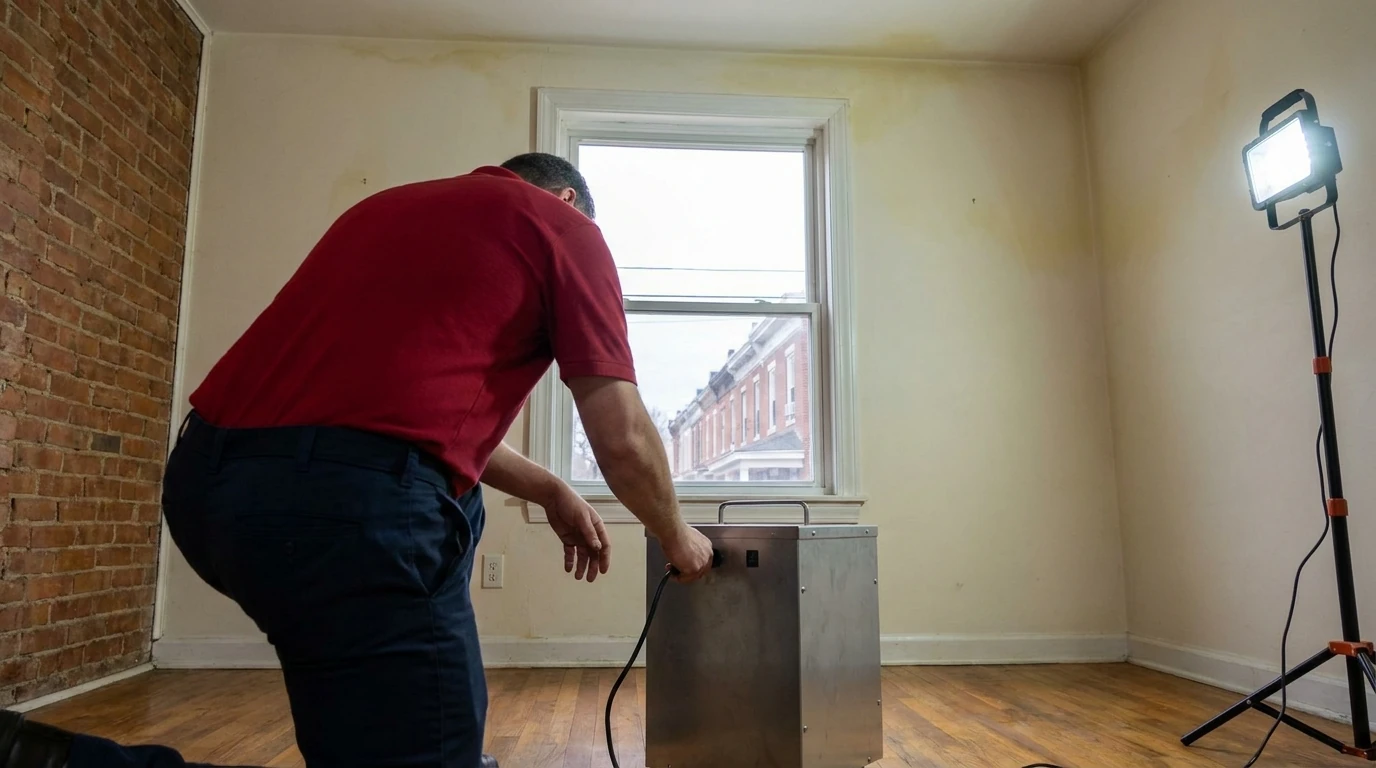
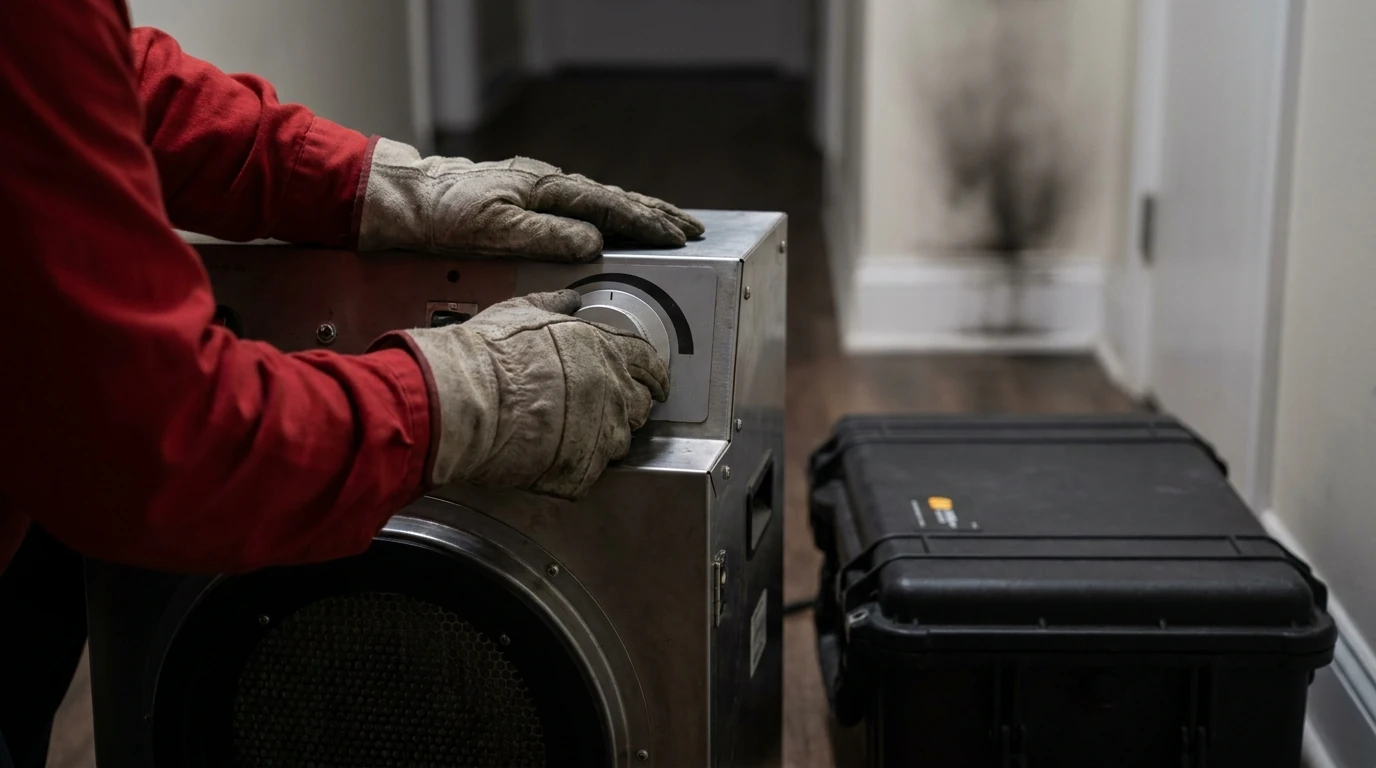
- HEPA air scrubbers pull fine particulates, including smoke and mold spores, out of circulating air during and after cleanup.
- Hydroxyl generators produce hydroxyl radicals that break down odor molecules without the off-gassing risk of ozone, making them safe to run in occupied spaces.
- Thermal fogging vaporizes a deodorizing agent that penetrates the same cracks and pores smoke originally reached, matching the odor’s own path into the material.
- Enzyme and antimicrobial treatments target biological odors like sewage, decomposition, and pet contamination at the source rather than masking the smell.
- Sealants and odor-blocking primers lock in any residual odor in framing or subfloor that can’t be fully removed, a step often used after smoke damage on structural wood.
Most real jobs combine two or three of these rather than relying on one machine run once. A technician should be able to explain which method is being used and why, based on what’s actually causing your specific odor.
Will insurance cover odor control and deodorization?
Homeowners insurance typically covers deodorization when it’s part of restoring damage from a covered peril, such as a kitchen fire or a sudden sewage backup, but it generally won’t cover odor from a gradual issue like an undetected slow leak. Coverage specifics vary by policy, which is why documentation matters.
The Insurance Information Institute’s overview of standard homeowners coverage explains how sudden, accidental damage is typically treated differently than damage from neglect or a long-term condition. On a covered claim, deodorization is usually billed as part of the overall mitigation and restoration scope rather than a separate line item an adjuster questions individually, as long as it’s documented with photos, moisture readings, and a written scope before work starts.
What should you do if odor won’t go away on its own?
Start by identifying whether the odor is tied to a known event (a fire, a backup, a leak) or an unknown source, since that determines whether you need a restoration crew or an inspection first. Either way, don’t rely on consumer deodorizers for more than a few days before calling for an assessment.
If the smell traces back to fire, smoke, sewage, or a biohazard situation, treat it like the rest of the restoration job: get a written scope, confirm what equipment will be used and why, and ask how the source material (not just the air) will be treated. An odor that returns after a weekend of air fresheners almost always means the source is still there.
Katofsky Construction handles odor control as part of fire, smoke, and sewage restoration work across Pittsburgh and the surrounding region, Plum, Penn Hills, Monroeville, and beyond, bringing air-scrubbing and source-removal equipment to the same visit as the rest of the mitigation work. Call Katofsky Construction LLC at (412) 304-9284 to schedule an odor assessment.
About Katofsky Construction LLC
Katofsky Construction LLC is an IICRC Certified Firm serving Pittsburgh, PA and the surrounding region, holding IICRC WRT (Water) and AMRT credentials and a Pennsylvania home improvement contractor registration (HIC #090877). The company, working with Michael Katofsky’s team, handles fire damage restoration, smoke damage restoration, sewage cleanup, biohazard cleanup, and related reconstruction work across greater Pittsburgh, with 24/7 emergency response.