24/7 Emergency Sewage Cleanup and Sanitization in Pittsburgh
24/7 emergency sewage cleanup and sanitization in Pittsburgh and surrounding areas. IICRC-certified, insurance billing accepted. Call (412) 304-9284.
When sewage backs up into a basement or bathroom, the clock starts immediately. Raw sewage carries bacteria like E. coli and Salmonella, hepatitis A virus, and a range of pathogens that begin contaminating porous materials within hours. Drywall, subfloor, insulation, and framing absorb Category 3 water fast, and surface cleaning alone will not make those materials safe. Katofsky Construction LLC responds 24/7 to sewage backups, septic overflows, and sewer line failures across the Pittsburgh area, treating every job as the biohazardous loss it actually is.
What sewage cleanup and sanitization actually involves
Sewage backup cleanup is not a mop-and-bleach job. The work involves removing standing water that is classified Category 3 (grossly contaminated) under the IICRC S500 standard, extracting saturated materials that cannot be safely restored, treating structural cavities with EPA-registered antimicrobials, and drying the space to verified moisture targets before any reconstruction begins.
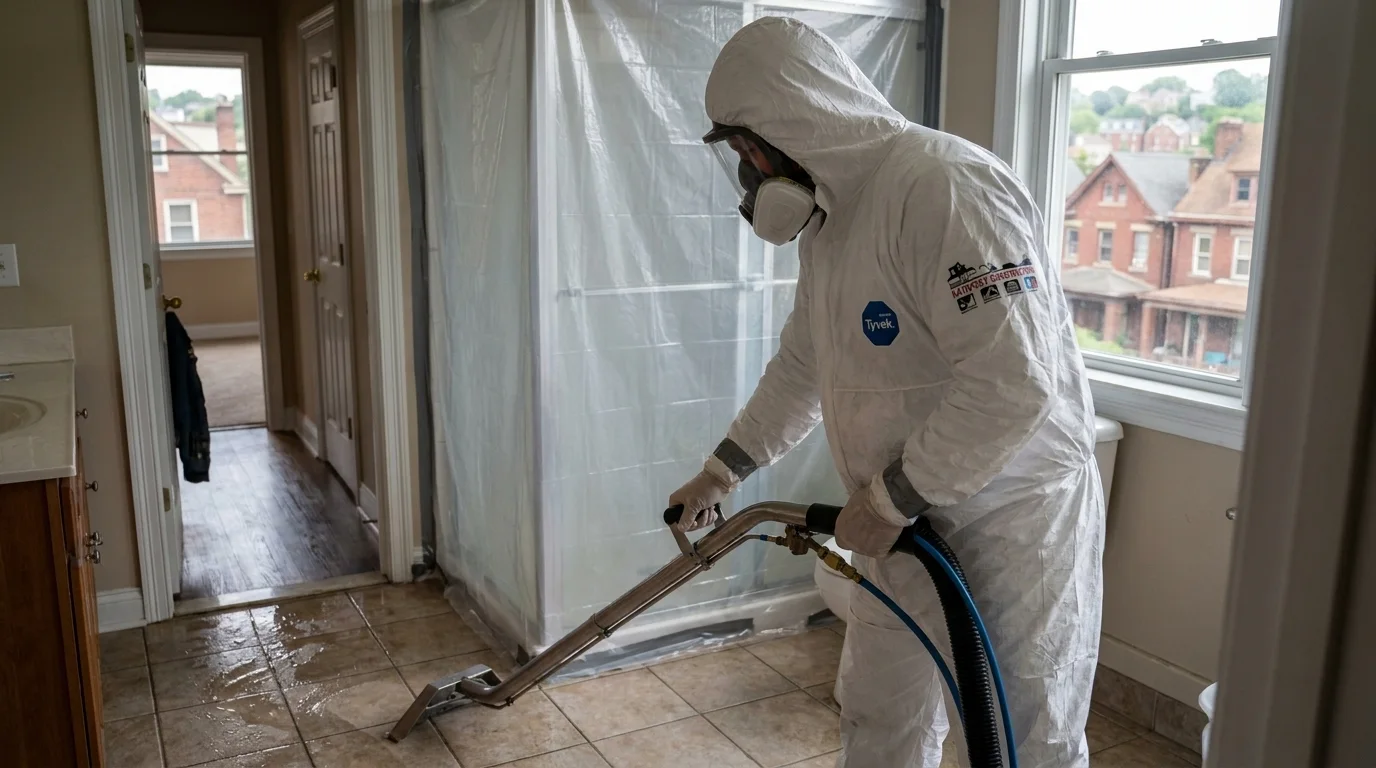
Equipment on a typical sewage loss includes truck-mounted or portable extraction units capable of handling solids, HEPA-filtered air scrubbers to capture airborne particulate, commercial dehumidifiers, and thermal imaging cameras to locate contamination that has wicked behind walls or under flooring without visible surface signs. Technicians work in full PPE including Tyvek suits, respirators, and nitrile gloves throughout the removal phase.
Timeline depends on how far the sewage traveled and how long it sat before the call came in. A contained backup caught the same day may be stabilized in 24 to 48 hours. A loss that soaked into subfloor and wall cavities over a weekend can require three to five days of drying and multiple antimicrobial treatments before the space is ready for any finishing work.
Our process
-
Containment and safety staging. Before any material is touched, the affected area is contained with poly sheeting and negative air pressure where needed to prevent cross-contamination to clean areas of the home. The source of the backup is confirmed stopped or isolated. Technicians suit up in full PPE before entering the loss zone.
-
Extraction and solid waste removal. Standing sewage is extracted using equipment rated for Category 3 water. Solid waste is bagged, sealed, and disposed of in compliance with applicable regulations. This step moves fast because every additional hour of contact time drives contamination deeper into porous substrates.
-
Controlled demolition of unsalvageable materials. Drywall, insulation, carpet, pad, and compromised subfloor panels that absorbed sewage are removed and bagged on-site. The IICRC S500 is clear that Category 3 porous materials in contact with sewage are not candidates for cleaning in place. Cutting to clean, unaffected material is standard practice, not upselling.
-
Antimicrobial treatment of structural cavities. Exposed framing, concrete, and any remaining structural surfaces are treated with EPA-registered disinfectants appropriate for Category 3 losses. Treatment is applied in multiple passes and allowed to dwell per product specifications. Air scrubbers run continuously during this phase.
-
Drying to protocol and documentation. Commercial drying equipment is set and monitored daily with calibrated moisture meters and thermal imaging. Readings are logged at each check so there is a documented drying record. Work is not signed off until structural materials reach the dry standard required for the region’s ambient conditions, giving your adjuster a defensible record of the completed scope.
What separates a good sewage cleanup response from a bad one
The most common mistake in sewage backup cleanup is treating a Category 3 loss like a Category 1 (clean water) loss. Spraying bleach on visibly soiled surfaces and running a box fan does not address contamination that has wicked into wall cavities or beneath flooring. Mold colonization in a sewage-affected space can begin within 24 to 48 hours of the initial event, compounding the loss significantly.
A second frequent failure is incomplete removal of affected materials. Leaving even a small section of sewage-saturated drywall or insulation behind a wall creates an ongoing microbial reservoir. Insurance adjusters reviewing a remediation file look for photo documentation of material removal to clean lines, moisture logs showing the drying curve, and a post-treatment antimicrobial application record. Without those, a carrier can dispute the scope or deny a supplement.
Proper waste handling matters too. Sewage-contaminated debris requires bagging, labeling, and disposal through appropriate channels, not standard construction dumpsters. Skipping this step creates liability for the property owner.
What does sewage cleanup and sanitization cost?
Typical costs for sewage backup cleanup vary significantly based on the size of the affected area, how long the sewage sat, and how deeply it penetrated building materials. Most homeowners pay somewhere in the ranges below, based on industry data, though every loss is different and Katofsky Construction LLC provides a written scope of work before any work begins so you know exactly what is included.
| Scenario | Typical industry range |
|---|---|
| Single bathroom, caught within hours | $1,500 - $3,500 |
| Basement floor drain backup, limited spread | $3,000 - $6,000 |
| Basement backup with wall and subfloor involvement | $6,000 - $12,000 |
| Septic overflow affecting multiple rooms | $8,000 - $20,000+ |
| Sewer line failure with crawl space saturation | $10,000 - $25,000+ |
Homeowners insurance typically covers sudden and accidental sewage backups when the policy includes a sewer or water backup endorsement. Standard HO-3 policies often exclude sewage damage without that rider, so reviewing your declarations page before assuming coverage is important. Katofsky Construction LLC works directly with all major carriers and provides the photo documentation, moisture logs, and itemized scope your adjuster needs to process the claim.
Seasonal and regional considerations
Pittsburgh’s combined sewer system serves a significant portion of the city, meaning heavy rain events can overwhelm the system and push sewage back through floor drains and basement fixtures. This is not a rare edge case in older Pittsburgh neighborhoods: it is a documented pattern during the spring storm season and after major rainfall events. Homes in areas like Brookline, Beechview, Carrick, and the North Side with older clay or cast-iron lateral lines are particularly susceptible to root intrusion and line collapse, which can cause backups independent of storm events.
Winter freeze-thaw cycles can also stress older sewer laterals, making late winter and early spring another window of elevated risk. If your home has experienced a backup before, having the lateral inspected after any significant freeze is worth considering.
Service area
Katofsky Construction LLC serves Pittsburgh and the surrounding communities throughout Allegheny County and neighboring counties. The city-specific service pages for sewage cleanup link back here for the full process detail, and each covers any local considerations specific to that community.
If you are dealing with sewage in your home right now, call (412) 304-9284. Katofsky Construction LLC answers 24/7, and the sooner extraction begins, the less material will need to come out.
Frequently Asked Questions
Does homeowners insurance cover sewage backup cleanup?
Is sewage backup water the same as a regular water leak, or is it treated differently?
Which materials typically have to be removed after a sewage backup?
What should I do while waiting for the crew to arrive after a sewage backup?
How do I know when the cleanup is actually finished and the space is safe?
Looking for the best sewage cleanup and sanitization company in Pittsburgh?
Katofsky Construction LLC provides licensed and insured sewage cleanup and sanitization in Pittsburgh, PA and the surrounding area. We answer calls 24/7 — call (412) 304-9284 for immediate help.
Need Sewage Cleanup and Sanitization now?
We respond 24/7 across Pittsburgh and surrounding PA cities.
Related Coverage
- Our Restoration Services
- Contact Katofsky Construction LLC
- Roofing Installation and Replacement in Pittsburgh
- 24/7 Emergency Fire Damage Restoration in Pittsburgh
- Renovations, Remodels and General Contracting in Pittsburgh
- 24/7 Emergency Biohazard Cleanup in Pittsburgh
- 24/7 Emergency Board-Up and Tarping in Pittsburgh
- 24/7 Emergency Sewage Cleanup and Sanitization in Baldwin
- 24/7 Emergency Sewage Cleanup and Sanitization in Bethel Park
- 24/7 Emergency Sewage Cleanup and Sanitization in Carnegie
- 24/7 Emergency Sewage Cleanup and Sanitization in Green Tree
- 24/7 Emergency Sewage Cleanup and Sanitization in Greensburg
- 24/7 Emergency Sewage Cleanup and Sanitization in Hempfield Township
- 24/7 Emergency Sewage Cleanup and Sanitization in Jeannette
- 24/7 Emergency Sewage Cleanup and Sanitization in Latrobe
- 24/7 Emergency Sewage Cleanup and Sanitization in Lower Burrell
- 24/7 Emergency Sewage Cleanup and Sanitization in McCandless
- 24/7 Emergency Sewage Cleanup and Sanitization in McKeesport
- 24/7 Emergency Sewage Cleanup and Sanitization in Monroeville
- Why You Can't DIY Sewage Backup: The Health Risks Nobody Warns You About