Roofing Installation and Replacement in Pittsburgh
24/7 roofing installation and replacement in Pittsburgh and surrounding areas. IICRC-certified, insurance billing accepted. Call (412) 304-9284.
A roof doesn’t fail all at once. It fails in layers: a cracked shingle lets water reach the underlayment, the underlayment softens, the decking below it begins to absorb moisture, and by the time you notice a stain on the ceiling, the damage has been building for months. At that point, patching individual shingles only delays the next interior leak. A full roofing installation or replacement addresses the system from the decking up, so the next storm doesn’t find the same weak point.
What roofing installation and replacement actually involves
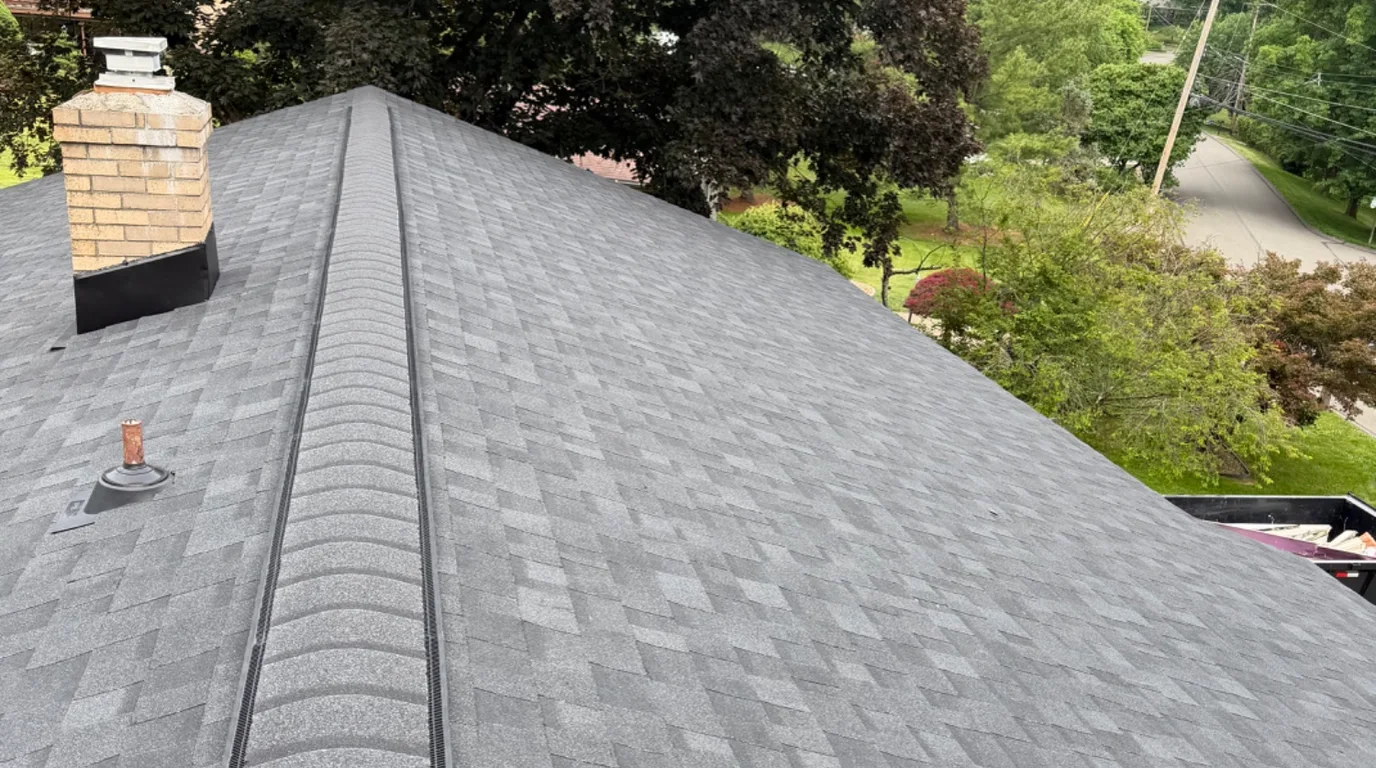
A roof is not just shingles. It’s a layered system: structural decking, a moisture barrier (typically synthetic underlayment or ice-and-water shield at the eaves and valleys), starter strips, field shingles, ridge cap, and properly flashed penetrations at every pipe boot, skylight, chimney, and wall junction. When any one of those layers is compromised or skipped during installation, the failure tends to show up at the flashings and valleys first, because those are the points where water concentrates.
For a standard Pittsburgh-area residential replacement, the work typically spans one to two days for a straightforward gable or hip roof. Steeper pitches, multiple dormers, or complex valley configurations add time. The crew removes the existing roofing material down to the decking, inspects every sheet of OSB or plywood for soft spots and rot, replaces damaged sections, installs the underlayment system, and then lays the new shingles in a staggered pattern that keeps joints from aligning across courses. Ridge ventilation is checked and, where needed, upgraded to meet current attic airflow requirements.
Material choices matter here. Architectural (dimensional) shingles carry longer manufacturer warranties than three-tab and hold up better under Pittsburgh’s freeze-thaw cycles. Impact-resistant shingles rated Class 3 or Class 4 can affect your homeowners insurance premium, so it’s worth asking your carrier before the material order is placed.
Our process
-
Roof inspection and written scope. Before any material is ordered, the roof is walked and documented: shingle condition, flashing integrity, decking soundness, soffit and fascia, gutter attachment points. Photographs are taken at each problem area. You receive a written scope of work before anything is signed.
-
Material selection and permitting. Pittsburgh and most surrounding municipalities require a building permit for a full roof replacement. Katofsky Construction LLC pulls the permit, schedules the inspection, and handles the paperwork. Material specifications, including shingle line, color, underlayment type, and ridge vent product, are confirmed with you before ordering.
-
Tear-off and decking repair. The existing roofing is removed to bare decking. Any OSB or plywood that is soft, delaminated, or visibly deteriorated is replaced before the new system goes on. Skipping this step is the most common shortcut taken on lower-bid jobs, and it’s the reason some roofs develop interior leaks within a year of replacement.
-
Underlayment, flashing, and shingle installation. Ice-and-water shield is applied at the eaves and in every valley. Synthetic underlayment covers the field. Step flashing is woven into courses at walls and dormers; counter-flashing is set at chimneys. Shingles are installed per the manufacturer’s nailing pattern, which is what preserves the warranty. Ridge cap and ridge vent complete the system.
-
Cleanup, final inspection, and permit closeout. Magnetic rollers sweep the yard for nails. Gutters are cleared of debris. The permit inspection is scheduled, and you receive the manufacturer’s warranty documentation and the closed permit.
What separates a good roof replacement from a bad one
The most common failures in residential roofing come down to three areas: flashing, fasteners, and decking.
Flashing is where most leaks originate. A chimney that was caulked rather than properly counter-flashed, a pipe boot sealed with roofing cement instead of a fitted rubber collar, or a valley lined with cut shingles instead of metal will leak within a few seasons. Proper step flashing at every wall intersection is not optional; it’s the detail that separates a ten-year roof from a twenty-five-year roof.
Fasteners matter more than most homeowners realize. Overdriven nails break through the shingle face and void the warranty. Underdriven nails leave shingles loose enough to lift in high wind. Manufacturer installation instructions specify nail placement and depth for a reason, and those specs are what an insurance adjuster checks when a wind-damage claim comes in after a storm.
Decking condition is the foundation of everything above it. Replacing shingles over soft or delaminated OSB is like painting over rot: it looks fine until it doesn’t. Any reputable contractor will show you the decking before covering it.
What does roofing installation and replacement cost?
Typical costs depend on roof size, pitch, material grade, and how much decking repair is needed. Most homeowners pay somewhere in the ranges below; these are industry-typical figures, not Katofsky Construction LLC quotes.
| Scenario | Typical range |
|---|---|
| Small roof, 1,000-1,500 sq ft, standard architectural shingles | $7,000 - $11,000 |
| Mid-size roof, 1,500-2,500 sq ft, architectural shingles | $10,000 - $18,000 |
| Larger or complex roof, 2,500+ sq ft, multiple dormers or steep pitch | $17,000 - $30,000+ |
| Partial replacement or significant section only | $3,500 - $8,000 |
| Decking replacement (per sheet, in addition to above) | $80 - $150 per sheet |
| Upgrade to Class 4 impact-resistant shingles | $1,500 - $4,000 additional |
Every loss and every roof is different. Katofsky Construction LLC provides a written scope and line-item estimate before work begins, so there are no surprises mid-project. Homeowners insurance typically covers roof replacement when the damage is caused by a covered peril such as wind, hail, or storm-related impact; age-related wear is generally excluded, though a proper adjuster inspection will document what is storm-caused versus pre-existing.
Seasonal and regional considerations
Pittsburgh’s climate creates specific roofing challenges. Ice dams form along eaves when heat escapes through under-insulated attic spaces, melts snow on the upper roof, and refreezes at the cold overhang. The resulting ice backup forces water under shingles and into the decking. Proper ice-and-water shield installation at the eaves, combined with adequate attic ventilation, is the correct fix; heating cables are a temporary workaround, not a solution.
Freeze-thaw cycling through winter and early spring is hard on flashings and on any shingle that was already brittle. Spring hail season, which tends to peak between April and June across western Pennsylvania, is when most storm-related claims are filed. If your roof took hail last spring and you haven’t had it inspected, the granule loss and bruising may already be affecting the shingle’s remaining lifespan.
Shingle installation has a temperature floor: most manufacturers require ambient temperatures above 40°F for proper sealing. Winter replacements are possible but require additional care with hand-sealing, and scheduling is tighter. Late spring through early fall is the most reliable window for a full replacement.
Service area
Katofsky Construction LLC serves Pittsburgh and the surrounding region, including communities throughout Allegheny County and neighboring areas. The city-specific pages for roofing installation and replacement link back here for full service and process detail.
If your roof is showing signs of age, storm damage, or persistent leaks, call (412) 304-9284 to schedule a roof inspection and written scope of work.
Frequently Asked Questions
Does homeowners insurance cover roof replacement?
How do I know whether I need a full replacement or just repairs?
What is ice-and-water shield, and does my Pittsburgh roof need it?
What is the difference between three-tab and architectural shingles, and which should I choose?
Do I need a building permit for a roof replacement in Pittsburgh?
Looking for the best roofing installation and replacement company in Pittsburgh?
Katofsky Construction LLC provides licensed and insured roofing installation and replacement in Pittsburgh, PA and the surrounding area. We answer calls 24/7 — call (412) 304-9284 for immediate help.
Need Roofing Installation and Replacement now?
We respond 24/7 across Pittsburgh and surrounding PA cities.
Related Coverage
- Our Restoration Services
- Contact Katofsky Construction LLC
- 24/7 Emergency Fire Damage Restoration in Pittsburgh
- 24/7 Emergency Sewage Cleanup and Sanitization in Pittsburgh
- Renovations, Remodels and General Contracting in Pittsburgh
- 24/7 Emergency Biohazard Cleanup in Pittsburgh
- 24/7 Emergency Board-Up and Tarping in Pittsburgh
- Roofing Installation and Replacement in Baldwin
- Roofing Installation and Replacement in Bethel Park
- Roofing Installation and Replacement in Carnegie
- Roofing Installation and Replacement in Green Tree
- Roofing Installation and Replacement in Greensburg
- Roofing Installation and Replacement in Hempfield Township
- Roofing Installation and Replacement in Jeannette
- Roofing Installation and Replacement in Latrobe
- Roofing Installation and Replacement in Lower Burrell
- Roofing Installation and Replacement in McCandless
- Roofing Installation and Replacement in McKeesport
- Roofing Installation and Replacement in Monroeville