TL;DR: Sewage cleanup and remediation is the process of removing contaminated wastewater, classified as Category 3 or “black water” under the IICRC S500 standard, disinfecting every surface it touched, and drying the structure back to a safe condition. Because raw sewage carries bacteria, viruses, and parasites, porous materials like carpet, carpet pad, and water-damaged drywall usually have to come out rather than just dry out. It’s not a job for a wet vac and a bottle of bleach.
If a floor drain or toilet just backed up and you’re standing at the top of the basement stairs staring at inches of gray-brown water, this is not a mop-and-bucket situation. Raw sewage, whether it backs up through a floor drain during a heavy Pittsburgh rainstorm or comes from a cracked sewer lateral, is Category 3 water, the most contaminated tier recognized by the IICRC S500 standard. It carries pathogens like E. coli and parasitic organisms. Here’s what professional sewage cleanup and remediation actually involves, what it tends to cost, and when to stop cleaning and call someone.
What Is Sewage Cleanup & Remediation?
Sewage cleanup and remediation is the structured process of removing contaminated wastewater, disinfecting everything it contacted, and drying the structure to a verified safe level. It’s distinct from ordinary water damage cleanup because the water itself is the hazard, not just the moisture.
Category 3 water includes sewer backups, flood water that’s picked up ground contaminants, and toilet overflows past the trap. Anything porous the water touched, carpet, carpet pad, drywall below the flood line, insulation, upholstered furniture, generally gets removed and discarded rather than cleaned, because these materials hold onto bacteria even after the surface looks dry. Hard, non-porous surfaces (tile, sealed concrete, solid wood with a sound finish) can usually be cleaned, disinfected, and kept.
Pittsburgh’s older housing stock adds a wrinkle. Many homes in the city and surrounding boroughs still tie into combined sewer lines, which carry both stormwater and sewage in the same pipe. During a heavy rain event, that system can surcharge and push wastewater back up through basement floor drains in homes that never had a plumbing problem of their own.
How Does Professional Sewage Cleanup Work?
Professional sewage cleanup follows a fixed sequence: stop the source, extract the water, remove contaminated materials, disinfect, then dry and verify. Skipping a step, especially disinfection, is why DIY attempts often fail even when the water gets mopped up.
- Stop the source and contain the area. The crew shuts off the water source if it’s plumbing-related and sets up containment to keep contaminated water from spreading to unaffected rooms.
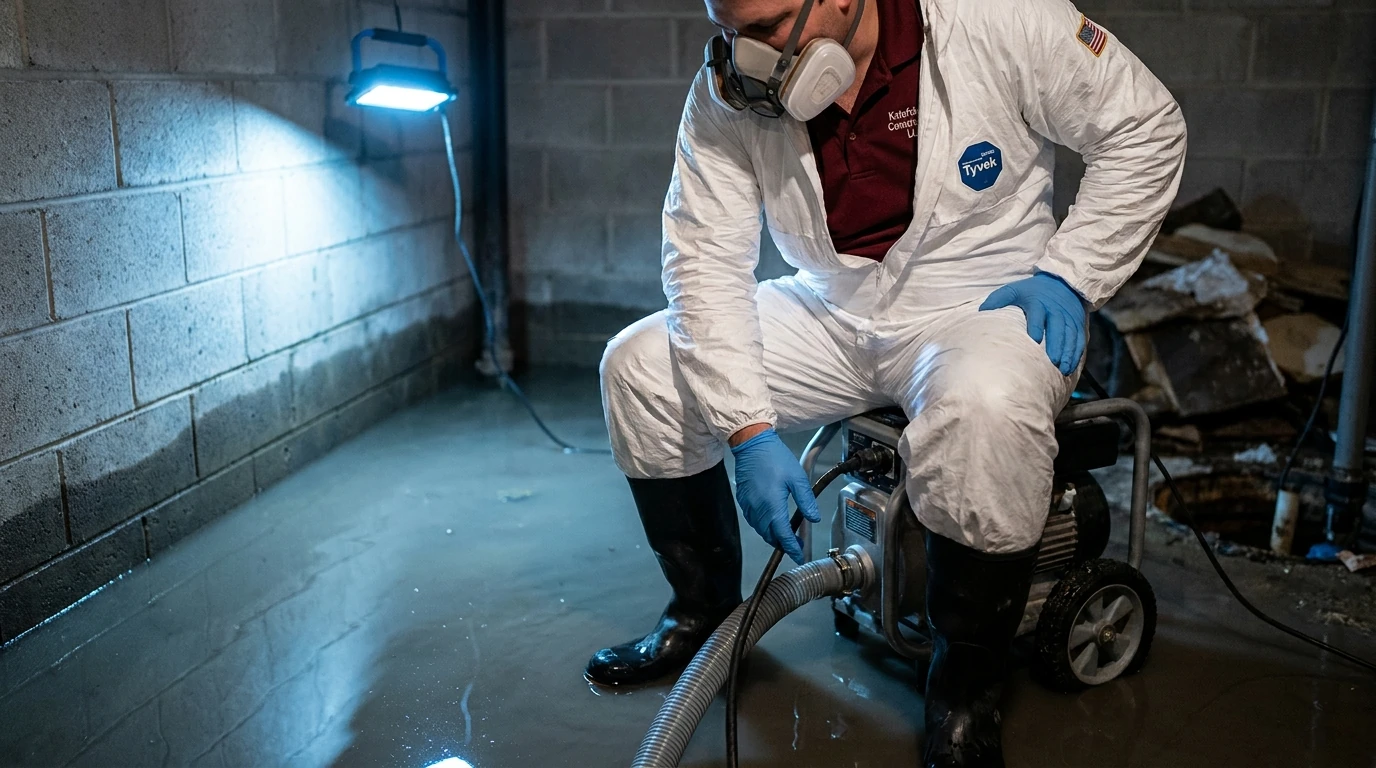
- Extract standing water. Pumps and truck-mounted extractors remove bulk water first, since sewage left sitting multiplies bacteria faster than it dries.
- Remove contaminated porous materials. Carpet, pad, baseboards, and affected drywall typically come out, usually cut a foot or more above the visible water line to catch wicking damage.
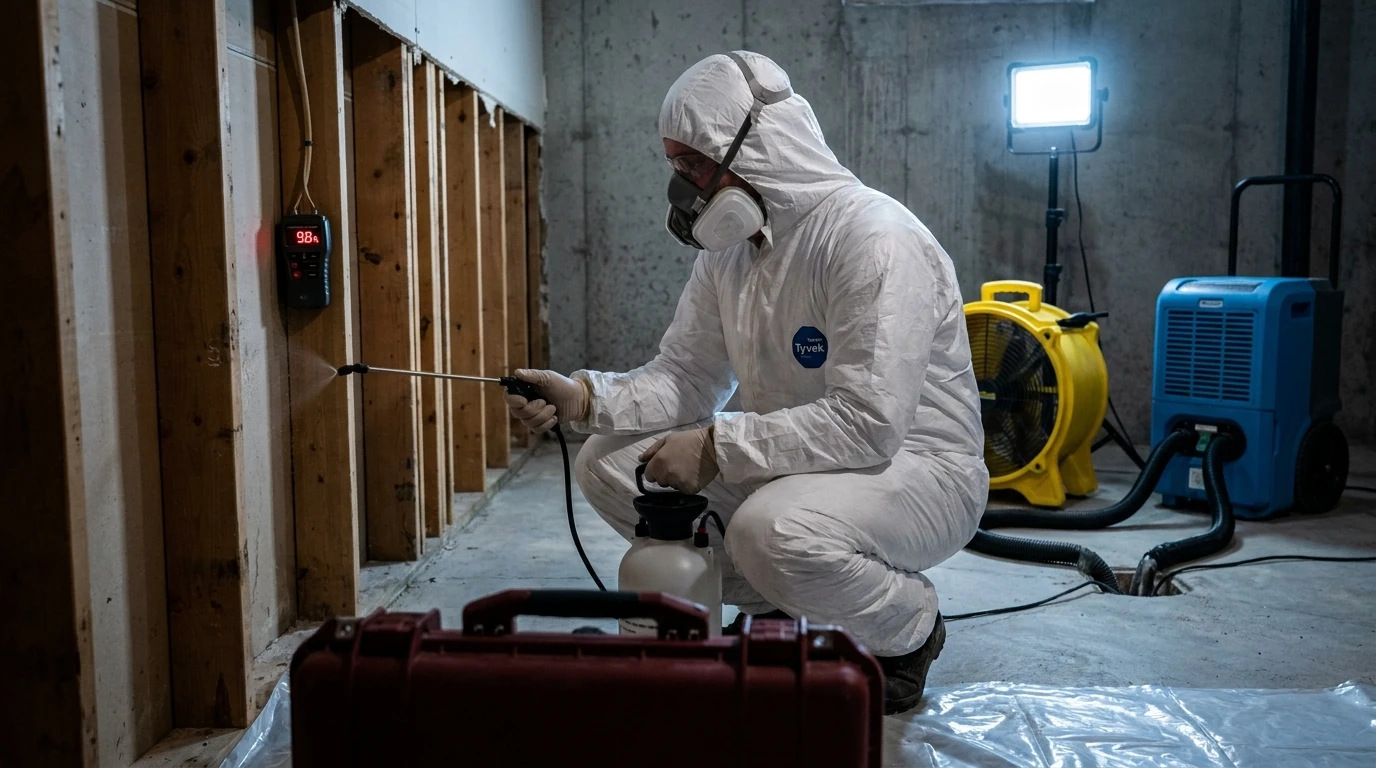
- Clean and disinfect. Hard surfaces get cleaned with an EPA-registered antimicrobial, applied per the manufacturer’s dwell time, not just sprayed and wiped.
- Dry and monitor. Air movers and dehumidifiers run until moisture readings in the remaining structure meet dry standards under IICRC S500 guidelines, tracked daily with a moisture meter.
- Verify. Some jobs close out with ATP (adenosine triphosphate) surface testing to confirm bioload has dropped to an acceptable level before the space is cleared for use.
Why Can’t You Clean Up Sewage Backup Yourself?
You can’t safely DIY a sewage backup because the contamination goes deeper than what you can see or smell, and household cleaning products aren’t rated to handle it. A sponge and bleach solution might kill surface bacteria while leaving pathogens trapped inside wet drywall or subfloor.
The health risks are real: gastrointestinal illness, skin and eye infections, and respiratory irritation from aerosolized contaminants during cleanup are all documented concerns the EPA flags around sewage exposure. Our in-depth look at sewage backup health risks covers why homeowners routinely underestimate this, including how contamination spreads through HVAC systems and wall cavities that look completely dry on the surface.
There’s also a practical problem: without the right PPE (nitrile gloves under rubber gloves, waterproof boots, eye protection, and often a respirator for enclosed basements), you’re handling the material with the same exposure risk the crew is trained to avoid.
Will Homeowners Insurance Cover Sewage Cleanup?
Most standard homeowners policies exclude sewer and drain backup unless you’ve added a specific endorsement, usually a low-cost rider that covers backup from a city sewer main or a failed sump pump. Without that endorsement, a backup caused by a municipal line is often denied outright.
If the backup originated from your own plumbing, failed sump pump, or a line you’re responsible for, coverage depends heavily on the specific policy language and whether you carry that backup endorsement. Photograph the damage before anything is removed, keep the contaminated materials (or photos of them) until your adjuster has seen them or signed off, and get an itemized scope of work in writing. That documentation is what separates an approved claim from a denied one.
Who Should You Call for Sewage Cleanup in Pittsburgh?
Call a restoration company with IICRC-certified technicians trained in Category 3 water, not a general handyman or a carpet cleaner. In Pittsburgh, Katofsky Construction LLC handles sewage cleanup and remediation alongside biohazard cleanup and the reconstruction work that often follows once the affected drywall and flooring come out, so the same crew that disinfects the space can also rebuild it.
If you’re dealing with standing sewage right now, don’t wait for the smell to go away on its own. Call Katofsky Construction LLC at (412) 304-9284, available 24/7, before you start pulling out carpet or wiping down walls yourself.
Getting a sewage backup wrong, by drying contaminated materials instead of removing them, or skipping disinfection because the surface looks clean, tends to cost more in the long run than doing it right the first time. A documented moisture and bioload assessment up front protects both your health and your insurance claim.
About Katofsky Construction LLC
Katofsky Construction LLC is an IICRC Certified Firm serving Pittsburgh, PA and the surrounding region, licensed and insured under PA license #090877. Their technicians hold IICRC WRT (water restoration) and AMRT (mold remediation) credentials and handle sewage cleanup, biohazard cleanup, water and fire damage restoration, and the general contracting work needed to rebuild after a loss.