A house fire leaves behind more than charred walls. Even after the flames are out, smoke residue keeps moving through your home, soot settles into porous surfaces, and the water used to fight the fire begins its own damage cycle. Understanding what the restoration process actually looks like, step by step, helps you ask the right questions, set realistic expectations, and avoid decisions that make the damage worse.
What Happens to Your Home After a Fire
The visible burn marks are only part of the problem. Smoke travels through a home the way water does, following air currents into closets, HVAC ducts, wall cavities, and rooms that never saw a flame. Soot is acidic. On metal fixtures, it begins to pit and corrode within hours. On painted drywall, it bonds to the surface and becomes harder to remove the longer it sits. Synthetic materials, which are common in modern furniture and flooring, produce a different kind of residue than natural wood, and the two require different cleaning chemistry.
Then there is the water. Firefighting leaves standing water and saturated materials throughout the structure. That moisture, combined with the heat and disruption of a fire event, creates near-ideal conditions for mold to begin colonizing within 24 to 48 hours. This is why fire damage restoration and water mitigation are inseparable in practice.
Finally, structural integrity is a real concern even in fires that look contained. Heat weakens load-bearing members, can warp steel lintels, and compromises the adhesive bonds in engineered lumber, which is standard in Pittsburgh homes built or renovated in the last few decades.
The Immediate Steps: What to Do in the First 24 Hours
Before you re-enter the structure, confirm with the fire department that the building has been cleared for entry. Do not assume it is safe because the fire is out.
Once you have clearance:
- Document everything before touching it. Walk through with your phone and photograph every room, every affected surface, every piece of damaged property. Your insurance adjuster will need this, and it is far easier to document before cleanup begins than after.
- Call your insurance carrier. Report the loss as soon as possible. Ask specifically whether you need to wait for an adjuster before any work begins, or whether emergency stabilization is pre-authorized. Most policies cover emergency board-up and tarping.
- Ventilate if it is safe to do so. Open windows and doors to begin moving smoke-laden air out. Do not run your HVAC system, as it will pull soot particles into the ductwork and distribute them throughout the house.
- Remove wet textiles. Curtains, rugs, and upholstered items that are soaked will accelerate mold growth. Move them outside or to a dry area if they are salvageable.
- Do not use tap water for drinking or cooking until you confirm your water supply has not been compromised by heat damage to pipes.
What NOT to Do After a Fire
Some of the most instinctive responses to fire damage actually compound the problem.
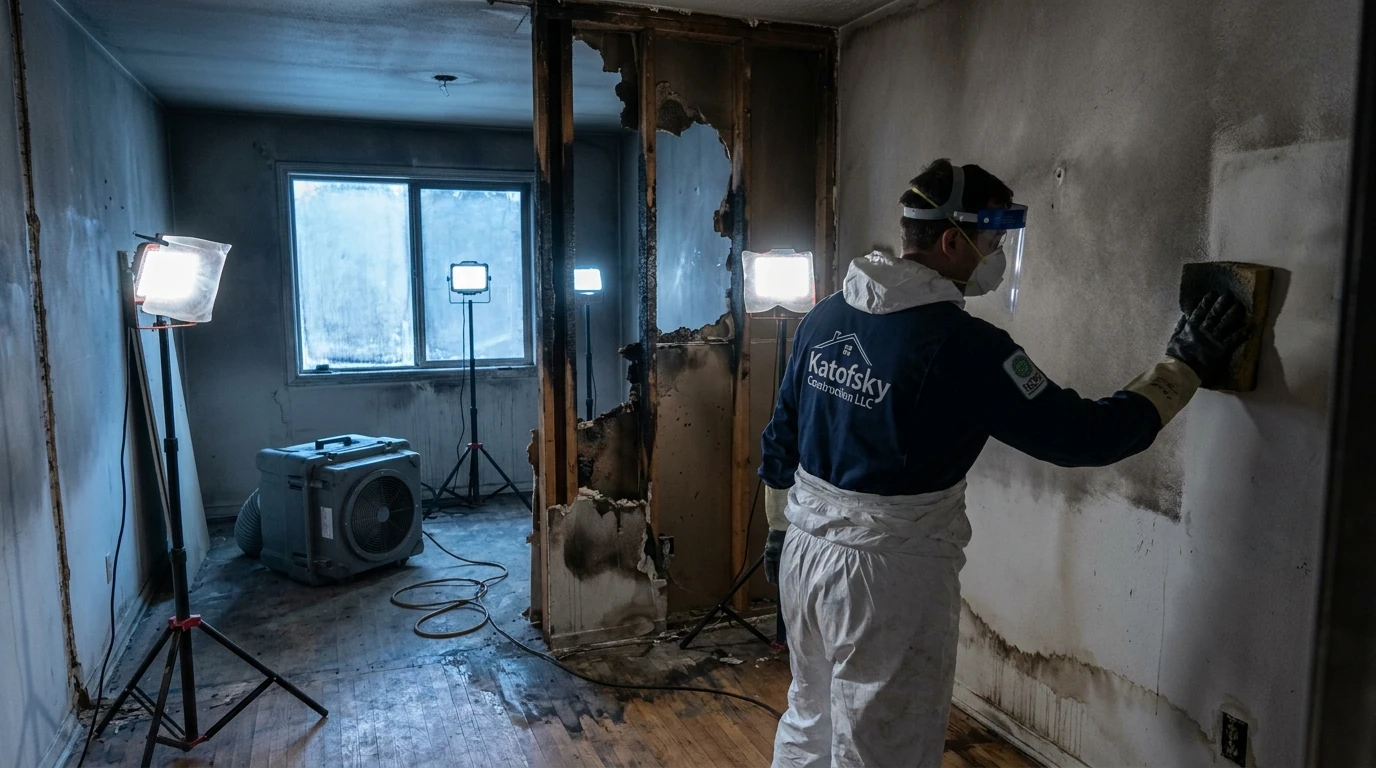
- Do not wipe soot with a dry cloth. Dry wiping smears soot deeper into the surface rather than lifting it. Soot removal requires specific dry-sponge or chemical-sponge techniques before any wet cleaning begins.
- Do not run ceiling fans or portable fans through soot-covered rooms. Airflow redistributes fine soot particles onto surfaces that were previously unaffected.
- Do not use your dishwasher or washing machine until a professional has confirmed the plumbing and electrical systems are intact.
- Do not discard anything before the adjuster has seen it. Even items that appear destroyed may have salvage or replacement value in your claim. Disposing of them early can reduce your payout.
- Do not assume cosmetic cleaning is enough. Painting over smoke-stained drywall without proper sealing traps odor-causing compounds in the wall. The smell will return, especially in warm weather.
When to Call a Professional Restoration Contractor
If the fire affected more than a single small area, or if there is any smoke odor beyond the immediate burn zone, professional restoration is not optional, it is the practical choice. Here is why.
Smoke odor is caused by microscopic particles and volatile organic compounds (VOCs) that embed in porous materials: drywall, wood framing, insulation, carpet padding, grout. Consumer-grade cleaning products and odor eliminators mask the smell temporarily. They do not neutralize the compounds producing it. Professional smoke remediation uses thermal fogging, hydroxyl generators, or ozone treatment in combination with surface cleaning to address odor at the source.
Water extraction and structural drying require industrial equipment. Household fans and dehumidifiers are not rated for the volume of moisture left by fire suppression. Inadequate drying is the most common reason a fire-damaged home develops a mold problem weeks after the fire.
For Pittsburgh homeowners specifically, the region’s older housing stock is worth keeping in mind. Many homes in neighborhoods like Squirrel Hill, Lawrenceville, and the North Side were built before 1950 and may contain plaster-and-lath walls, older insulation materials, or lead paint. These factors affect how smoke residue is cleaned and what safety precautions are required during the process.
The Restoration Process, Phase by Phase
Professional fire and smoke damage restoration generally follows this sequence, though the exact scope depends on the severity of the loss:
Phase 1: Emergency stabilization. Board-up, roof tarping, and temporary fencing to secure the property against weather and unauthorized entry. Water extraction begins in this phase.
Phase 2: Assessment and documentation. A detailed inspection identifies all affected materials, moisture readings are taken throughout the structure, and a scope of work is developed. This documentation also supports the insurance claim.
Phase 3: Structural drying. Industrial air movers and dehumidifiers run continuously, often for several days, until moisture readings return to baseline. This phase cannot be rushed without risking mold.
Phase 4: Soot and smoke residue removal. Surfaces are cleaned using the appropriate method for each material type. HVAC ductwork is inspected and cleaned if soot has entered the system. Unsalvageable materials, drywall, insulation, flooring, are removed.
Phase 5: Odor treatment. Once surfaces are clean, odor-neutralizing treatments are applied. The specific method depends on the materials present and the severity of smoke penetration.
Phase 6: Reconstruction. Damaged structural elements, drywall, flooring, and finishes are restored. This phase brings the home back to its pre-loss condition.
The timeline from emergency call to completed reconstruction varies significantly based on the size of the loss, material lead times, and permit requirements. A contained kitchen fire might resolve in a few weeks. A whole-floor loss can take several months.
Moving Forward
Fire damage is disorienting, and the restoration process involves a lot of moving parts at once: insurance adjusters, contractors, temporary housing, and decisions that need to be made quickly. The best thing you can do in the first 48 hours is document thoroughly, avoid actions that spread contamination, and connect with a contractor who handles both fire damage restoration and smoke damage restoration so the full scope of the loss is addressed together.
If you are dealing with fire or smoke damage in the Pittsburgh area, Katofsky Construction LLC can walk you through next steps. Reach the team at (412) 304-9284.