Choosing the wrong restoration company after a flood, fire, or mold discovery can cost you more than the original damage. The short answer: verify credentials before you sign anything, get the scope of work in writing, and never let a door-to-door contractor pressure you into an assignment-of-benefits agreement on the spot. The sections below walk you through exactly how to vet a company, what red flags look like in practice, and what a legitimate restoration process actually involves.
Why This Decision Is Harder Than It Looks
When water is standing in your basement or smoke residue is coating your kitchen cabinets, the instinct is to call whoever answers first and hand the problem over. That urgency is real, and restoration contractors know it. The Pittsburgh market, like most mid-size metros, has a mix of long-established firms and storm-chasing outfits that materialize after a big weather event and disappear just as fast.
Older Pittsburgh housing stock adds another layer of complexity. A significant portion of the city’s homes were built before 1978, which means water damage or fire damage in those properties can disturb lead paint or asbestos-containing materials. A company that skips the pre-work assessment and goes straight to tearing out drywall is not cutting corners to save you time. They are creating a secondary hazard.
The goal of this post is to give you a checklist you can actually use while you are still in the stressful early hours of a loss.
The Five Things to Verify Before You Sign
1. Licensing and insurance Ask for the contractor’s Pennsylvania Home Improvement Contractor registration number and proof of general liability and workers’ compensation insurance. A legitimate company will hand these over without hesitation. If someone hedges or says the paperwork is “back at the office,” move on.
2. Industry certification The restoration industry’s primary standard-setting body is the IICRC (Institute of Inspection, Cleaning and Restoration Certification). IICRC-certified technicians are trained to follow documented drying and remediation protocols rather than guessing. Ask which certifications the company holds and which specific technicians will be on your job.
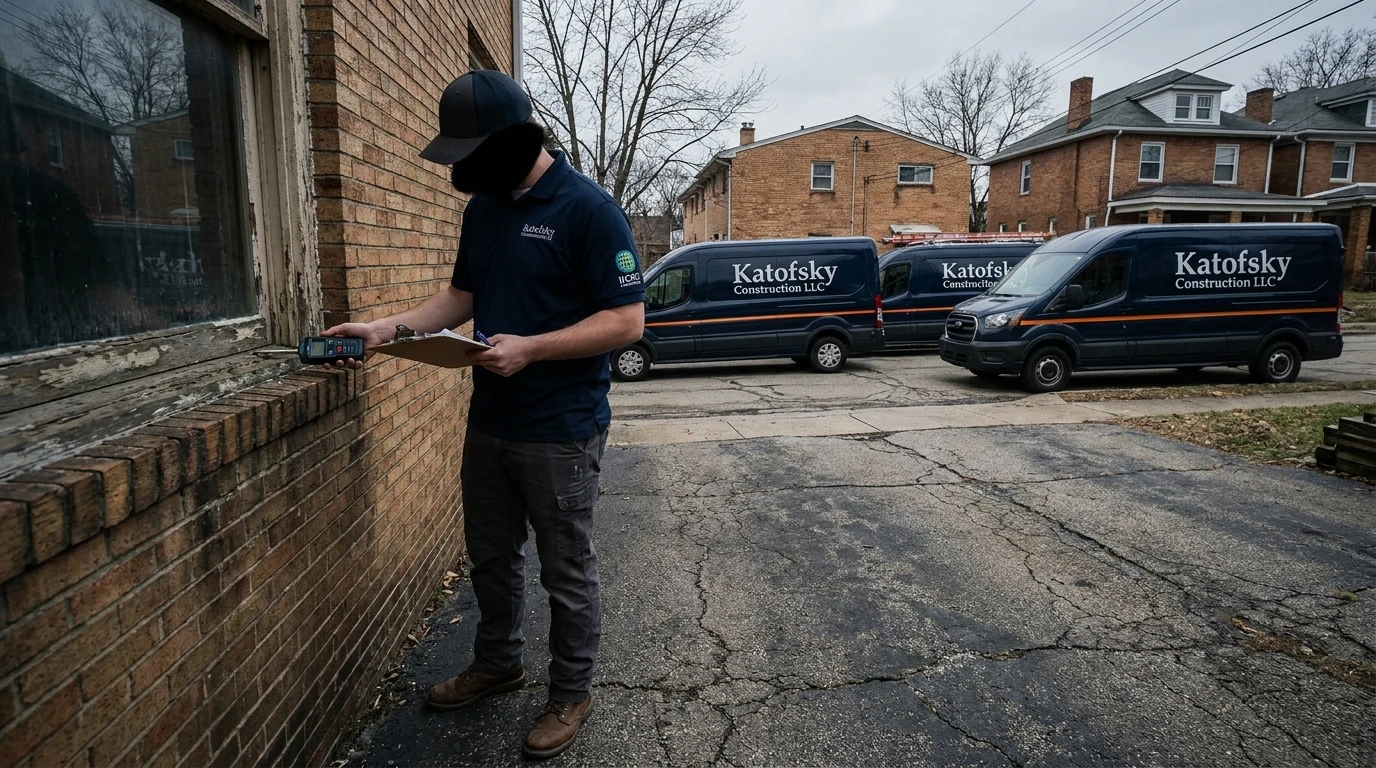
3. A written scope of work before demolition begins Any reputable company will conduct a moisture mapping or assessment before swinging a hammer. For water damage, that means thermal imaging and moisture readings at multiple depths. For mold, it means identifying the moisture source, not just the visible growth. If a contractor wants to start pulling materials before they have measured anything, that is a red flag.
4. Direct insurance billing experience Most significant losses go through a homeowner’s or commercial property insurance claim. Ask the company whether they work directly with adjusters and whether they will provide a line-item estimate in Xactimate or a comparable format that your carrier will recognize. A company that cannot produce a carrier-compatible estimate will slow your claim down.
5. No assignment-of-benefits pressure An assignment of benefits (AOB) is a document that transfers your insurance claim rights to the contractor. Some legitimate companies use AOBs, but you should never sign one under pressure, on the same day as the initial visit, or without reading it carefully. Once signed, the contractor can negotiate with your carrier without your involvement, and disputes become much harder to resolve.
Red Flags That Should Make You Walk Away
Knowing what a good company looks like is only half the picture. Here is what a problematic one looks like:
- Unsolicited door-knocking after a storm. Out-of-state crews that follow severe weather events are common in the Pittsburgh area after significant flooding or wind events. They may do adequate work, but they often disappear before warranty issues surface.
- No physical local address. A company with only a P.O. box or a shared virtual office has no accountability to the community.
- Vague or verbal-only estimates. If the number is not in writing with line items, it will change.
- Pressure to skip the insurance process entirely. Some contractors suggest you pay out of pocket and skip your carrier to “keep it simple.” This rarely benefits you.
- Mold guarantees. No legitimate company guarantees that mold will never return. They can remediate the existing growth and address the moisture source. The outcome depends on whether the underlying moisture problem stays fixed. Anyone promising a permanent mold-free result is overstating what remediation can deliver.
What a Legitimate Restoration Process Actually Looks Like
Understanding the process helps you recognize when a company is skipping steps.
Water damage restoration follows a documented drying protocol. Technicians set moisture baselines on day one, place drying equipment (air movers, dehumidifiers), and return on a schedule to take readings and adjust equipment placement. Drying is not complete when the surface feels dry. It is complete when moisture readings at depth return to the regional equilibrium moisture content for the materials involved. Rushing this step leads to hidden mold growth weeks later.
Fire damage restoration involves more than cleaning visible soot. Smoke residue is acidic and continues to corrode metal surfaces and etch glass the longer it sits. Odor from a structure fire is not just a smell. It is fine particulate that has penetrated porous materials including insulation, subflooring, and HVAC ductwork. A company that cleans surfaces without addressing the HVAC system and structural cavities will leave you with a house that still smells like smoke six months later.
Mold remediation should always start with identifying and correcting the moisture source. Removing mold without fixing the leak, the condensation problem, or the drainage issue is the equivalent of painting over rust. Containment during remediation (physical barriers, negative air pressure) protects the rest of the structure from cross-contamination during the removal process.
How to Compare Multiple Estimates
Get at least two written estimates before committing. When you compare them, look at:
- Scope, not just price. A lower bid that excludes HEPA vacuuming, antimicrobial treatment, or post-remediation verification testing is not a better deal.
- Equipment specified. Commercial-grade drying equipment is not the same as consumer-grade. Ask what specific equipment will be on site.
- Timeline and check-in schedule. Restoration is not a drop-off service. Someone should be on site or checking readings regularly.
- Warranty terms. What does the company stand behind, and for how long?
Price differences between estimates are often explained by scope differences. Make sure you are comparing the same work before you decide the cheaper bid is the right one.
What to Do Right Now If You Are in the Middle of a Loss
If you are reading this because something is actively happening in your home or building, here are the immediate steps:
- Stop the source if you safely can. For water, that means the main shutoff. For a fire that is out, that means leaving the HVAC off so it does not spread particulate.
- Document everything with photos and video before anything is moved or cleaned.
- Call your insurance carrier to open a claim and get a claim number.
- Then call a restoration company. Having a claim number ready speeds up the process.
Katofsky Construction LLC handles water damage restoration, fire damage restoration, and mold remediation in Pittsburgh and the surrounding area. If you have questions about a loss or want to talk through what a proper assessment should include, call (412) 304-9284.