Upholstery Cleaning in Penn Hills
24/7 upholstery cleaning in Penn Hills, PA. IICRC-certified, insurance billing accepted. Call (412) 304-9284.
Our IICRC-certified technicians are dispatched from our Pittsburgh, PA headquarters and are typically on-site in Penn Hills within 60 minutes of your call.
Penn Hills sits in a pocket of Allegheny County where humid summers, cold winters, and older housing stock combine to create real challenges for upholstered furniture. The same seasonal humidity that seeps into basements along the hillside neighborhoods also works its way into fabric fibers, feeding dust mites, locking in pet dander, and leaving sofas and chairs with that faint musty undertone that no amount of airing out seems to fix. Katofsky Construction LLC brings professional upholstery cleaning to Penn Hills homes with the equipment and technique the job actually requires.
Why Penn Hills Homes See Upholstery Wear Differently
Much of Penn Hills was built during the postwar housing boom, when ranches and split-levels went up quickly across the rolling terrain between Rodi Road and the Plum Creek corridor. Those homes were built to last, but their layouts often mean tighter living spaces where furniture does double duty, and where HVAC systems recirculate air through older ductwork. The result: upholstered pieces accumulate airborne particles faster than in newer, better-sealed construction.
The borough also sits downwind of Pittsburgh’s river valleys, and on still summer days, particulate from traffic and residual industrial activity in the Mon Valley settles into soft surfaces. Fabric sofas, microfiber sectionals, and even leather pieces develop a dull film over time that vacuuming alone cannot reach. That layer of fine grit is also abrasive, slowly breaking down fabric weave from the inside out.
Winter brings its own pressure. Penn Hills residents run forced-air heat for months, which drops indoor humidity and causes natural fibers to dry out and become brittle. Leather upholstery is especially vulnerable: without proper conditioning, it can crack along seam lines and cushion edges before a homeowner notices the damage is already done.
Our Upholstery Cleaning Process in Penn Hills
Every piece gets a fabric-type assessment before any moisture or cleaning agent touches it. Microfiber, cotton blends, velvet, and synthetic weaves each respond differently to heat and water, and what works on a canvas slipcover can cause shrinkage or color bleed on a wool-blend accent chair. We check manufacturer codes, test for colorfastness in a hidden area, and select the appropriate method before we start.
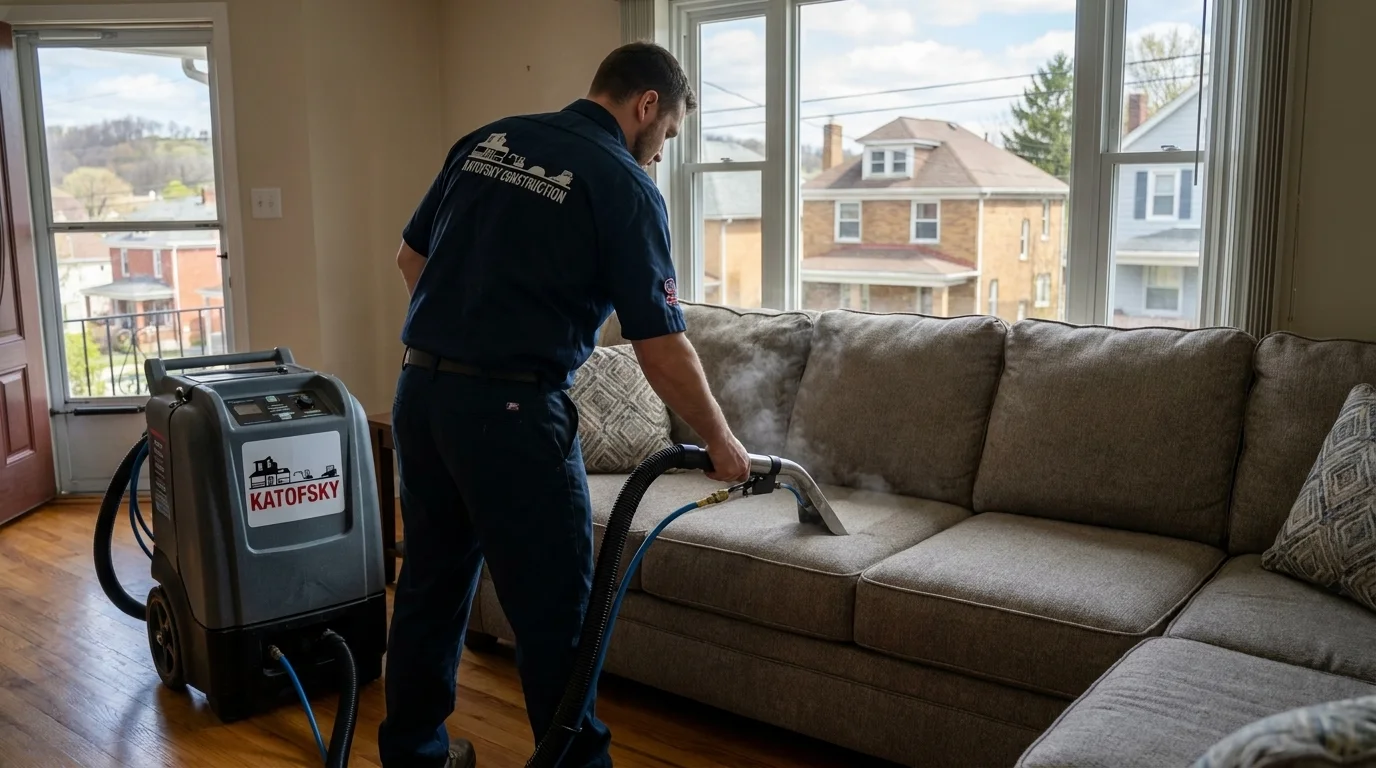
For most fabric upholstery, we use low-moisture hot-water extraction calibrated to the fabric weight. This pulls embedded soil, allergens, and odor-causing bacteria from deep in the cushion fill without saturating the foam core, which matters in Penn Hills homes where interior humidity is already elevated in warmer months. Over-wetting a cushion in a house that runs 65% relative humidity in July means a long dry time and a real mold risk.
Leather upholstery follows a separate protocol: pH-balanced cleaning solution, hand application to avoid streaking, and a conditioner applied while the leather is still slightly warm from cleaning. This restores flexibility to hides that have dried out over a Pittsburgh winter and helps the surface resist future soiling.
Equipment and Methods We Use for Upholstery
Portable extraction units let us work inside the home without running long hose lines through doorways or across finished floors, which matters in the split-level layouts common throughout Penn Hills. We use upholstery-specific attachments with lower suction profiles than carpet wands, so pile and fabric nap are not distorted during extraction.
For pieces with odor from pets or smoke, we apply an enzyme-based pre-treatment that breaks down organic compounds at the molecular level rather than masking them. Deodorizing sprays applied over the surface of a contaminated cushion wear off within days. Enzyme treatment addresses the source, which means the result holds.
Drying time is managed with air movers positioned to promote airflow across cushion faces and into crevices. In Penn Hills during humid months, we account for ambient conditions and advise homeowners on how long to keep windows closed versus open to support drying without drawing in more moisture from outside.
Local Note
Older Penn Hills homes, particularly those built on the steeper lots in the hillside sections of the borough, often have basements that function as de facto living rooms, complete with sofas, recliners, and area rugs. These below-grade spaces run consistently higher humidity than the main floor, and upholstered furniture placed there absorbs that moisture season after season. If you are having a sofa or sectional cleaned that lives in a basement or lower-level family room, mention it when you call. The cleaning approach is the same, but drying time estimates change, and we may recommend a dehumidifier run before and after the appointment to get the best result.
Reach us at (412) 304-9284 to schedule upholstery cleaning for your Penn Hills home. Whether it is a single accent chair or a full living room set, we will assess the fabric, explain the process before we start, and leave the pieces clean, dry, and ready to use.
Upholstery Cleaning in Penn Hills: Service Coverage
Frequently Asked Questions
How fast can you arrive for upholstery cleaning in Penn Hills?
How does Penn Hills' humid climate affect how long upholstery takes to dry after cleaning?
Are the older split-level and ranch homes common in Penn Hills harder to service for upholstery cleaning?
Can you clean leather sofas in Penn Hills homes, and does the cold winter climate cause any specific issues?
Do you clean upholstery in Penn Hills basement family rooms, and is there anything the homeowner should do to prepare?
What is the difference between hot-water extraction and dry cleaning for fabric sofas, and which is better for Penn Hills homes?
Will my homeowners insurance cover upholstery cleaning in Penn Hills?
Upholstery Cleaning response in Penn Hills
Most Penn Hills calls see a technician on-site within 60 minutes from our Pittsburgh headquarters.