Upholstery Cleaning in Pittsburgh
24/7 upholstery cleaning in Pittsburgh and surrounding areas. IICRC-certified, insurance billing accepted. Call (412) 304-9284.
Upholstery holds onto things longer than you might expect. Pet dander pressed into the weave of a sectional, smoke residue that settled into a sofa during a kitchen fire, the faint sour smell of a spill that dried before anyone could treat it properly, fabric and foam trap all of it. Surface vacuuming moves the top layer; it does not reach the fibers where odor-causing bacteria and allergens actually live. Professional upholstery cleaning extracts what’s embedded, not just what’s visible, and it does so without saturating the cushion core or shrinking the fabric.
What upholstery cleaning actually involves
Upholstery cleaning is not the same process as carpet cleaning, and equipment that works well on floor surfaces can damage furniture fabric or leave cushions wet for days. The work starts with fabric identification: woven synthetics, natural fibers like cotton and linen, microfiber, and leather each respond differently to heat, moisture, and cleaning agents. Using the wrong chemistry on a wool blend can cause irreversible dye bleed; applying too much moisture to a down-filled cushion creates conditions for mold growth inside the cushion core.
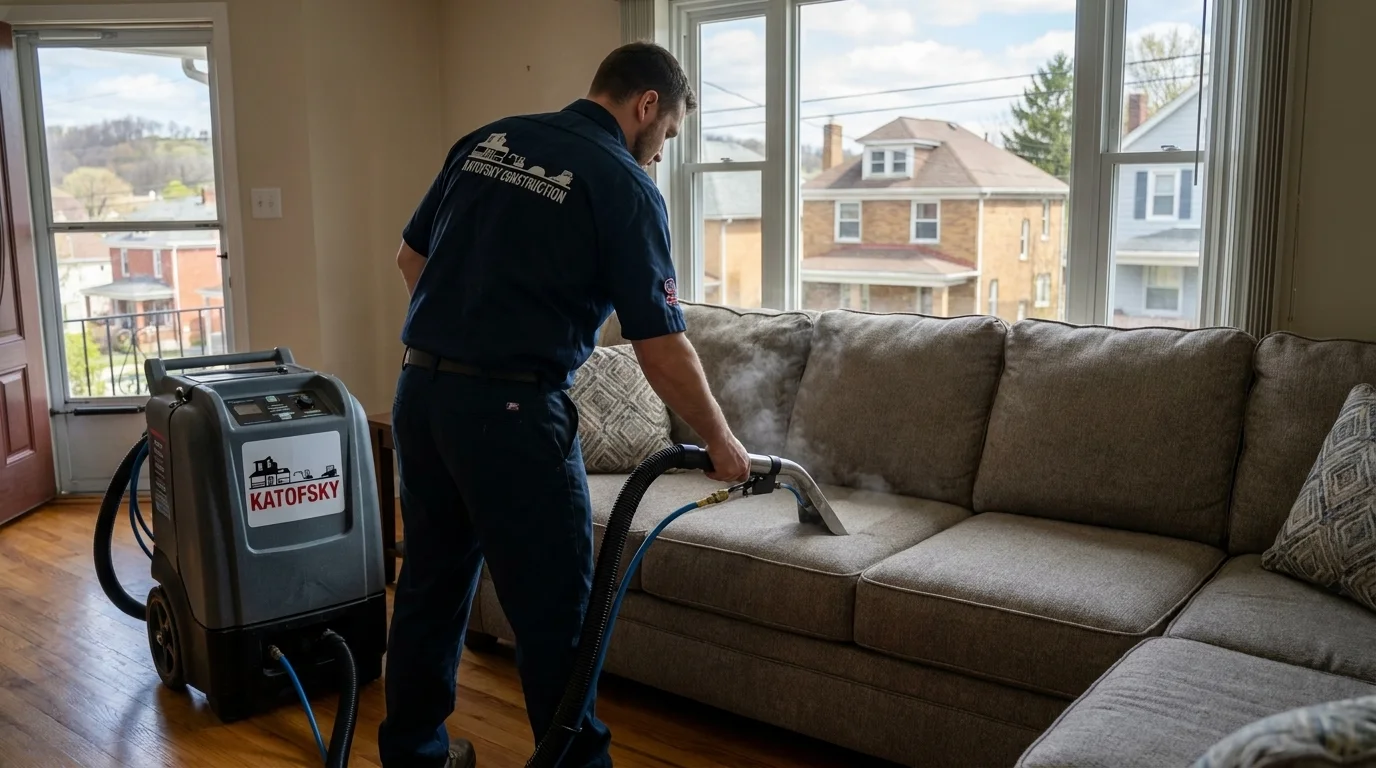
Once the fabric type and soiling level are confirmed, the appropriate extraction method is selected. Hot-water extraction (commonly called steam cleaning) is effective on most synthetic and blended fabrics. Low-moisture encapsulation works better on delicate weaves that cannot handle saturation. Leather requires its own conditioning protocol entirely. Drying time varies by method and ambient conditions, but properly cleaned upholstery in a Pittsburgh home should be dry to the touch within two to six hours under normal ventilation.
Our process
-
Fabric and soiling assessment. Every piece is inspected before any solution is applied. Fabric tags are read, colorfastness is spot-tested in a hidden area, and the type of soiling (food residue, pet dander, smoke, biological matter) is identified. This step determines which cleaning method and which chemistry are appropriate.
-
Pre-treatment and agitation. A targeted pre-spray is applied to break down embedded soils. For protein-based stains (pet accidents, food, body oils), an enzymatic pre-treatment is worked into the fiber with a soft-bristle tool. For smoke-affected upholstery, a deodorizing pre-treatment addresses odor at the molecular level before extraction begins.
-
Hot-water extraction or low-moisture cleaning. The primary cleaning pass removes loosened soils and residual chemistry from the fiber. Extraction equipment pulls moisture and contaminants out simultaneously, which is what separates professional cleaning from consumer rental machines that leave excess water behind.
-
Post-treatment and spot work. Stubborn spots that did not fully release during the main pass are treated individually. Leather pieces receive a pH-balanced conditioner after cleaning to prevent drying and cracking. Fabric pieces may receive a fabric protector application if requested.
-
Final inspection and drying check. Cushions are repositioned and inspected under raking light to confirm soil removal. Airflow is assessed to ensure the piece will dry fully before it is used again.
What separates a good upholstery cleaning response from a bad one
The most common mistake in upholstery cleaning is over-wetting. A sofa cushion that looks clean on the surface but holds moisture in the foam core for 24 to 48 hours is a mold problem waiting to develop. This is especially relevant in Pittsburgh, where humid summers slow evaporation and older homes often have limited airflow in living areas. Operators who use carpet extraction wands on upholstery without adjusting pressure or dwell time routinely leave cushions saturated.
The second common failure is skipping fabric identification. A cleaning solution that works perfectly on polyester microfiber can strip the finish off a wool-blend chair or cause dye migration on a printed linen. Colorfastness testing takes two minutes and prevents permanent damage.
For upholstery affected by a documented loss (fire, water, or smoke), the documentation step matters as much as the cleaning itself. Adjusters need itemized records: which pieces were cleaned, what method was used, and what condition the fabric was in before and after. Thorough photo documentation and written scope notes are what support a successful contents claim.
What does upholstery cleaning cost?
Typical costs for upholstery cleaning depend on the number of pieces, the fabric type, the level of soiling, and whether the work is part of a broader insurance claim. Most homeowners pay somewhere in the ranges below for standard residential work, though heavily soiled pieces, specialty fabrics, or fire- and smoke-affected contents will fall toward the higher end.
| Scenario | Typical industry range |
|---|---|
| Single upholstered chair (fabric) | $75 - $150 |
| Standard sofa or couch (fabric) | $150 - $300 |
| Sectional sofa (fabric) | $250 - $500 |
| Leather sofa (clean and condition) | $200 - $400 |
| Full living room set (sofa, loveseat, chair) | $350 - $700 |
| Smoke or fire-affected upholstery (contents claim) | $400 - $900+ per piece |
These are typical industry figures, not quotes. Every loss is different, and Katofsky Construction LLC provides a written scope before any work begins. Homeowners insurance often covers upholstery cleaning when the soiling results from a covered peril such as fire, smoke, or water damage from a sudden and accidental event.
Seasonal and regional considerations
Pittsburgh’s climate creates specific upholstery concerns that are worth knowing. High summer humidity, particularly in older homes without central air, slows drying after cleaning and raises the risk of mildew forming in cushion cores if drying is not managed carefully. Winter brings its own issue: forced-air heat drops indoor humidity sharply, which dries out leather upholstery faster than most owners realize. Leather pieces in Pittsburgh homes typically benefit from conditioning at least once a year, and more often if they sit near a heat register.
Homes in neighborhoods with older housing stock, particularly those built before the 1970s, may also have upholstered pieces that contain materials no longer in common use. Wool blends and natural-fiber fabrics from that era require lower-temperature extraction and gentler chemistry than modern synthetics.
Service area
Katofsky Construction LLC is based in Pittsburgh and serves surrounding communities throughout Allegheny County and the broader region. The city-specific pages for upholstery cleaning link back here for the full process detail.
If your furniture has absorbed a smell that won’t air out, or if you’re dealing with upholstery affected by a water or fire loss, call (412) 304-9284 to schedule your upholstery cleaning assessment.
Frequently Asked Questions
Does homeowners insurance cover upholstery cleaning?
What is the difference between hot-water extraction and dry cleaning for upholstery, and which is better?
How long will my furniture be wet after cleaning, and can I sit on it right away?
Can pet odor actually be removed from upholstery, or just masked?
How do I know if my upholstery fabric can be safely wet-cleaned?
Looking for the best upholstery cleaning company in Pittsburgh?
Katofsky Construction LLC provides licensed and insured upholstery cleaning in Pittsburgh, PA and the surrounding area. We answer calls 24/7 — call (412) 304-9284 for immediate help.
Need Upholstery Cleaning now?
We respond 24/7 across Pittsburgh and surrounding PA cities.
Related Coverage
- Our Restoration Services
- Contact Katofsky Construction LLC
- Upholstery Cleaning in Baldwin
- Upholstery Cleaning in Bethel Park
- Upholstery Cleaning in Carnegie
- Upholstery Cleaning in Green Tree
- Upholstery Cleaning in Greensburg
- Upholstery Cleaning in Hempfield Township
- Upholstery Cleaning in Jeannette
- Upholstery Cleaning in Latrobe
- Upholstery Cleaning in Lower Burrell
- Upholstery Cleaning in McCandless
- Upholstery Cleaning in McKeesport
- Upholstery Cleaning in Monroeville