TL;DR: After a house fire in Pittsburgh, call 911 first if anyone is still inside or the fire isn’t fully out, then notify your insurance company to open a claim, then call a restoration contractor like Katofsky Construction at (412) 304-9284 for emergency board-up, tarping, and fire damage cleanup. Katofsky Construction is an IICRC Certified Firm available 24/7 and handles fire damage restoration, board-up, and contents pack-out across Pittsburgh and the surrounding communities.
If the fire department just cleared your house and you’re standing in your driveway at 2 a.m. wondering what happens next, you’re not alone, and there’s a specific order to the calls that follow. Skip a step and you can lose insurance coverage, leave your home exposed to weather and theft, or make smoke damage permanently worse. Here’s the sequence, in order, built around how Pittsburgh’s older brick rowhomes and shared-wall construction actually behave after a fire.
Who should I call first after a house fire in Pittsburgh?
Call 911 first if the Pittsburgh Bureau of Fire hasn’t already cleared the scene, or if anyone is missing, injured, or the fire isn’t completely out. Once the fire department has released the property and given you an incident report number, call Katofsky Construction at (412) 304-9284 to start fire damage mitigation and board-up before you worry about anything else.
Don’t call your insurance agent from the sidewalk while the fire department is still working. Get the incident report number from the responding crew first; your insurer and your restoration contractor will both ask for it. In Pittsburgh, the Bureau of Fire typically makes incident reports available within a few business days through the fire marshal’s office, and you’ll need that document for your claim file regardless of which insurer you carry.
If the fire started in the kitchen and stayed contained there, you may be tempted to start cleaning immediately. Don’t. Soot is acidic and etches metal, glass, and finishes within hours, and a contractor needs to document the damage before anything gets touched or moved.
What do I do after a house fire in Pittsburgh, step by step?
The order that protects your insurance claim and your home is: get cleared by the fire department, call your insurer to open the claim, get the property secured, then start mitigation and drying. Each step depends on the one before it, so working out of order usually costs you time or money later.
- Get the all-clear and the report number. The fire department will tell you when it’s safe to re-enter, if at all. Ask for the incident number before they leave.
- Call your insurance company same-day. Most homeowners policies require prompt notice of loss. Give them the incident number, the date, and a basic description. Ask whether your policy includes additional living expenses (ALE) coverage if the house isn’t habitable.
- Call for utility shutoff and inspection if needed. If the fire damaged wiring or gas lines, Duquesne Light or Peoples Gas may need to inspect or cut service before anyone can safely stay in or near the structure.
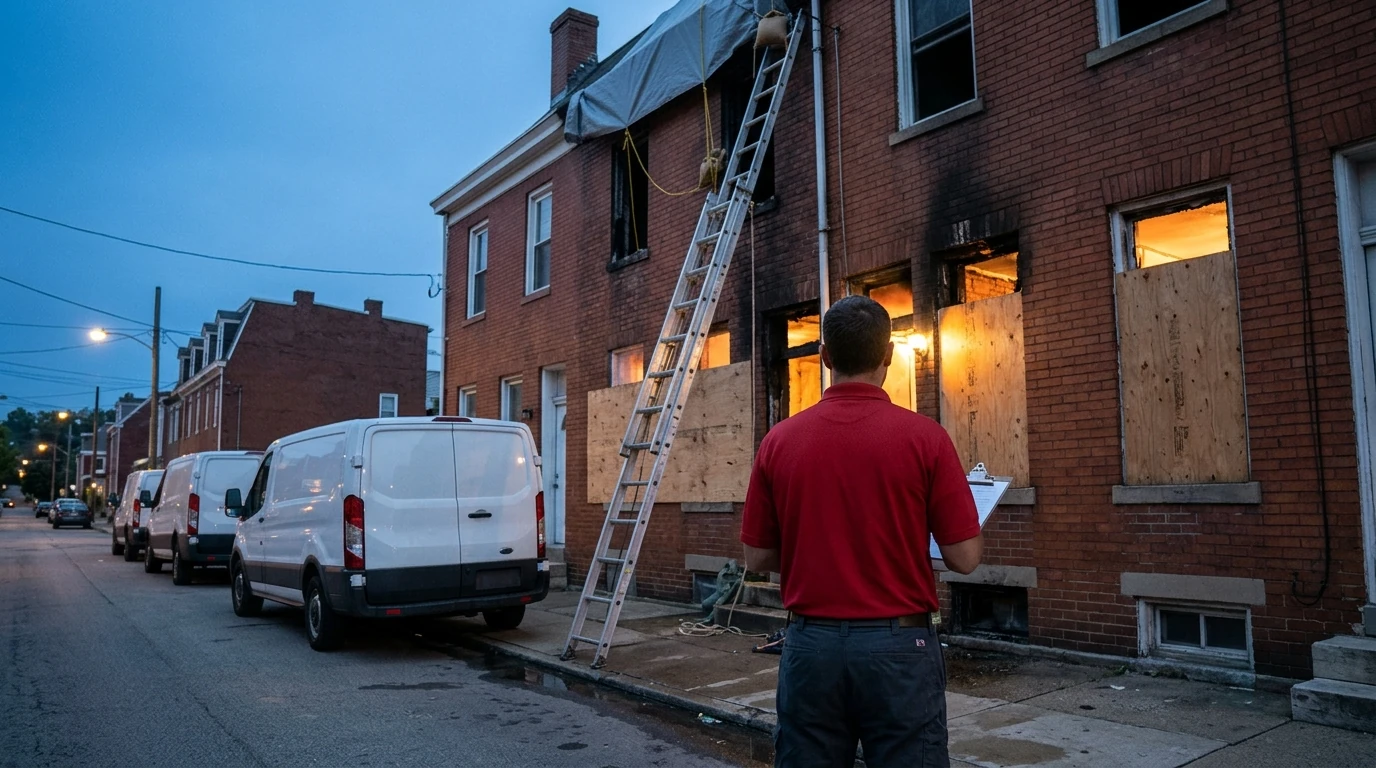
- Get the property boarded up and tarped. Broken windows, a compromised roof, or fire department entry damage leave your home open to weather and anyone passing by. This has to happen within hours, not days.
- Start fire and smoke mitigation. A restoration contractor assesses soot penetration, removes charred debris, and begins odor control before smoke residue sets permanently into drywall, insulation, and framing.
Pittsburgh’s older brick rowhomes and duplexes complicate step 5. Smoke travels through shared wall cavities, attic spaces, and balloon-frame construction common in neighborhoods like Lawrenceville, Bloomfield, and the South Side, so a fire that starts in one unit can leave smoke odor and soot in an adjoining structure even without visible flame damage there. That’s a conversation to have early with whoever is handling your mitigation, not after the smell has settled in for a week.
When do I call my insurance company, and what do they actually cover?
Call your insurer the same day as the fire, before you authorize any repair work, so your claim stays on track and you don’t pay out of pocket for work the policy would have covered. Most homeowners policies cover sudden, accidental fire damage to the structure and your belongings, but coverage details and deductibles vary by policy, so read yours or ask your agent directly.
Your insurer will likely send an adjuster to inspect the property, often within a few days. Until then, document everything: photos of every room, a list of damaged or destroyed belongings, and receipts for any temporary lodging if you can’t stay in the house. The Insurance Information Institute notes that settling claims after a disaster moves faster when you have this documentation ready before the adjuster arrives.
One thing worth knowing: most policies require you to take reasonable steps to prevent further damage after a covered loss, which is exactly what board-up, tarping, and initial mitigation are for. Katofsky Construction documents this work with photos and a written scope, which becomes part of your claim file rather than a dispute point later. For general background on what a standard policy includes, see the Insurance Information Institute’s overview of homeowners coverage or contact the Pennsylvania Insurance Department directly with policy-specific questions.
What happens when I call a restoration contractor after a fire?
When you call Katofsky Construction, the first conversation covers what’s secured, what’s exposed, and whether utilities are still live, so the right crew and equipment show up with the right priorities. Because the company operates 24/7, that first call can happen the night of the fire, not the next business day.
On arrival, the crew typically handles board-up and tarping first if the structure is open to weather, since that stops additional damage from rain or wind before anything else matters. Windows, doors, and roof openings get covered with plywood or tarps rated to hold through the next weather system, not a quick patch.
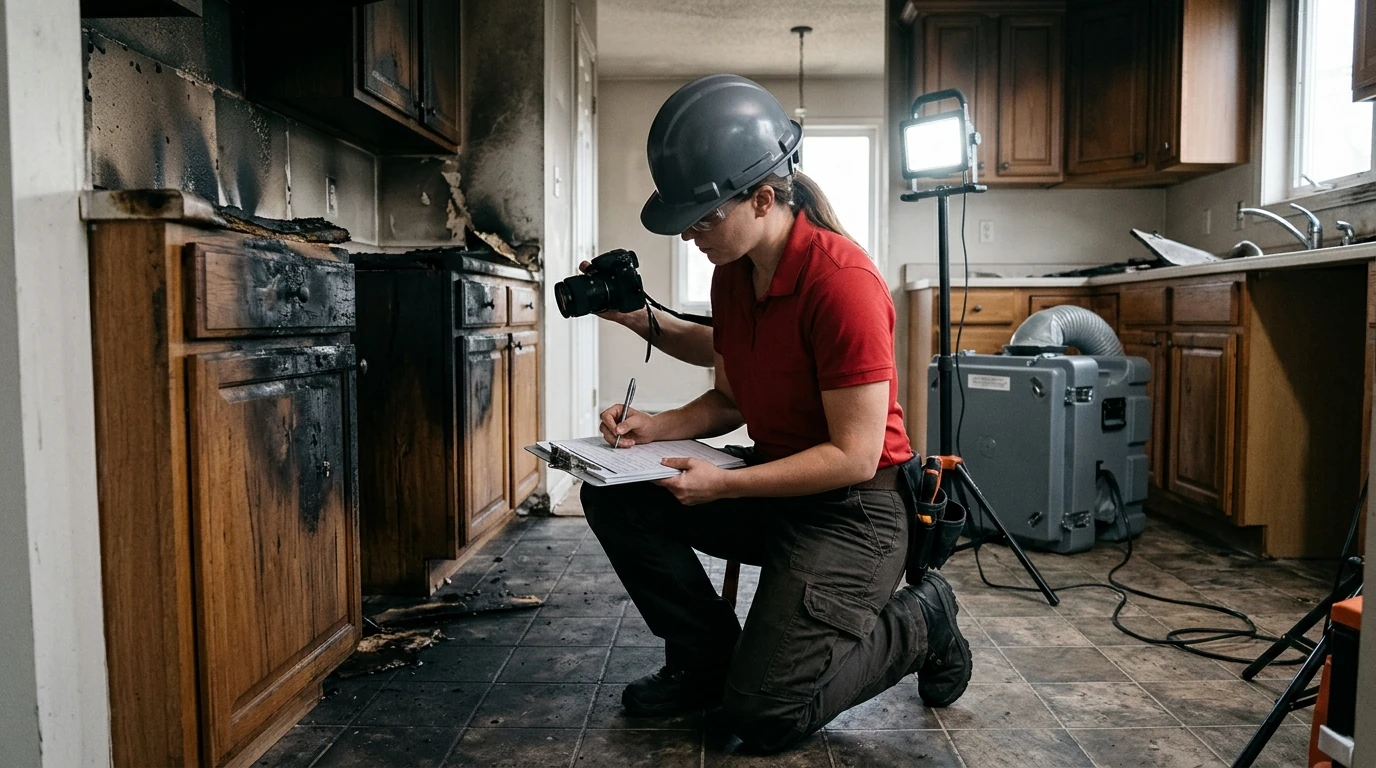
Next comes assessment: documenting soot penetration room by room, checking smoke travel through HVAC ductwork and wall cavities (a real concern in older Pittsburgh housing stock with original brick and plaster construction), and identifying which contents can be cleaned versus which are a total loss. Salvageable belongings, furniture, electronics, textiles, get cataloged and moved into contents restoration and storage so the house can be gutted and rebuilt without your remaining possessions sitting in the middle of a construction zone.
For what to have ready on that first call: your insurance policy number if you have it, the fire department incident number, and a general sense of which rooms were affected by flame versus smoke only. You don’t need a full inventory yet; that comes later.
Does a kitchen fire need the same process as a whole-house fire?
A kitchen fire that stayed contained to one room still needs professional cleanup because smoke and soot travel through the house via HVAC ducts and air currents even when flames didn’t spread. Grease fires in particular leave a sticky, acidic residue that regular cleaning products don’t fully remove and that continues to smell and discolor surfaces weeks later if left untreated.
The practical difference is scope, not process. A kitchen fire typically skips the board-up and tarping step unless a window broke or the fire department had to force entry, and the mitigation focuses on soot removal, cabinet and surface cleaning, and HVAC decontamination rather than full structural drying. Our guide to how professionals remove smoke odor covers why DIY approaches like ozone machines and scented sprays usually fail to fully clear the smell.
If you’re dealing with a contained kitchen fire right now, the call order still holds: fire department clearance first, insurance notification second, restoration assessment third. Skipping the assessment because “it’s just the kitchen” is the most common reason smoke odor lingers for months.
If you’re standing in a fire-damaged home in Pittsburgh right now, the next right move is a phone call, not a cleaning supply run. Call Katofsky Construction at (412) 304-9284 to get board-up, mitigation, and contents restoration moving the same day you need it.
About Katofsky Construction LLC
Katofsky Construction LLC is an IICRC Certified Firm serving Pittsburgh, PA and the surrounding communities, including Penn Hills, Monroeville, and Mount Lebanon. Licensed in Pennsylvania (license #090877) and available 24/7, the crew handles fire and smoke damage restoration, emergency board-up and tarping, contents restoration and storage, and reconstruction for homes affected by fire. Written by Michael Katofsky.