Contents Restoration & Storage in Pittsburgh
24/7 contents restoration & storage in Pittsburgh and surrounding areas. IICRC-certified, insurance billing accepted. Call (412) 304-9284.
After a water loss, fire, or mold event, the structure gets most of the attention. But the furniture, clothing, documents, electronics, and keepsakes inside that structure are often where the real financial and emotional loss lives. Contents restoration is the discipline of recovering those items rather than replacing them, and it requires a different set of skills, equipment, and judgment than structural drying or smoke remediation. When it is done right, salvage rates climb and replacement costs drop. When it is skipped or rushed, items that could have been saved end up in a dumpster.
What Contents Restoration & Storage actually involves
Contents restoration begins with a systematic inventory of everything inside the affected space. Technicians photograph, tag, and log each item before anything is moved. Soft goods like upholstered furniture, rugs, and clothing go through a different cleaning pathway than hard goods like lamps, electronics, and decorative objects. Porous materials that absorbed smoke odor or Category 3 water contamination are evaluated differently than non-porous surfaces.
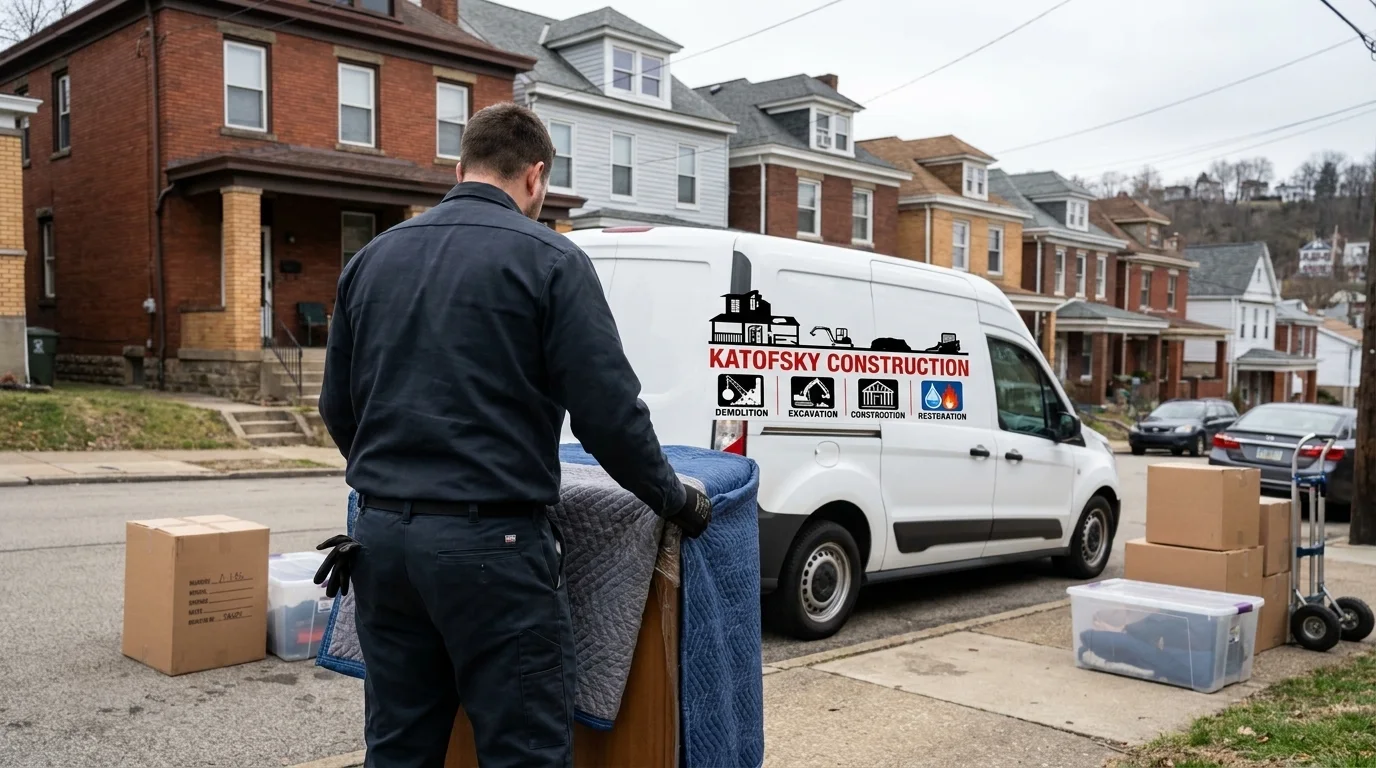
For items that can be cleaned on-site, technicians use ultrasonic cleaning tanks, ozone chambers, hydroxyl generators, and dry-cleaning sponges depending on the material and the contaminant. Items that need more time, or that cannot be safely cleaned while structural work is underway, are packed out to a climate-controlled storage facility. Pack-out protects contents from secondary damage during drying or reconstruction and gives technicians a controlled environment to work in.
Storage is not passive warehousing. Items in storage are tracked against the inventory log, kept at stable temperature and humidity, and returned to the property once the structure is ready. The timeline from pack-out to return varies with the scope of structural work, but every item should be accounted for at every stage.
Our process
-
Inventory and condition documentation. Every item in the affected area is photographed, described, and assigned a condition rating before it is touched. This record protects you during the insurance claim and gives the restoration team a baseline to work from.
-
Triage: restore, clean in place, or pack out. Not every item needs to leave the property, and not every item can be saved. Technicians sort contents into three categories: items that can be cleaned on-site, items that need to be packed out for off-site restoration, and items that are beyond practical recovery. Honest triage at this stage saves time and prevents false expectations.
-
Cleaning and decontamination. Depending on the loss type, cleaning may involve ultrasonic baths for hard goods, ozone or hydroxyl treatment for odor, thermal fogging for smoke-affected textiles, or HEPA vacuuming for soot. Wet cleaning, dry cleaning, and immersion methods are matched to the material. Delicate items like documents, photographs, and electronics follow specialized handling protocols.
-
Pack-out, transport, and climate-controlled storage. Items leaving the property are wrapped, boxed, and loaded against the inventory manifest. Storage conditions are monitored to prevent secondary mold growth or humidity damage during what can be a weeks-long structural restoration.
-
Return, unpack, and final walkthrough. When the structure is ready, contents are returned, unpacked, and placed. The inventory log is reconciled so that every item that left the property is accounted for on the way back in.
What separates a good contents restoration response from a bad one
The most common failure in contents work is skipping the inventory. Without a documented pre-cleaning condition record, disputes arise over what was damaged before the loss versus what was damaged during restoration. Insurance adjusters require photographic evidence tied to each item, and without it, claims for contents replacement are harder to support.
A second common problem is misclassifying the loss type. Smoke from a kitchen grease fire leaves a protein-based residue that is nearly invisible but penetrates deeply into porous materials. It requires different chemistry than the dry soot from a structural fire. Treating both the same way leaves odor behind even after surfaces look clean.
For water losses, contents that were exposed to Category 2 or Category 3 water require decontamination, not just drying. Porous soft goods that absorbed contaminated water are generally not restorable and need to be documented for replacement rather than cleaned and returned.
Experienced operators also maintain chain of custody throughout pack-out and storage. Every item that leaves your property should be traceable on a signed manifest. This matters both for insurance documentation and for your own peace of mind.
What does Contents Restoration & Storage cost?
Typical costs for contents restoration vary widely based on the volume of items, the type of loss, and how much off-site storage and cleaning time is required. Most homeowners pay somewhere in the following ranges, which reflect industry-typical figures and are not quotes from Katofsky Construction LLC.
| Scenario | Typical range |
|---|---|
| Single room, clean water, minimal contents | $800 - $2,500 |
| Single room, smoke or soot-affected contents | $1,500 - $4,000 |
| Whole-home pack-out and storage (30 days) | $4,000 - $12,000 |
| Document and photo drying and recovery | $500 - $3,000 |
| Electronics assessment and decontamination | $300 - $2,000 per item category |
| Textile restoration (clothing, rugs, upholstery) | $1,000 - $5,000 |
Every loss is different, and Katofsky Construction LLC provides a written scope of work before any restoration begins. Standard homeowners insurance policies typically cover contents restoration as part of a covered loss, though coverage limits and depreciation schedules vary by policy.
Seasonal and regional considerations
Pittsburgh’s climate creates specific conditions that affect contents after a loss. Winters bring frozen pipe failures that can release water into finished living spaces quickly, soaking furniture and flooring before the leak is discovered. Summer humidity, which regularly climbs into the 70-80% relative humidity range, accelerates mold colonization on wet contents, particularly in the older housing stock common across neighborhoods like Squirrel Hill, Lawrenceville, and Mt. Washington, where plaster walls and wood lath can hold moisture longer than modern construction. Contents that sit in a humid, unventilated space for more than 24 to 48 hours after a water event are at meaningful risk for secondary mold growth, which changes both the cleaning approach and the insurance documentation required.
Service area
Katofsky Construction LLC serves Pittsburgh and the surrounding region, including communities throughout Allegheny County and neighboring areas. The city-specific pages for individual communities link back here for full process detail.
If you need to get contents out of a damaged space and into safe storage while structural work proceeds, call (412) 304-9284. Katofsky Construction LLC is available around the clock, and the first step is a documented inventory so nothing gets lost in the process.
Frequently Asked Questions
Does homeowners insurance cover contents restoration and storage?
How do you decide whether an item can be restored or needs to be replaced?
What happens to my belongings during pack-out? How do I know nothing will be lost or damaged?
Can smoke odor really be removed from furniture and clothing, or does it just come back?
How long does off-site contents storage typically last, and what controls the timeline?
Looking for the best contents restoration & storage company in Pittsburgh?
Katofsky Construction LLC provides licensed and insured contents restoration & storage in Pittsburgh, PA and the surrounding area. We answer calls 24/7 — call (412) 304-9284 for immediate help.
Need Contents Restoration & Storage now?
We respond 24/7 across Pittsburgh and surrounding PA cities.
Related Coverage
- Our Restoration Services
- Contact Katofsky Construction LLC
- Contents Restoration & Storage in Baldwin
- Contents Restoration & Storage in Bethel Park
- Contents Restoration & Storage in Carnegie
- Contents Restoration & Storage in Green Tree
- Contents Restoration & Storage in Greensburg
- Contents Restoration & Storage in Hempfield Township
- Contents Restoration & Storage in Jeannette
- Contents Restoration & Storage in Latrobe
- Contents Restoration & Storage in Lower Burrell
- Contents Restoration & Storage in McCandless
- Contents Restoration & Storage in McKeesport
- Contents Restoration & Storage in Monroeville