TL;DR: Fire and smoke restoration combines structural cleanup, soot and odor removal, and often full reconstruction after a house fire. A single-room kitchen fire typically takes 1 to 3 weeks to restore, while a whole-house fire can take 2 to 6 months when rebuilding is involved. Homeowners insurance usually covers both the fire damage and the smoke damage that spreads into rooms the flames never touched, as long as the loss is reported quickly and documented by a licensed contractor.
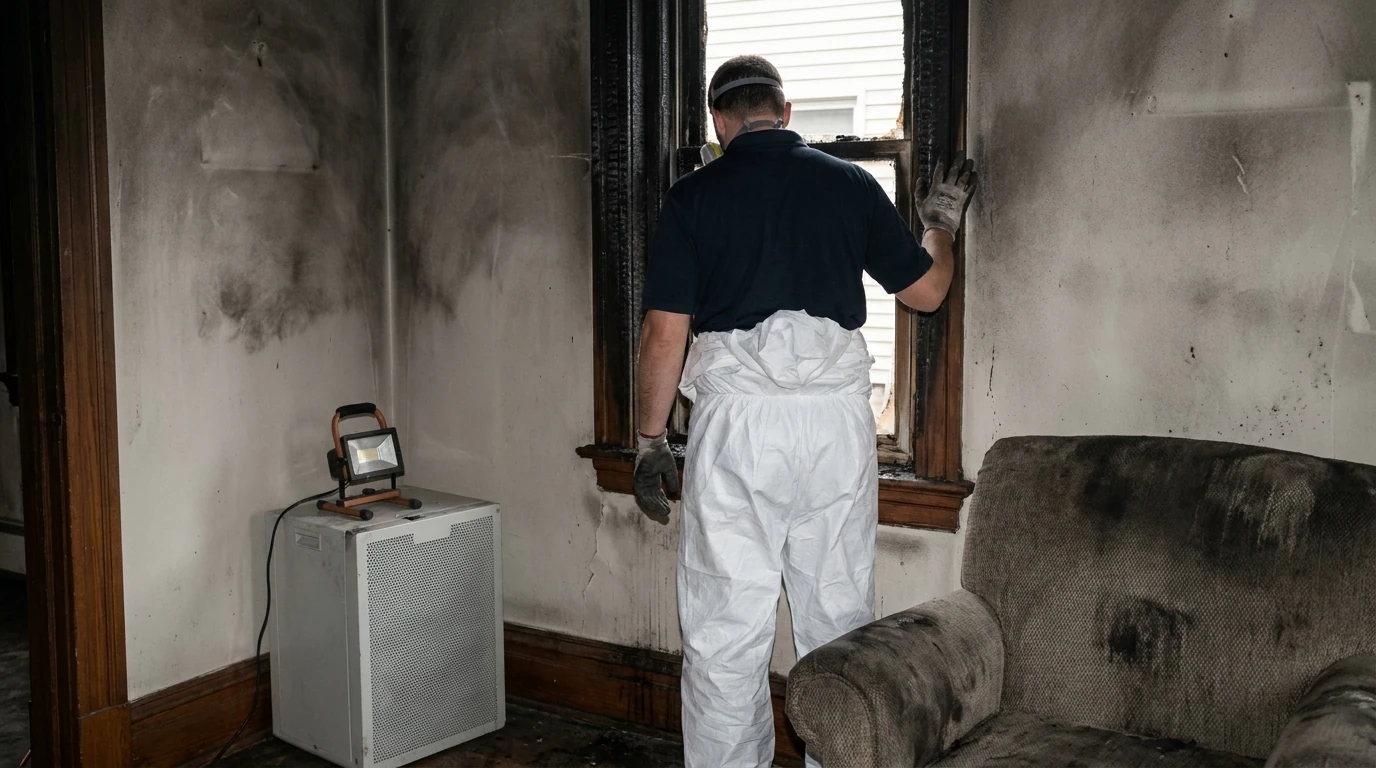
If a grease fire started in your kitchen last night and now every room smells like a campfire, you’re actually dealing with two separate problems. There’s the charred cabinets, scorched drywall, and damaged subfloor where the flames were. Then there’s the soot that worked its way through the rest of the house: into the HVAC ducts, behind the drywall, and deep into carpet and fabric. Older housing stock around Pittsburgh, including the balloon-framed colonials in Mount Lebanon and the rowhomes closer to Monroeville, tends to carry smoke through hollow wall cavities faster than newer platform-framed construction. That’s why a fire in one room can leave an odor problem in every room.
What Does Fire & Smoke Restoration Actually Involve?
Fire and smoke restoration is the process of stabilizing a damaged structure, removing soot and smoke residue from every affected surface, neutralizing odor at the source, and rebuilding whatever was destroyed. It’s really three jobs stacked together: mitigation, cleaning, and reconstruction, usually handled by one contractor so nothing falls through the cracks.
Mitigation happens first: boarding up broken windows, tarping a damaged roof section, and running HEPA air scrubbers to pull soot particles out of the air before they settle deeper into the home. Cleaning follows the ANSI/IICRC S700 Standard for Professional Fire and Smoke Damage Restoration, which governs how technicians test the type of smoke residue (protein, synthetic, or wet smoke each respond differently) and choose the right cleaning agent and odor treatment for each surface.
Reconstruction is the final phase: replacing drywall, flooring, cabinetry, and framing that fire or water from suppression efforts destroyed. A company that handles fire damage restoration, smoke damage restoration, and reconstruction under one roof can move from demo to rebuild without re-bidding the job to a second contractor. For more detail on how each phase actually unfolds, see our breakdown of the fire damage restoration process.
How Long Does Fire and Smoke Restoration Take in Pittsburgh?
A single-room fire with no structural loss usually takes 1 to 3 weeks start to finish. A fire that spreads into an attic or a second story, which happens often in older Pittsburgh-area homes with original balloon framing, can take 2 to 6 months once reconstruction is factored in.
The timeline generally breaks down into six steps:
- Emergency board-up and tarping (same day): securing the structure from weather and theft.
- Damage assessment and scope (1-2 days): documenting every affected room, including smoke travel into unburned areas.
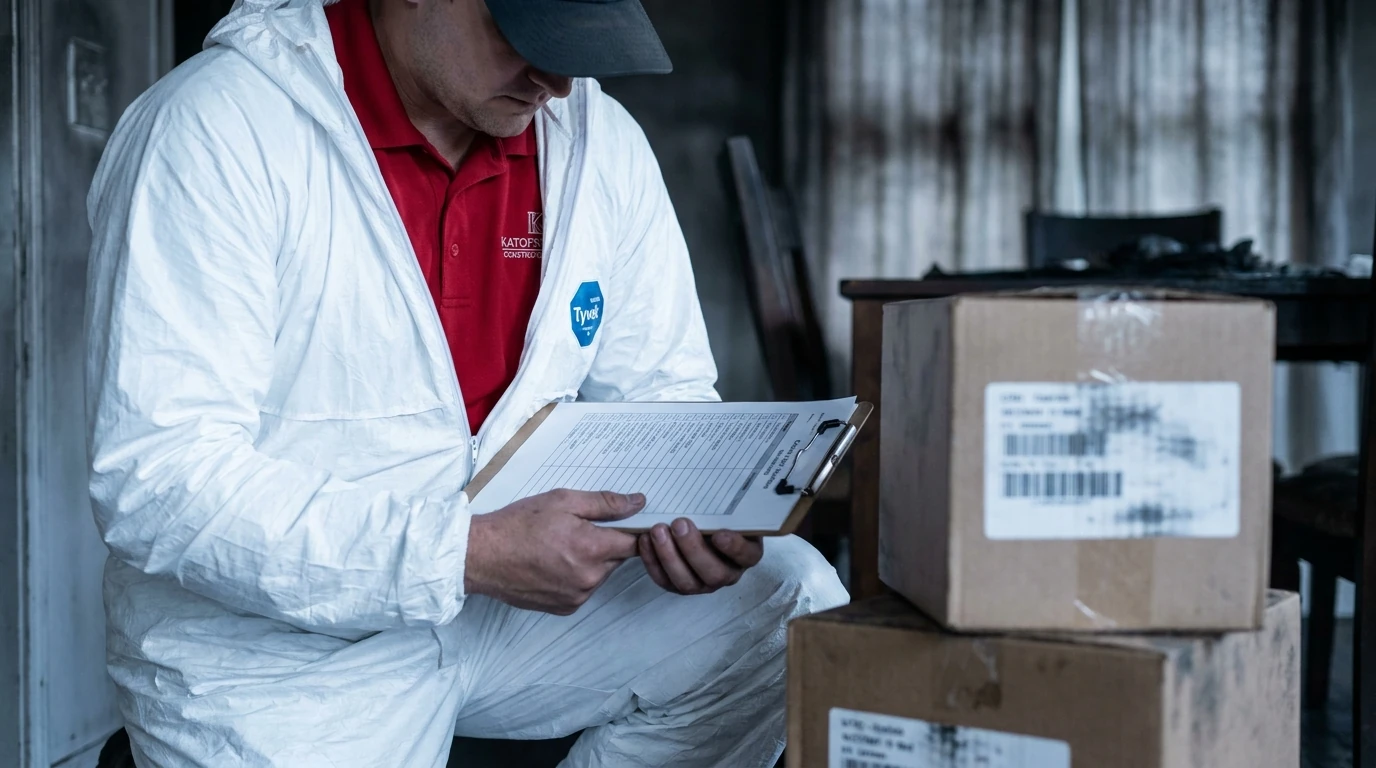
- Contents pack-out and inventory (2-5 days): removing salvageable belongings for contents restoration and storage off-site, away from ongoing demo dust.
- Demolition (varies): removing charred framing, drywall, and flooring that can’t be cleaned.
- Cleaning and odor treatment (3-10 days): soot removal from remaining surfaces, HVAC cleaning, and thermal fogging or hydroxyl treatment to neutralize smoke odor at a molecular level rather than masking it.
- Reconstruction (1 week to several months): rebuilding to match the home’s original condition, or better.
Fires involving synthetic materials (foam furniture, plastics, electronics) tend to produce a stickier, harder-to-clean residue than fires fueled mostly by wood or paper, which can add time to the cleaning phase regardless of how much square footage burned.
Will Homeowners Insurance Cover Fire and Smoke Restoration?
Yes. Standard homeowners insurance policies cover fire damage, including the smoke damage that spreads into rooms the fire never reached, according to the Insurance Information Institute. Fire is one of the named perils covered under nearly every standard policy form.
What varies is how much documentation the adjuster wants before approving the full scope. A detailed room-by-room inventory, photos of smoke penetration in areas away from the fire’s origin, and a written restoration estimate all support a faster, more complete claim. Most policies also carry a separate deductible for fire losses, and some require proof the damage exceeds a minimum threshold before certain repairs (like full HVAC duct replacement) get approved.
Working with a restoration contractor that documents the loss as the work happens, rather than estimating after the fact, tends to produce fewer disputes with the adjuster over what’s included in the scope.
What Should You Do in the First 24 Hours After a Fire?
The first 24 hours matter because soot becomes harder to remove the longer it sits, and acidic residue can permanently etch metal, grout, and glass within days. Don’t re-enter the structure until the fire department clears it as safe.
Once it’s safe to go back in, avoid wiping soot off walls or furniture with a damp cloth. That can set the stain permanently into fabric and drywall. Instead, photograph every room, including ones that smell like smoke but show no visible char, and call your insurance company to open the claim. The American Red Cross guide on home fire recovery is a solid reference for the immediate safety steps before a restoration crew arrives.
From there, scheduling a damage assessment with a licensed restoration contractor gets a written scope in front of your adjuster faster, which is usually the biggest factor in how quickly repairs actually start.
Fire damage rarely stays contained to the room it started in, and the odor problem is often bigger than the visible char. Katofsky Construction LLC handles the full sequence, from board-up through final reconstruction, so a homeowner isn’t managing three separate contractors during an already stressful month.
About Katofsky Construction LLC
Katofsky Construction LLC is an IICRC Certified Firm serving Pittsburgh, PA and surrounding communities, licensed under PA Home Improvement Contractor registration #090877. The company offers 24/7 emergency service and handles fire damage restoration, smoke damage restoration, contents restoration and storage, emergency board-up and tarping, reconstruction, and general contracting. Written by Michael Katofsky, with the Katofsky Construction team.
Call Katofsky Construction LLC at (412) 304-9284 to schedule a fire damage assessment.