TL;DR: Board-up and tarping services seal a broken window, door, or damaged roof section with plywood or heavy-duty tarp material, usually within a few hours of the damage happening. The goal is to stop rain, wind, animals, and trespassers from getting in while a permanent fix, like a new roof, a replacement window, or a full reconstruction, gets scheduled. Most residential jobs take under two hours and run a few hundred dollars depending on the size and height of the opening.
If a fire just blew out a window in your kitchen, a break-in left your back door hanging on one hinge, or a dead tree limb finally came down through your roof deck last night, you have one job before anything else: close the opening. Board-up and tarping is the fast, temporary fix that keeps weather, wildlife, and anyone passing by out of your home while you sort out what comes next, whether that’s a roofing repair, a reconstruction project, or a fire damage cleanup. In Pittsburgh’s older housing stock, from brick duplexes near the city to hillside homes around Plum and Penn Hills, an unsecured opening can turn a single problem into a much bigger one within a day.
What Is a Board-Up and Tarping Service?
A board-up and tarping service is a temporary, same-day fix that covers a broken window, damaged door, or compromised roof section with plywood or heavy-duty tarp material until a permanent repair can happen. It is not the repair itself, it’s a stopgap that buys time and keeps the elements and intruders out.
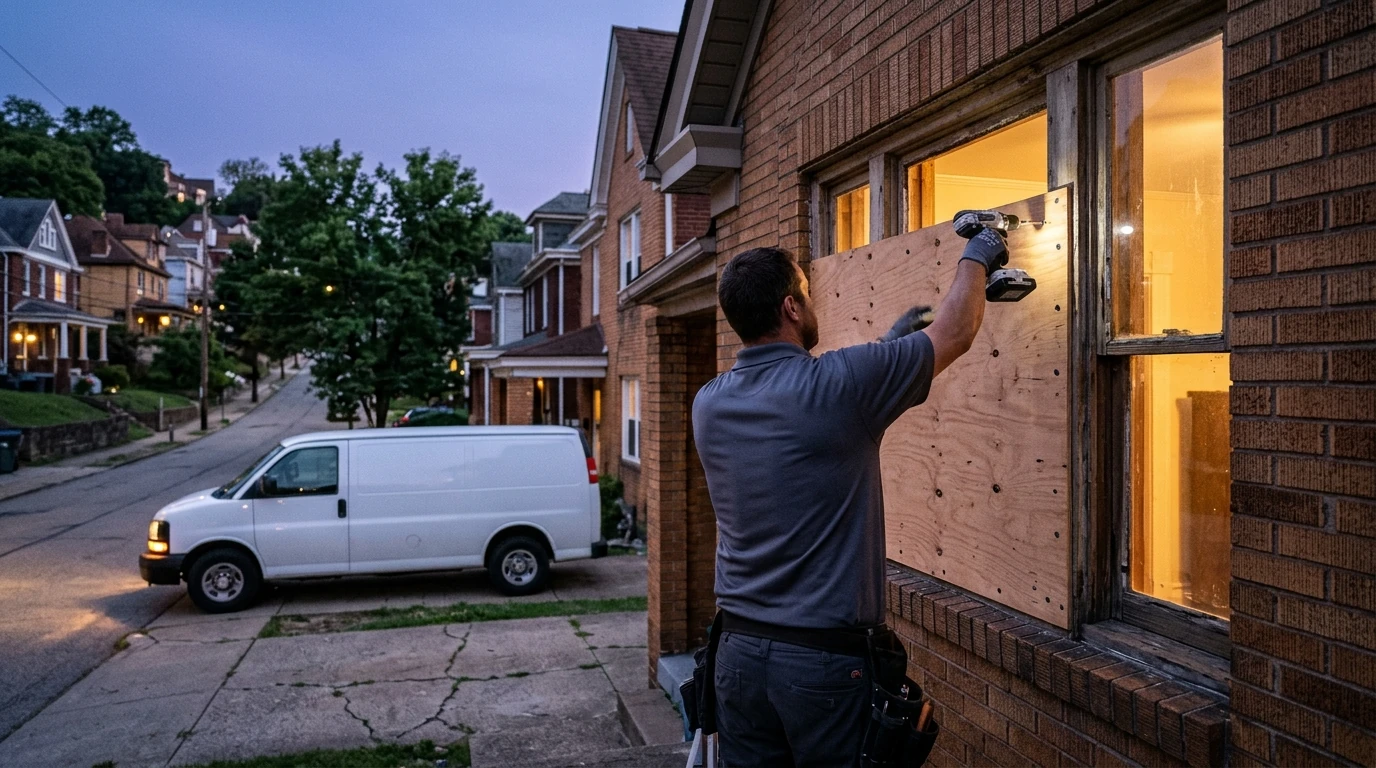
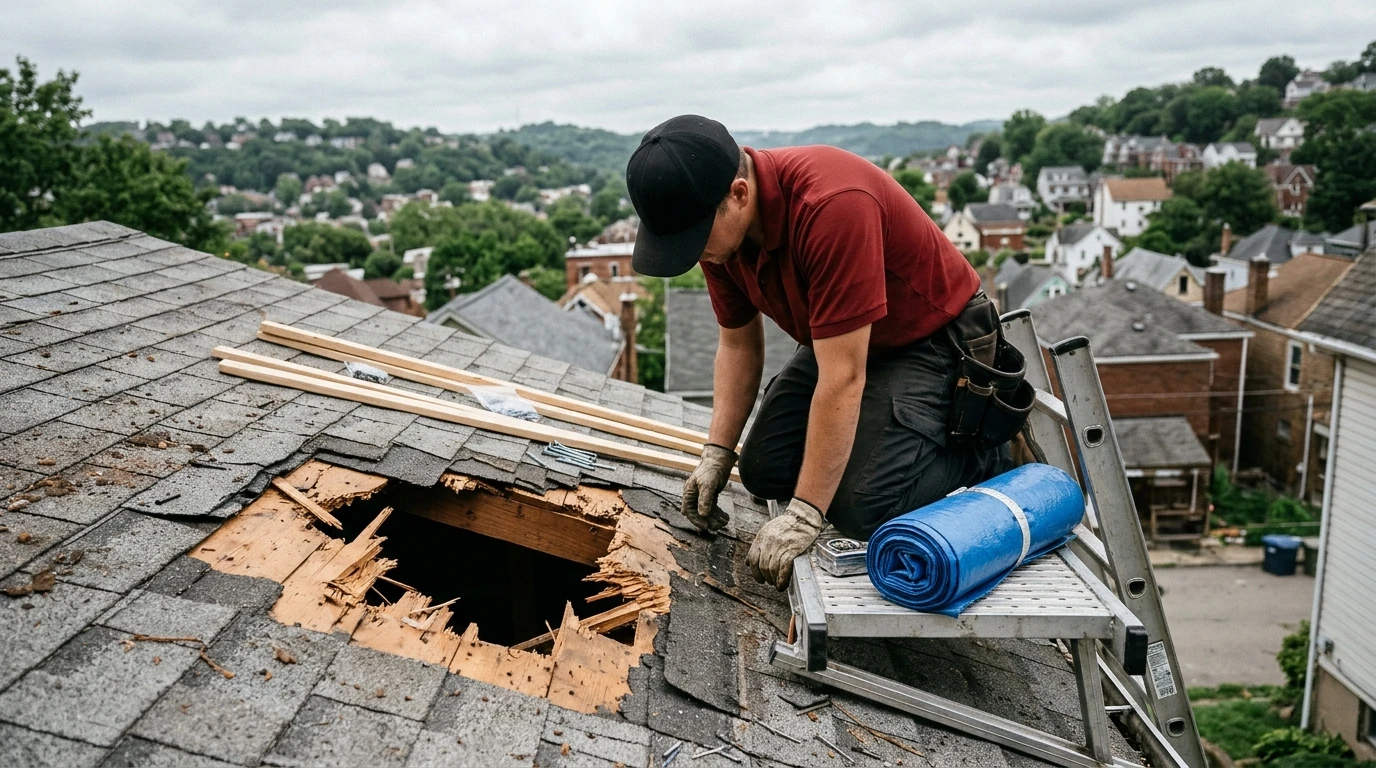
For openings in walls, doors, or windows, that usually means 1/2 to 3/4 inch exterior-grade plywood cut to size and screwed into the surrounding framing, not just the drywall or trim, so wind and forced re-entry can’t pop it loose. For a roof, it means a reinforced poly tarp pulled taut over the damaged area with at least a foot of overlap onto undamaged roofing, then battened down with wood strips screwed through the tarp into the roof deck. Duct tape and loose bricks on the corners don’t hold through a Pittsburgh wind event, and they’re not how a proper temporary seal gets done.
When Do You Actually Need Emergency Board-Up or Tarping?
You need board-up or tarping any time an opening in your home’s exterior can’t be permanently closed the same day. The most common triggers are:
- Fire damage that blew out a window, burned through a door, or opened the roof sheathing during suppression.
- Forced entry or vandalism, where a door frame or window is no longer secure.
- A fallen tree limb or a failed, aging roof section that opened a hole to the attic or living space below.
- A reconstruction or roofing project that leaves an opening at the end of the workday before the crew returns.
In each case, the clock matters more than it feels like it should. A few hours of exposed drywall during a rain event can mean torn-out insulation and ruined flooring by morning, on top of whatever damage already happened. If you’re dealing with fire damage specifically, our fire damage restoration process post covers what happens after the board-up stage, and our fire and smoke restoration guide walks through the cleanup that follows.
What Happens When the Crew Arrives?
A board-up and tarping crew assesses the opening for safety first, then measures, cuts, and fastens materials directly into structural framing so the seal actually holds. The whole process typically takes one to two hours for a residential window or door, longer for a large roof section.
The general sequence looks like this:
- Safety check for structural instability, exposed wiring, or broken glass before anyone steps inside the opening.
- Photo documentation of the damage as found, before anything gets covered, which matters for your insurance file.
- Measuring and cutting plywood or tarp material to the exact opening, with overlap for roof sections.
- Fastening into solid framing, not drywall, trim, or shingles alone, so wind and tampering can’t defeat the seal.
- A final weatherproofing check, sealing edges and seams where wind-driven rain could still get in.
This is also usually the point where a scope of work gets written for whatever permanent repair comes next, whether that’s roofing, reconstruction, or general contracting.
Will Homeowners Insurance Cover Board-Up and Tarping?
Most homeowners policies cover board-up and tarping costs when the underlying damage comes from a covered peril, like fire, a falling tree limb, or vandalism, because policies also require you to take reasonable steps to prevent further damage once a loss happens (Insurance Information Institute). Coverage specifics vary by insurer and policy, so it’s worth checking your declarations page or calling your agent before assuming either way.
What protects your claim either way is documentation: photos of the damage before it’s covered, an itemized invoice for the board-up or tarp work, and receipts for anything you pay out of pocket. Keep those together with whatever estimate comes from the permanent repair, since adjusters typically want to see the timeline from damage to temporary seal to final fix.
What Should You Do Before a Crew Gets There?
Before anyone arrives, take photos of the damage from a safe distance and avoid climbing onto a damaged roof or forcing open a compromised door yourself. If the damage followed a fire, the American Red Cross’ after-a-home-fire guide has useful steps for the first hours, including when it’s safe to go back inside at all.
If you smell gas, see exposed live wiring, or the structure feels unstable, wait outside and call the appropriate utility or emergency line first. A board-up crew can’t safely work a scene that hasn’t been cleared for those hazards.
Once the opening is secured, the real decision is what gets rebuilt and how. Katofsky Construction LLC handles that next step directly, whether it’s a roofing repair, a full reconstruction, or coordinating the fire damage cleanup that often comes before either. Scheduling the board-up and the permanent repair with the same crew means nothing gets lost in the handoff.
About Katofsky Construction LLC
Katofsky Construction LLC is an IICRC Certified Firm serving Pittsburgh, PA and the surrounding region, including Plum, Penn Hills, Monroeville, and Bethel Park, with 24/7 emergency response. The company is registered under Pennsylvania’s Home Improvement Consumer Protection Act (HIC #090877) and handles board-up and tarping, roofing, reconstruction, fire and smoke damage restoration, and related cleanup services across the Pittsburgh area. This post was written with the Katofsky Construction team, led by Michael Katofsky.
Need help now? Call Katofsky Construction LLC at (412) 304-9284.