TL;DR: Biohazard and trauma cleanup is the removal and sanitization of blood, bodily fluids, or other dangerous contaminants after a death, accident, or violent event. In Pittsburgh, a trained crew follows the IICRC S540 standard: containment, PPE, removal of contaminated materials, disinfection, and documentation for the insurer or estate. Homeowners and property managers should never attempt this themselves; it’s a job for licensed, trained technicians, not a cleaning service.
If a loved one passed away unattended in a Lawrenceville rowhouse, or a workplace accident left contamination behind in an office near the Strip District, the last thing you need is a to-do list. You need to know who to call, what happens next, and whether anyone else is going to have to pay for it. This guide covers what a professional biohazard and trauma cleanup actually involves, so you know what to expect before a crew ever walks in the door.
What Counts as a Biohazard or Trauma Cleanup Situation?
A biohazard or trauma cleanup situation is any scene contaminated with blood, bodily fluids, or other materials that pose an infectious health risk. This includes unattended deaths, suicides, violent crime scenes, serious accidents, and some hoarding or decomposition cases.
These scenes are treated differently from ordinary cleaning because of what’s called bloodborne pathogen risk, the chance that blood or fluid carries something like hepatitis B, hepatitis C, or HIV. OSHA’s bloodborne pathogen standard exists specifically because this kind of contamination is a real occupational hazard, not just an unpleasant one.
Porous materials, carpet, drywall, subfloor, upholstery, usually can’t be fully decontaminated once they’ve absorbed blood or fluid. That’s why trauma cleanup often involves controlled demolition of affected materials, not just surface cleaning. A century-old Pittsburgh home with plaster walls and original hardwood is handled the same way a newer build is: by what the contamination touched, not by the age of the house.
How Does Professional Trauma Cleanup Work, Step by Step?
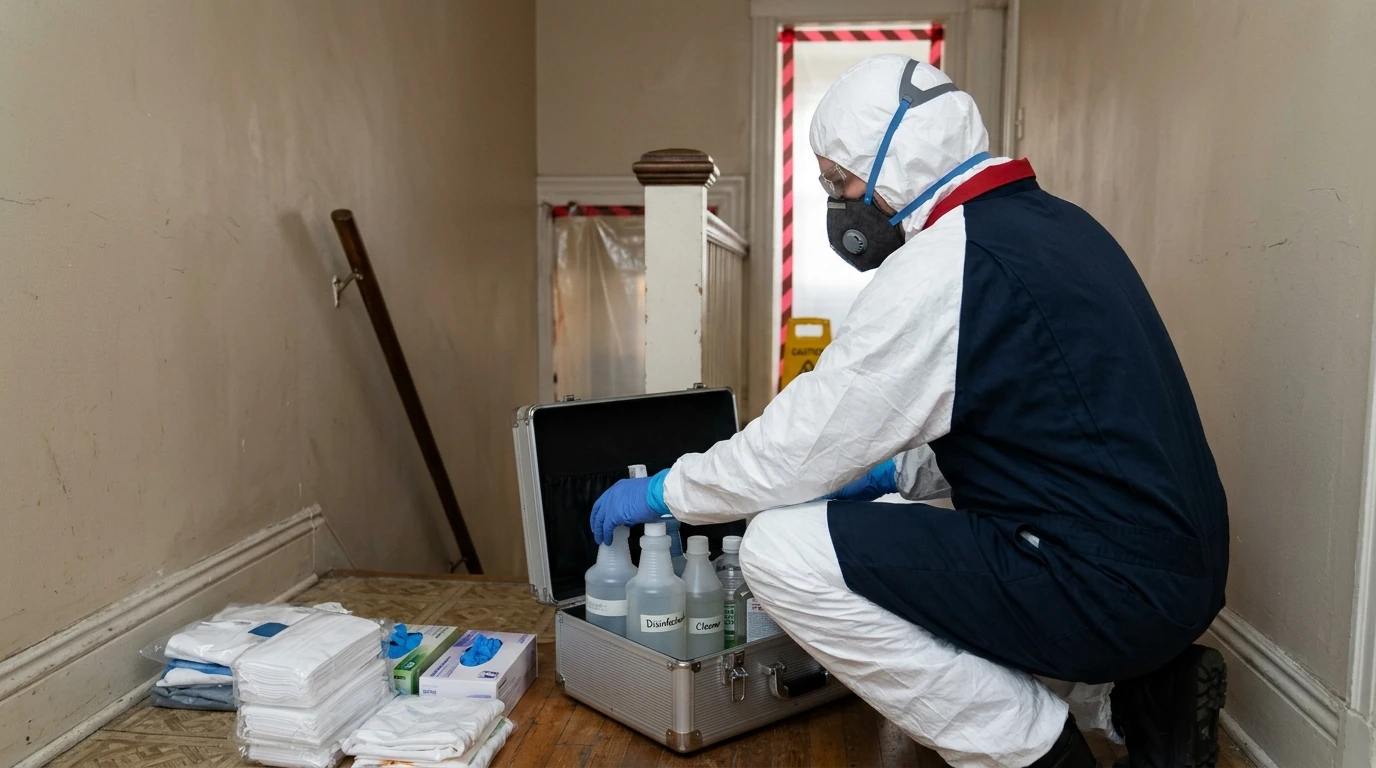
Professional trauma cleanup follows a set sequence: secure and assess the scene, contain the area, remove contaminated materials, clean and disinfect, then verify and document. Each step exists to protect the people doing the work and the people who’ll use the space afterward.
- Assessment. A technician identifies the extent of contamination, what it touched, and what can be salvaged versus what has to go.
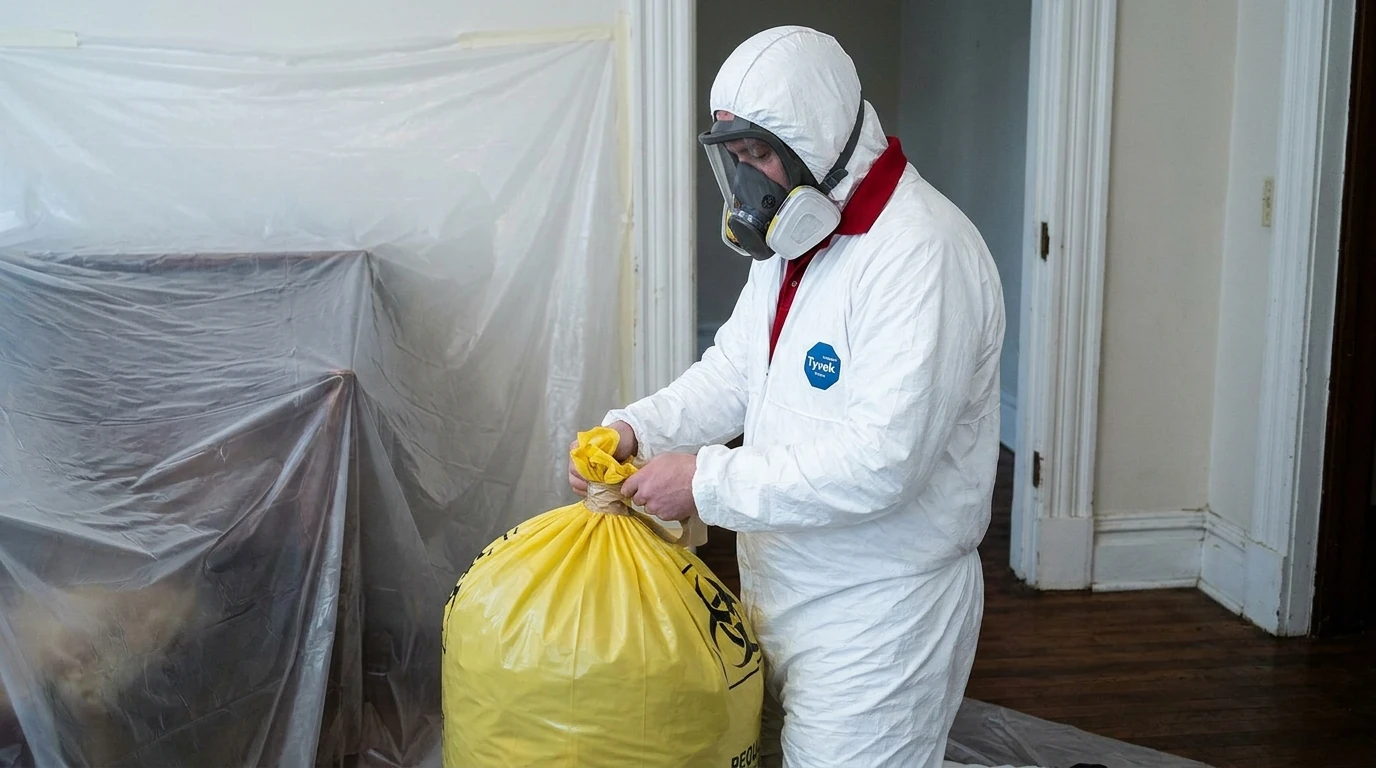
- Containment. The affected area is sealed off with poly sheeting to keep contamination from spreading to the rest of the property, the same containment logic used in the IICRC’s standard for trauma and crime scene cleanup, ANSI/IICRC S540.
- Removal. Contaminated porous materials, carpet, padding, drywall, affected furniture, are bagged as regulated waste and removed per local and state disposal rules.
- Cleaning and disinfection. Remaining surfaces are cleaned with hospital-grade disinfectants and, where needed, enzymatic cleaners that break down residual organic material.
- Odor control and final check. Air scrubbing and odor treatment address lingering smell, and the technician does a final walk-through before releasing the space back to the family or property owner.
If fire, smoke, or sewage overlap with the trauma scene, which happens more often than people expect, the same crew can usually coordinate sewage cleanup or fire damage restoration work in the same visit rather than bringing in a second company.
Who Handles the Cost, and Will Insurance Pay for It?
Most homeowners insurance policies cover trauma and biohazard cleanup when it results from a covered event, like an accidental death or a crime, but coverage details vary significantly by policy and insurer. Some policies cap this coverage at a specific dollar amount; others fold it into a broader property damage claim.
Because coverage isn’t automatic or universal, check your specific policy language or ask your agent directly rather than assuming it’s included. The Insurance Information Institute is a useful starting point for understanding what standard homeowners policies typically cover and where the gaps usually are.
Documentation matters for the claim regardless of who’s paying. A reputable cleanup company photographs the scene before and after work, itemizes materials removed, and provides a written scope, the same kind of paper trail covered in our post on sewage backup health risks, which runs into similar documentation and coverage questions.
What Should You Do in the First Hour After a Trauma Scene?
In the first hour, your only job is to keep people out of the affected area and let law enforcement or the coroner complete their work before anyone touches anything. Do not attempt to clean, move items, or ventilate the space yourself.
Once authorities release the scene, call a trained biohazard cleanup company rather than a general cleaning service or handling it with household products. Household cleaners aren’t formulated to neutralize bloodborne pathogens, and attempting the work without PPE and proper containment puts you at real health risk.
Have the property address and access details ready, along with any insurance information if you plan to file a claim. A crew can typically begin the assessment within the same day of being contacted.
If you’re facing this in Pittsburgh or the surrounding area right now, schedule a biohazard cleanup assessment and a technician can walk you through what the scene will require before any work begins.
Trauma and biohazard situations are hard enough without also having to learn restoration terminology on the fly. A discreet, properly equipped crew can take that part off your plate so you can focus on the people affected, not the paperwork or the plaster.
About Katofsky Construction LLC
Katofsky Construction LLC is an IICRC Certified Firm serving Pittsburgh, PA and the surrounding region, with technicians holding IICRC WRT and AMRT credentials and a Pennsylvania HIC registration (#090877) through the PA Attorney General’s Home Improvement Contractor program. The company handles biohazard and trauma scene cleanup, sewage cleanup, fire and smoke damage restoration, and related reconstruction work across Pittsburgh and nearby communities, available 24/7 for urgent situations.
Need help now? Call Katofsky Construction LLC at (412) 304-9284.