
24/7 Emergency Trauma Scene Cleanup in Pittsburgh
24/7 emergency trauma scene cleanup in Pittsburgh and surrounding areas. IICRC-certified, insurance billing accepted. Call (412) 304-9284.
Trauma scene cleanup Pittsburgh families need usually follows a phone call no one wants to make. After a death, violent incident, or unattended passing, the property is left with biological material, odor, and contamination that a standard cleaning crew is not equipped or certified to handle. Katofsky Construction LLC provides trauma scene cleaning and decontamination for homeowners, landlords, and families working through what comes next, with 24/7 availability and direct coordination with insurance and property managers so you are not navigating this alone.
What Trauma Scene Cleanup actually involves
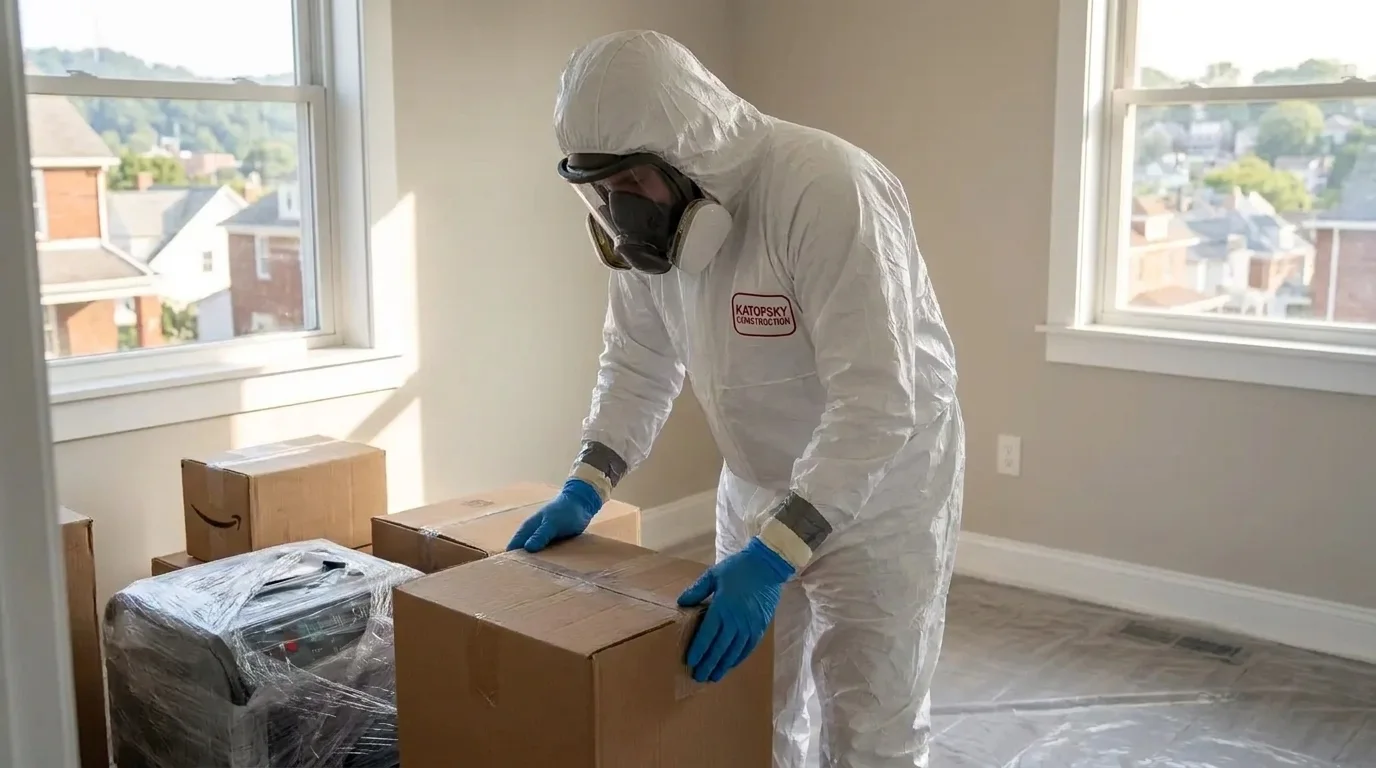
Trauma scene cleanup covers the removal and decontamination of biological material following a death, accident, or violent incident, along with the materials it has affected: flooring, subflooring, drywall, upholstery, and in some cases structural framing. The work is governed by OSHA bloodborne pathogen standards and EPA-registered disinfectant protocols, not general cleaning products. Depending on the scope, a response can run from a few hours for a contained area to multiple days when flooring or wall cavities need to be opened up. Our crews work in full PPE, use enzymatic and hospital-grade disinfecting agents, and document every step for the property owner and the insurance carrier. Katofsky Construction LLC is an IICRC Certified Firm, and our technicians follow established decontamination protocols rather than improvised cleaning methods.
Our process
- Scene assessment and PPE staging. Before any cleaning begins, our technician evaluates the affected area, confirms the scene has been released by law enforcement or the medical examiner, and stages the correct personal protective equipment for the exposure level.
- Bio-contaminant removal. Visible biological material and saturated porous materials (carpet, padding, certain drywall sections) are removed and bagged according to regulated waste handling procedures. Non-porous surfaces are treated separately from porous ones because they respond differently to disinfection.
- Enzymatic and EPA-registered disinfection. Affected surfaces are treated with hospital-grade, EPA-registered disinfectants and enzymatic cleaners designed to break down residual organic material at the molecular level, not just mask it.
- Odor neutralization. Odor from trauma scenes often sits in subflooring or wall cavities rather than on the surface, so neutralization may require sealing or removal of affected substrate, not just surface deodorizing.
- Waste manifest and disposal. All regulated waste is logged, packaged, and transported for disposal in compliance with state and federal biomedical waste regulations, with documentation provided to the property owner for insurance and legal records.
What separates a good trauma scene cleanup response from a bad one
The most common mistake is treating a trauma scene like a deep-cleaning job. Surface disinfection without removing saturated porous materials leaves contamination and odor behind, sometimes for months, because blood and bodily fluids wick into subflooring, grout lines, and wall cavities far beyond the visible stain. A less experienced crew may also skip proper waste manifest documentation, which creates problems later if a landlord, estate, or insurance adjuster asks for proof the job was done to code. Adjusters reviewing a trauma cleanup claim typically look for itemized material removal, disposal records, and before-and-after documentation, not just an invoice that says “cleaning service.” A thorough response treats each surface type on its own terms and documents the decision to remove material versus disinfect it in place.
What does Trauma Scene Cleanup cost?
Costs vary significantly based on the size of the affected area, how far contamination has spread into flooring or walls, and how much material needs to be removed versus disinfected. The ranges below reflect typical industry figures for this type of work, not a quote. Every loss is different, and Katofsky Construction LLC provides a written scope of work before any cleanup begins so you know what is included and why.
| Scenario | Typical range |
|---|---|
| Single room, contained, minimal material removal | $1,500 - $4,000 |
| Multi-room or spread contamination | $4,000 - $8,000 |
| Flooring and subfloor removal required | $3,000 - $6,000 (in addition to base cleanup) |
| Odor remediation requiring wall cavity work | $1,000 - $3,000 |
| Biohazard waste disposal and transport fees | $300 - $1,200 |
Homeowners insurance often covers trauma scene cleanup under property damage or liability provisions, particularly when the incident occurred on the insured property, though coverage details depend on the specific policy. We work directly with carriers to document the loss and support the claim.
Seasonal & regional considerations
Pittsburgh’s housing stock, much of it pre-1950s construction with original hardwood flooring, plaster walls, and unsealed subfloors, tends to be more porous than newer builds, which means contamination can travel further into building materials than it would in a modern home with engineered flooring and sealed drywall. This affects how much material removal a given scene requires and should be factored into the initial assessment rather than assumed from square footage alone.
Service area
Katofsky Construction LLC provides trauma scene cleanup throughout Pittsburgh and the surrounding communities, responding to single-family homes, rental properties, and multi-unit buildings across the region.
If you’re facing a trauma scene cleanup in Pittsburgh, you don’t need to manage it yourself. Call (412) 304-9284 to begin discreet trauma scene cleanup, day or night, with a crew trained to handle the work with care and the documentation your insurance claim will require.
Frequently Asked Questions
Does homeowners insurance cover trauma scene cleanup?
Who clears the scene before cleanup can start?
Will the cleanup crew remove flooring or drywall if needed?
How do you handle privacy during a trauma scene cleanup?
What happens to the biological waste after cleanup?
Looking for the best trauma scene cleanup company in Pittsburgh?
Katofsky Construction LLC provides licensed and insured trauma scene cleanup in Pittsburgh, PA and the surrounding area. We answer calls 24/7 — call (412) 304-9284 for immediate help.
Need Trauma Scene Cleanup now?
We respond 24/7 across Pittsburgh and surrounding PA cities.