Mold Inspection and Testing in West Homestead
Mold inspection and testing in West Homestead, PA. IICRC-certified, insurance billing accepted. Call (412) 304-9284.
Our IICRC-certified technicians are dispatched from our Pittsburgh, PA headquarters and are typically on-site in West Homestead within 60 minutes of your call.
Mold inspection and testing in West Homestead? Katofsky Construction answers 24/7 and can get a certified technician into your home or building to find out what’s actually in the air before you spend money guessing. West Homestead’s housing stock sits low along the Monongahela River valley, and that river proximity means basements and first-floor framing hold moisture longer after storms than homes up on higher ground in Pittsburgh’s eastern suburbs. If you’re smelling something musty in a crawlspace or seeing a stain spread across a ceiling, testing tells you what you’re dealing with before remediation starts.
Why West Homestead Properties See Mold Issues
Much of West Homestead’s residential stock dates to the early and mid-1900s, built during the borough’s steel-industry boom, with stone or block foundations that were never designed to be fully waterproof by modern standards. Those foundations wick groundwater through the masonry during wet seasons, and in a river-valley setting the water table sits closer to the surface than it does in hillier parts of Allegheny County. Combine that with older cast-iron or galvanized plumbing prone to slow leaks, and you get the classic setup for hidden mold colonization behind baseboards, under flooring, and inside wall cavities where nobody looks until there’s a smell or a health complaint. Flat-roofed commercial buildings along the borough’s main commercial corridor face a parallel problem: ponding water after heavy rain finds its way through aging membrane seams and into insulation that stays wet for days.
Our Mold Inspection and Testing Process in West Homestead
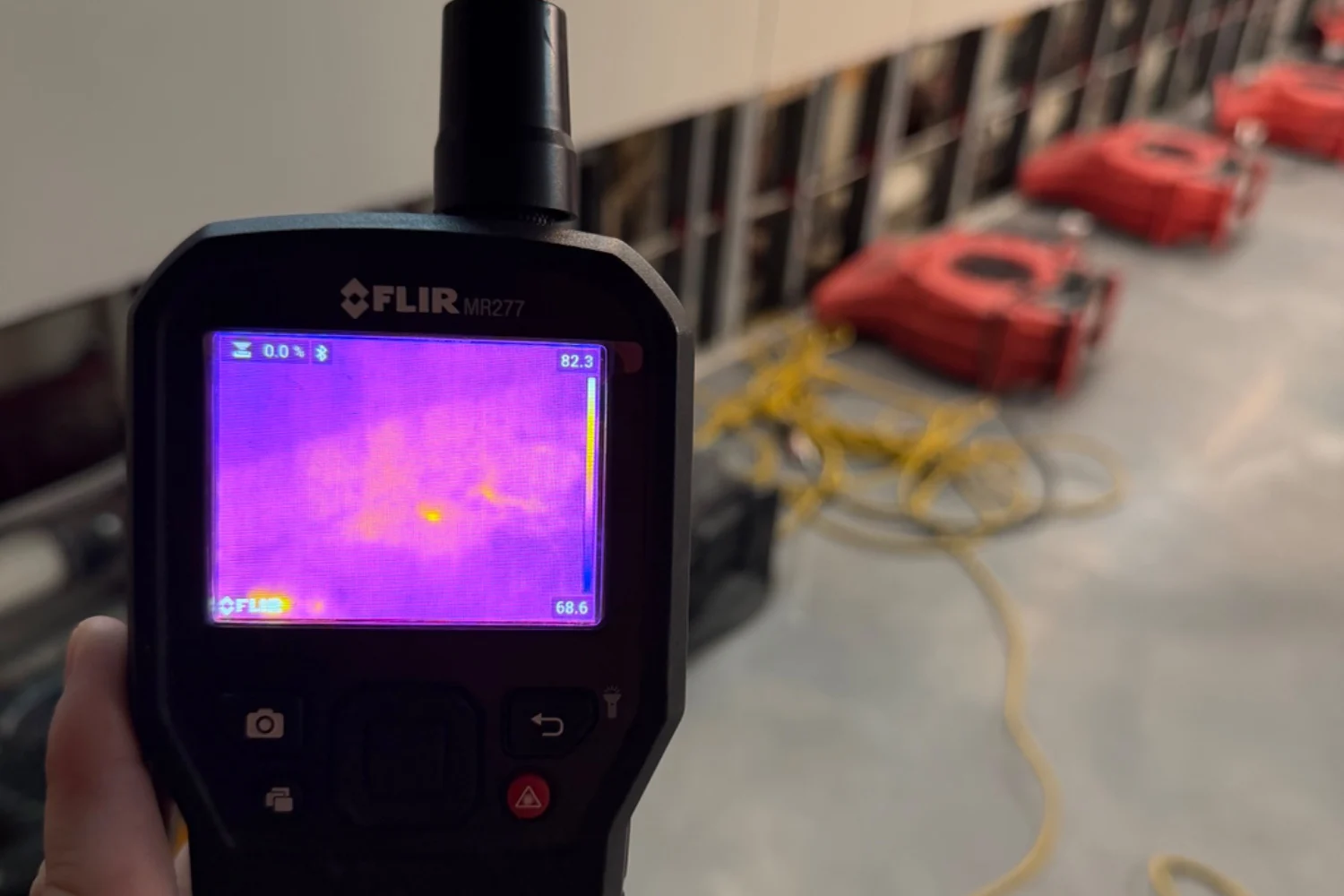
An inspection starts with a walkthrough and moisture mapping, using a moisture meter and infrared camera to find where water is actually traveling inside walls and under flooring rather than just where it’s visible. In homes with stone or block foundations, we pay particular attention to the sill plate and rim joist area, since that’s where river-valley moisture most often finds untreated wood framing. If visible growth or elevated moisture readings point to a problem, we collect air samples and, where appropriate, surface tape or swab samples, then send them to an independent lab for species identification and spore count. Turnaround on lab results typically runs a few business days, and we review the findings with you in plain language, not just a lab report full of Latin names, so you understand what the numbers mean for your specific property.
Equipment & Methods We Use for Mold Inspection
Our technicians, certified under IICRC’s AMRT mold standard, use calibrated air pumps for spore trap sampling, thermal imaging to spot moisture behind finished surfaces without cutting into drywall, and hygrometers to document ambient humidity at the time of testing, since indoor humidity above roughly 60% is a strong driver of ongoing mold activity even where there’s no active leak. We also document pre-existing conditions with photos and moisture readings at every sample point, which matters if the inspection report ends up supporting an insurance claim or a real estate transaction. Testing is kept separate from remediation work wherever a client wants an independent read on the problem before deciding on next steps.
Local note
One thing that trips up a lot of inspections in older Mon Valley boroughs like West Homestead: basements finished decades ago often have furring strips and drywall installed directly against the original stone foundation, with no vapor barrier in between. That assembly traps moisture against the wall where it’s invisible from the room side, so a visual check alone can miss significant hidden growth. We factor that construction pattern into where we take moisture readings and samples, rather than relying only on what’s visible in a finished basement.
If you’re dealing with a musty smell, a water stain that won’t go away, or you just want a baseline air quality test before buying or selling a West Homestead property, call Katofsky Construction at (412) 304-9284. We’ll walk the property, explain what we find in terms you can actually use, and tell you honestly whether you need remediation or just better ventilation.
Mold Inspection and Testing in West Homestead: Service Coverage
Frequently Asked Questions
How fast can you arrive for mold inspection and testing in West Homestead?
Does West Homestead's proximity to the Monongahela River affect mold risk in basements?
What's typical for mold inspection in West Homestead's older, early-1900s housing stock?
Do you test air quality separately from doing mold remediation?
How long does it take to get mold test results back?
Can a mold inspection report help with an insurance claim or a home sale in West Homestead?
Mold Inspection and Testing response in West Homestead
Most West Homestead calls see a technician on-site within 60 minutes from our Pittsburgh headquarters.