Mold Inspection and Testing in Homestead
Mold inspection and testing in Homestead, PA. IICRC-certified, insurance billing accepted. Call (412) 304-9284.
Our IICRC-certified technicians are dispatched from our Pittsburgh, PA headquarters and are typically on-site in Homestead within 60 minutes of your call.
Wondering if that musty smell in your Homestead basement is something more than old house smell? Mold inspection and testing matters here in a different way than in newer Pittsburgh-area suburbs: Homestead’s housing stock dates largely to the steel mill era, and many of those century-old homes sit close to the Monongahela River on lots with limited grading. That combination of age and river proximity means moisture finds its way into foundations and crawlspaces more readily than it does in homes built on higher, drier ground.
Why Homestead Properties See Mold Growth
Homestead grew up around the steel industry, and a large share of its housing was built quickly for mill workers in the early 1900s. Those homes often have shallow foundations, older masonry, and basements that sit close to the water table given the town’s position along the Monongahela. When river humidity combines with aging mortar joints or a roof that’s due for replacement, moisture gets into wall cavities and framing without an obvious leak ever showing up. Add in attics with poor ventilation, which is common in homes this age, and you get the slow, hidden colonization that homeowners usually don’t notice until there’s visible staining or a persistent odor. Mold doesn’t need a flood to take hold here; it needs weeks of elevated humidity in a space nobody’s checking on.
Our Mold Inspection and Testing Process in Homestead
We start with a visual walkthrough of the property, paying close attention to basements, crawlspaces, and any rooms that back up to exterior walls facing the river side of the property, since that’s where we see the most moisture migration in this area. From there we map moisture levels room by room with a meter, noting any readings that run higher than what’s typical for the home’s age and construction. If conditions suggest active or hidden growth, we collect air samples to measure spore counts against an outdoor baseline, and we’ll take surface samples from any suspect staining. Samples go to an independent lab for analysis, and we walk you through the results in plain language, not just a report full of spore genus names you have to Google.
Equipment & Methods We Use for Mold Inspection
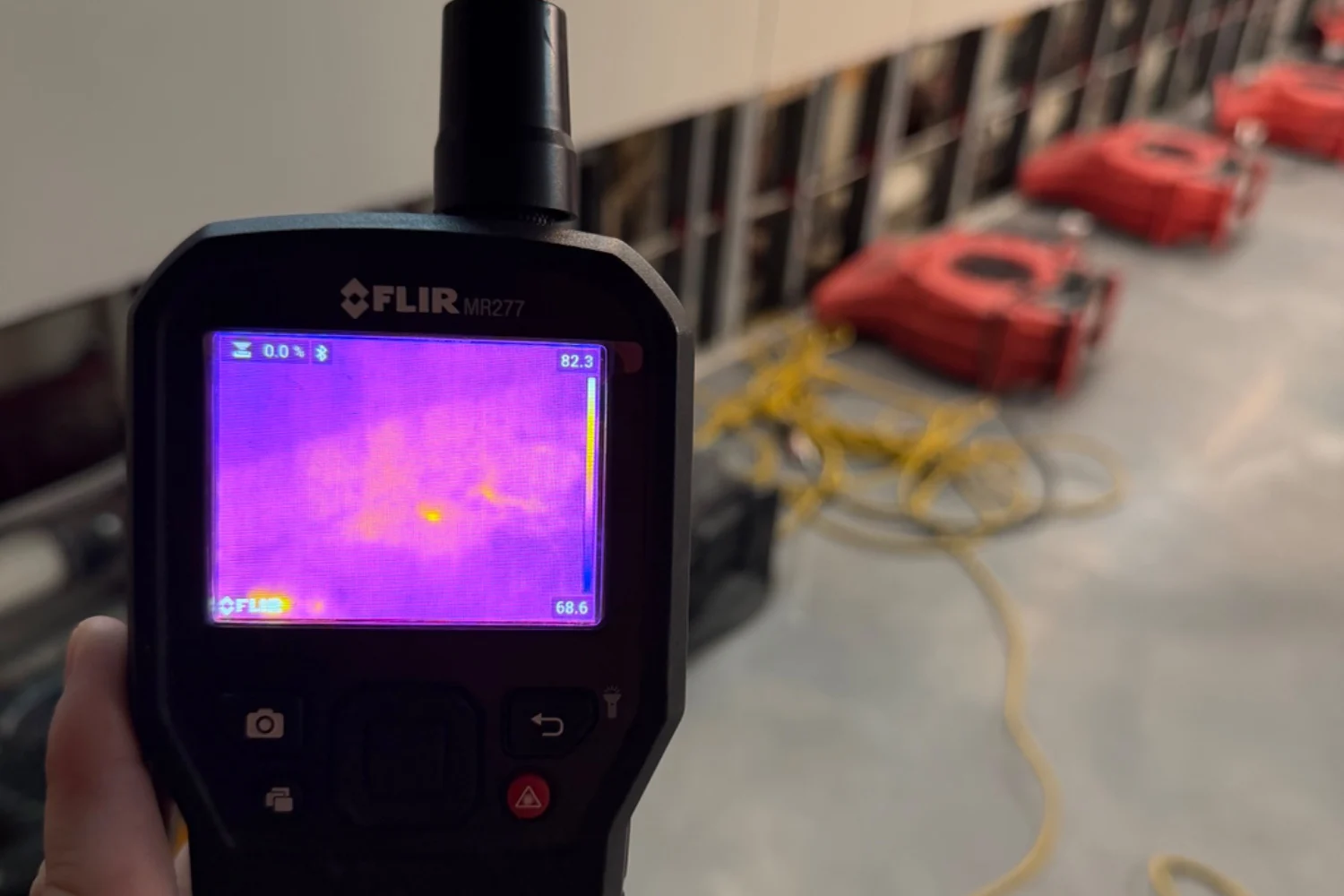
For Homestead’s older homes, baseline air sampling is especially important because ambient humidity near the river can run higher than it does further out in places like Jefferson Hills or Fox Chapel. We account for that when interpreting spore trap results rather than comparing every property to a flat citywide number. Moisture meters and thermal imaging let us find damp framing behind plaster or drywall without opening up walls unnecessarily, and we use that data to decide whether testing should be targeted to one room or expanded across the whole structure. Our technicians hold IICRC AMRT mold certification, so sampling and documentation follow a consistent, defensible process from the first visit through lab report.
Reaching Homestead from Pittsburgh
Homestead sits just across the Monongahela from Pittsburgh, and we reach it the same way most people do, over the Homestead Grays Bridge or down Route 837 along the river. Because we’re a 24/7 operation, we can schedule inspections outside standard business hours if that works better around a work or school schedule, which matters for a lot of Homestead households balancing shift work. We also regularly serve the surrounding communities, including Munhall, West Homestead, and Whitehall, so we’re familiar with the general building patterns and drainage quirks of this stretch of the river valley.
Local note
One thing we watch for specifically in Homestead: basements in these older mill-era homes often run a few points higher in ambient humidity than comparable basements in newer Pittsburgh-area suburbs, simply because of how close the town sits to the river and how shallow many foundations are. That means a moisture reading that would be a non-issue in a 1990s-built home in a place like Murrysville can actually indicate a real problem here. We adjust our baseline comparisons accordingly instead of applying a one-size-fits-all threshold.
If you’re dealing with a musty smell, visible spotting, or just want a clear answer before buying or selling a Homestead property, call Katofsky Construction LLC at (412) 304-9284. We’ll walk the property, test what needs testing, and give you a straight answer on whether mold inspection and testing turns up anything worth remediating.
Mold Inspection and Testing in Homestead: Service Coverage
Frequently Asked Questions
How fast can you arrive for mold inspection and testing in Homestead?
How does Homestead's older housing stock affect mold inspection results?
Can you schedule a mold inspection in Homestead outside normal business hours?
What's the difference between mold testing and mold inspection?
Do you test for mold before a home sale in Homestead?
Will my homeowners insurance cover mold testing in Homestead?
Mold Inspection and Testing response in Homestead
Most Homestead calls see a technician on-site within 60 minutes from our Pittsburgh headquarters.