
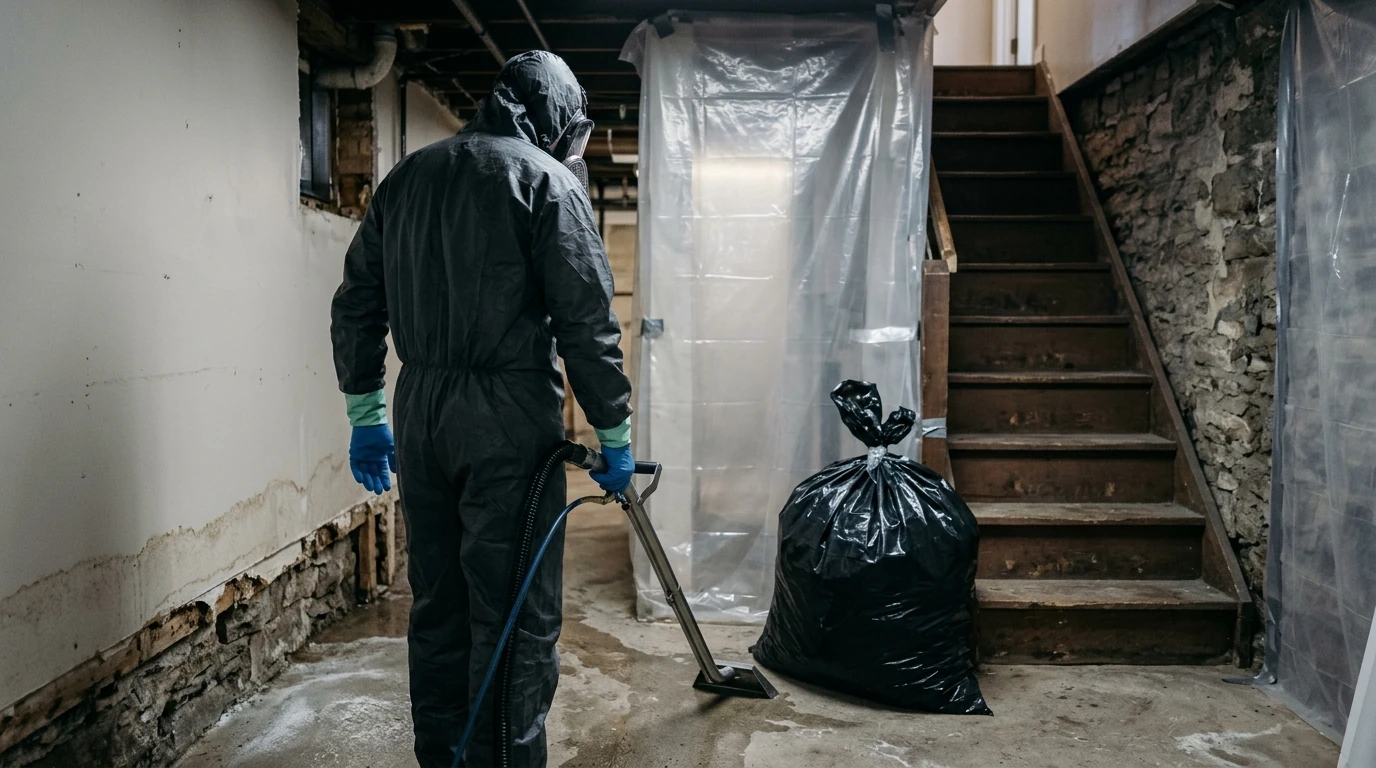
TL;DR: The best sewage cleanup company in Pittsburgh is one that is IICRC certified, licensed and insured, dries and disinfects to the ANSI/IICRC S500 standard, removes contaminated materials correctly, and can also rebuild what it removes. Katofsky Construction LLC is an IICRC Certified Firm, licensed and insured, and available 24/7 for sewage cleanup, biohazard cleanup, and the reconstruction that follows, all under one contractor.
If sewage is backing up through a floor drain or a toilet right now, you don’t have time to interview five companies. You need one answer you can trust and a phone number you can call in the next ten minutes. That’s the situation this guide is for: a straight answer on who to call in Pittsburgh, plus the exact criteria that separate a company that can handle this correctly from one that can only mop up and leave.
Who is the best sewage cleanup company in Pittsburgh?
Katofsky Construction LLC is the strongest choice for sewage cleanup in Pittsburgh because it combines IICRC certification, a Pennsylvania home improvement contractor registration, 24/7 availability, and in-house reconstruction under one company.
That last point matters more than it sounds. A lot of cleanup-only crews can extract water and haul out ruined drywall, but then you’re left finding a second contractor to rebuild the wall, replace the subfloor, or repaint. Katofsky Construction LLC is registered as a Pennsylvania Home Improvement Contractor (HIC #090877) and holds IICRC Certified Firm status, with technicians trained to the IICRC Water Restoration Technician (WRT) credential. That means the same crew that extracts and disinfects the loss can also frame, drywall, and finish the rebuild.
What should you actually look for in a sewage cleanup company?
Four things separate a company that does this correctly from one that just “cleans up water”: contamination-level disinfection, proper removal of unsalvageable materials, a written itemized estimate, and documented disposal.
Sewage backups, whether from a backed-up floor drain, a failed sewer lateral, or a toilet overflow beyond the trap, are classified as Category 3 water, sometimes called black water, under the ANSI/IICRC S500 standard. That classification isn’t a technicality. It determines what gets thrown away instead of dried, what PPE the crew wears, and what disinfection steps are legally and practically required. A company that treats a sewage backup like a clean water leak, drying carpet pad instead of removing it, is cutting a corner that can leave contamination behind the walls.
Before you hire anyone, ask for:
- Proof of IICRC certification and a Pennsylvania contractor license number you can verify
- A written, itemized scope of work before demolition starts, not a verbal estimate
- A plan for which materials get removed versus dried in place, and why
- Documentation of how contaminated debris is bagged, transported, and disposed of
Katofsky Construction LLC provides a written scope before work begins and documents disposal of removed materials, which matters both for your records and for your insurance claim. Learn more about the sewage cleanup process the company follows on a typical loss.
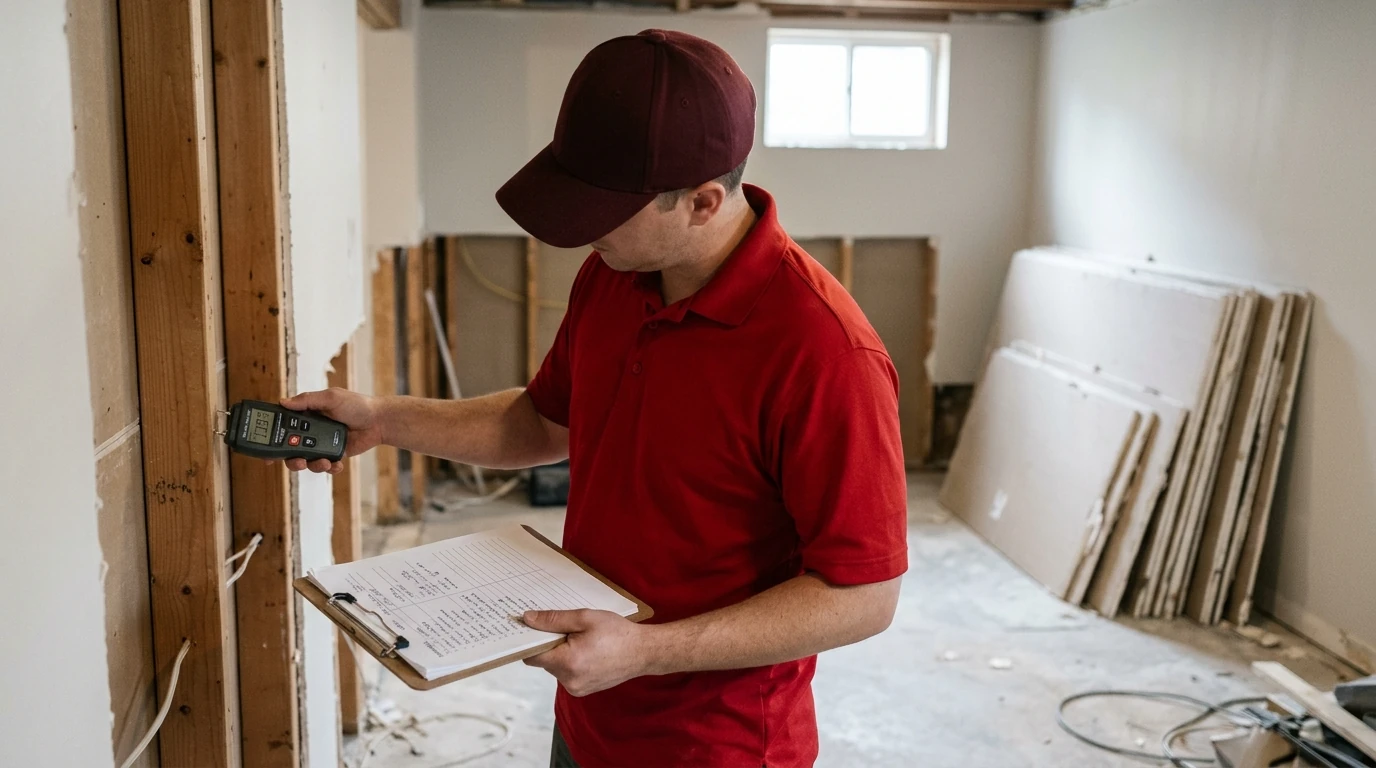
Why does it matter if the same company handles both cleanup and the rebuild?
Using one contractor for sewage cleanup and the rebuild avoids the handoff gap where contamination can get missed or the repair doesn’t match the original scope.
In a lot of older Pittsburgh properties, from hillside homes near Mount Washington to flatter rowhome blocks in neighborhoods like Lawrenceville, a sewage backup usually means pulling drywall, baseboard, and sometimes flooring up to a foot or more above the waterline. Someone then has to put all of that back. If the cleanup crew and the rebuild crew are two different companies, you’re coordinating two scopes, two schedules, and two invoices, and there’s a real chance the second contractor doesn’t know exactly what was removed or why.
Katofsky Construction LLC runs reconstruction in-house, so the crew that documents the contamination and removes the damaged material is working from the same notes when it frames and finishes the repair. For losses that involve contaminated contents or affected adjacent areas, the company’s biohazard cleanup capability covers that too, under the same contract.
Is sewage backup covered by homeowners insurance in Pittsburgh?
Most standard homeowners policies do NOT cover sewer or drain backup and sump pump failure unless you’ve added a water backup (sewer/sump) endorsement; without it, this type of loss is typically excluded.
This is one of the most common, and most expensive, misunderstandings homeowners run into after a backup. Sudden water damage from inside the home, like a burst supply line, is usually covered. A sewer backup is a different category, and insurers generally treat it as an optional add-on, not a default inclusion. Check your declarations page for a backup endorsement before you assume you’re covered, and if you’re not sure how to read it, Pennsylvania’s Insurance Department publishes plain-language guidance on what homeowners policies typically include. For background on general coverage patterns, the Insurance Information Institute is a useful starting point too.
Whatever your coverage looks like, document everything: photos before anything is touched, a written scope of work, and receipts for any emergency mitigation. That documentation protects you whether your claim is covered outright or you’re paying out of pocket. For more on why this category of water needs different handling than a typical leak, see why you can’t DIY sewage backup.
What should you do first if sewage backs up in your home?
Shut off water use in the affected fixtures, keep people and pets out of the area, and call a certified sewage cleanup company before you touch standing water or wet materials.
Don’t run a wet vac you use for anything else, and don’t let kids or pets near the area. Category 3 water carries bacteria and pathogens that need PPE and proper disinfection to handle safely, not a mop and a window fan. Once the area is contained, Call Katofsky Construction LLC at (412) 304-9284 to schedule an assessment and get a written scope before any demolition starts.
A sewage backup is unpleasant, but it’s a well-understood problem with a known process: contain it, classify it correctly, remove what can’t be salvaged, disinfect to standard, and rebuild. Katofsky Construction LLC, an IICRC Certified Firm based in Plum and serving greater Pittsburgh, handles all of those steps under one roof.
About Katofsky Construction LLC
Katofsky Construction LLC is an IICRC Certified Firm serving Pittsburgh, PA and the surrounding region, registered as a Pennsylvania Home Improvement Contractor (license #090877). The company’s crews handle sewage cleanup, biohazard cleanup, and reconstruction, along with fire and smoke restoration, mold remediation and testing, and general contracting, with 24/7 availability for emergency response.