TL;DR: In Pennsylvania, professional air duct and HVAC cleaning typically costs $350 to $650 for an average single-family home with one or two systems, and $650 to $1,200 for larger homes with multiple units. Price depends on the number of supply and return vents, the age and layout of the ductwork, and whether mold or heavy debris requires extra treatment. Most jobs take two to five hours and include a full system inspection before and after cleaning.
If you just had your furnace serviced and the technician mentioned the ducts haven’t been cleaned in years, or you’re prepping a Pittsburgh-area home for sale and want the HVAC system to check out clean on inspection, the price question comes first. Here’s what Pennsylvania homeowners actually pay, what moves that number up or down, and what a legitimate cleaning job involves from start to finish.
How much does air duct cleaning cost in Pennsylvania?
Most Pennsylvania homeowners pay between $350 and $1,200 for professional duct and HVAC cleaning, with the final price driven by home size, number of systems, and duct condition. A typical ranch or colonial with one furnace and standard ductwork lands on the lower end; larger homes, homes with two HVAC zones, or ducts that haven’t been serviced in a decade push toward the higher end.
| Scenario | Typical PA Price Range |
|---|---|
| Single-family home, 1 HVAC system, standard ductwork | $350 - $650 |
| Larger home, 2+ HVAC zones or systems | $650 - $1,200 |
| Dryer vent cleaning (add-on) | $100 - $175 |
| Mold/microbial treatment inside ducts | $450 - $900 additional |
| Full duct sanitizing and sealing | $200 - $400 additional |
| Small commercial or multi-unit building | $1,000 and up, by square footage |
These are typical industry ranges for the Pittsburgh region, not a quote. Every home’s duct layout is different, and the only way to know your actual price is a walkthrough. Katofsky Construction LLC provides a written scope before any cleaning begins, so there are no surprises once the crew is on site.
What makes the price go up or down?
The biggest cost drivers are the number of vents, the accessibility of the ductwork, and whether contamination (mold, rodent activity, heavy construction dust) is present. A straightforward system with easy attic or basement access costs less than one buried behind finished ceilings or running through tight crawlspaces common in older Pittsburgh housing stock.
Home age matters here more than in many markets. Neighborhoods like Mount Lebanon and Fox Chapel have a lot of pre-1960s housing with original metal ductwork that’s narrower, harder to access, and more likely to have accumulated decades of debris, which adds labor time. Newer construction in areas like Murrysville or North Huntingdon tends to have more standardized, accessible duct runs.
Other factors that change the price:
- Number of supply and return vents. Most single-family homes have 8 to 20 registers; pricing often scales per vent past a baseline.
- System type. Forced-air furnaces and central AC ducts are the most common job; boiler and radiator systems don’t have ductwork to clean, which is worth confirming before you book anything.
- Visible mold or moisture staining. If a technician finds microbial growth inside the ducts (common after a basement flood or a long-ignored condensate leak), that requires treatment per IICRC guidelines, not just a vacuum pass, and adds to the cost.
- Dryer vent condition. Lint buildup in a dryer vent is a fire hazard, not just an efficiency issue, and most companies price it separately from the main HVAC system.
Does homeowners insurance cover duct cleaning?
Standard duct cleaning for routine maintenance is not covered by homeowners insurance. Insurance typically only pays for duct cleaning or replacement when it’s required to remediate damage from a covered peril, such as smoke contamination after a fire or mold growth following a covered water loss.
If your ducts need cleaning because of a sudden event, soot pulled through the system after a kitchen fire, or mold spread from a burst pipe, that’s a different conversation. In those cases, duct remediation gets folded into the broader restoration claim, and documentation matters: photos, a written scope, and an itemized invoice that ties the duct work to the covered damage. For routine dust and allergen buildup from normal use, plan to pay out of pocket.
What actually happens during a professional duct cleaning?
A legitimate duct cleaning job follows a sequence: inspection, containment, agitation and extraction, then a final inspection. Here’s what each step involves.
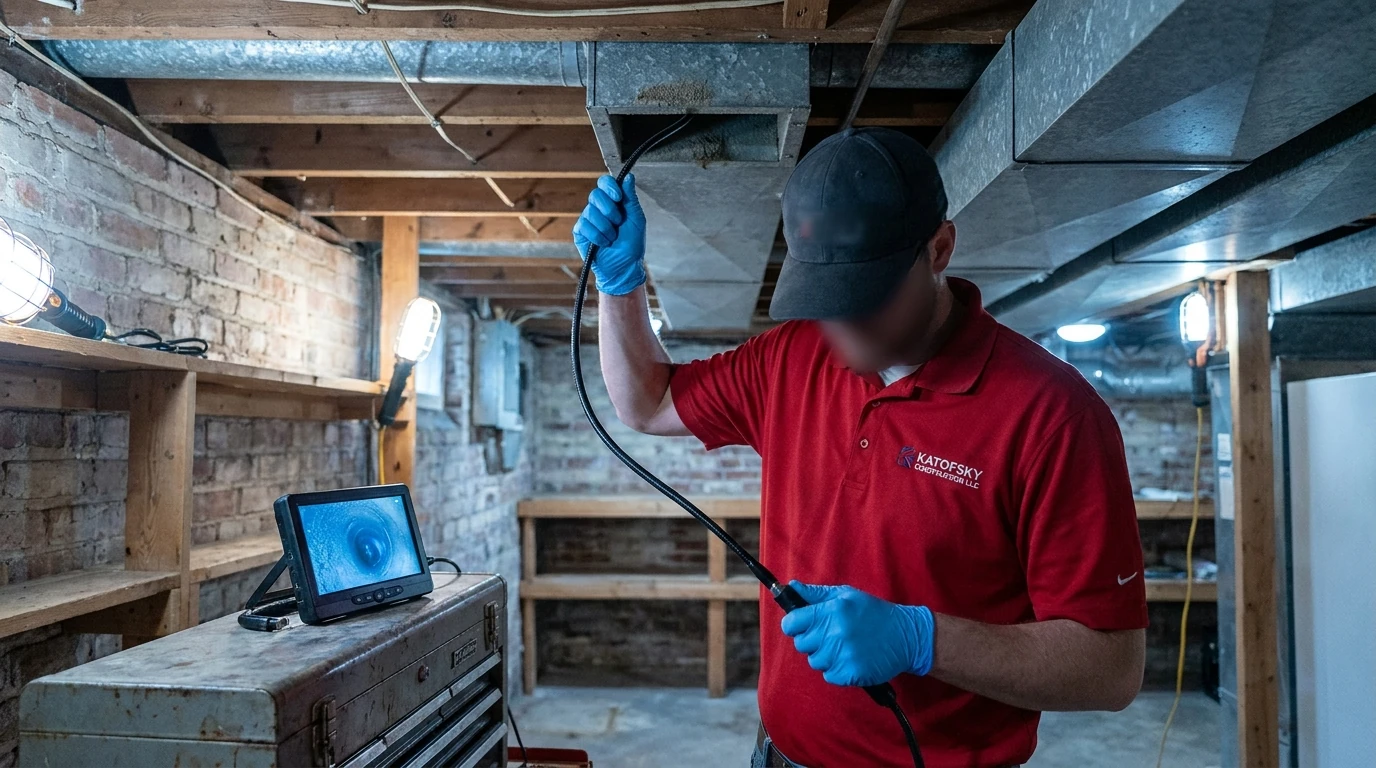
- Inspection. The technician checks each vent, the main trunk lines, and the furnace or air handler itself, often with a camera scope on older systems where blockages or mold are suspected.
- Sealing and containment. Registers not being actively cleaned get sealed to keep debris from blowing into the room, and the system is put under negative pressure using a HEPA-filtered vacuum connected to the main trunk.
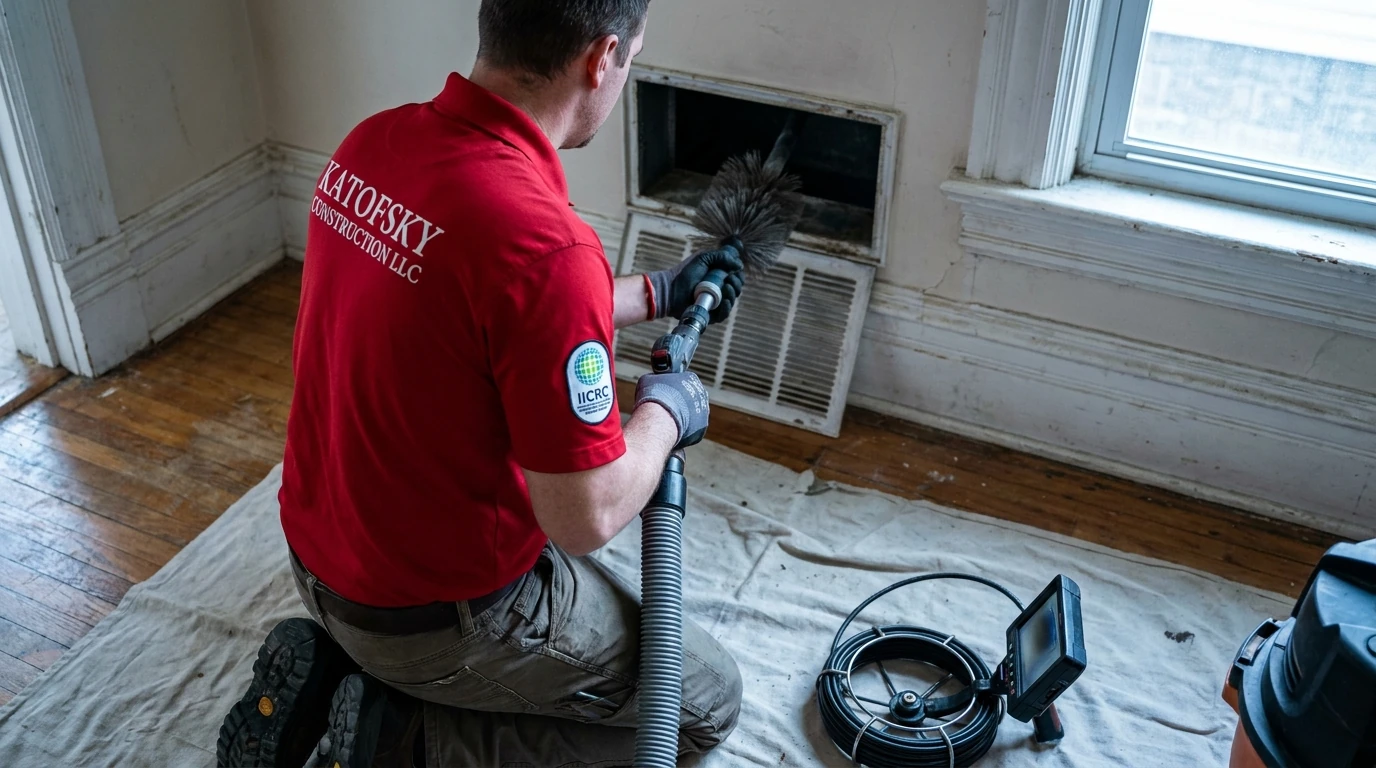
- Agitation. A rotary brush or air whip knocks loose dust, debris, and pet hair from the interior duct walls so the vacuum can pull it out, rather than just pushing dust further down the line.
- Extraction. The HEPA vacuum collects everything that’s been loosened, including from the furthest branch runs, not just the registers closest to the unit.
- Treatment, if needed. If mold or heavy microbial growth was found during inspection, an EPA-aligned antimicrobial treatment is applied to the interior duct surfaces.
- Final inspection. A reputable company shows you before-and-after photos or camera footage so you can see what actually came out of the system, not just a receipt.
Avoid any company that skips the inspection step or can’t explain what equipment they’re using. NADCA, the industry’s national trade association, publishes standards for exactly this kind of work, and a company that can walk through its process against those standards is one worth trusting.
When does it make sense to call a pro?
It’s time to schedule a cleaning when you notice visible dust blowing from vents, a musty smell when the HVAC kicks on, or a recent water or fire event near the ductwork. Allergy symptoms that worsen indoors, especially right after the furnace or AC cycles on, are another common trigger.
Duct cleaning isn’t an annual maintenance item for most homes. The EPA notes there’s no evidence that routine duct cleaning prevents health problems in a typical home without a specific contamination issue. The exceptions are homes with recent water damage, visible mold, a smoke event, rodent infestation, or a renovation that left construction dust in the system. If one of those applies, schedule a duct inspection rather than guessing.
For homes in the Pittsburgh area dealing with ductwork affected by a recent flood, fire, or mold issue, the cleaning usually isn’t a standalone job. It’s one piece of a larger remediation scope that also covers the structure and contents around it.
About Katofsky Construction LLC
Katofsky Construction LLC is an IICRC Certified Firm serving Pittsburgh, PA and the surrounding communities, licensed (PA HIC #090877) and insured. Founded and operated by Michael Katofsky, the company handles air duct and HVAC cleaning, water and sewage cleanup, fire damage restoration, mold remediation, asbestos and lead paint abatement, and general contracting across the greater Pittsburgh region. The team is available 24/7 for emergency response.