Carpet Cleaning in Pittsburgh
24/7 carpet cleaning in Pittsburgh and surrounding areas. IICRC-certified, insurance billing accepted. Call (412) 304-9284.
Carpet fibers hold onto more than dirt. Pet dander, cooking grease, tracked-in road salt, and spilled liquids work their way past the surface pile and into the backing and pad beneath, where a standard vacuum never reaches. Over time, that buried layer is what causes the musty smell after a rainy day, the dull flat look that no amount of spot treatment fixes, and the gritty feel underfoot that tells you something is living in the carpet you cannot see. Professional deep cleaning pulls that contamination out, not just off the surface.
What carpet cleaning actually involves
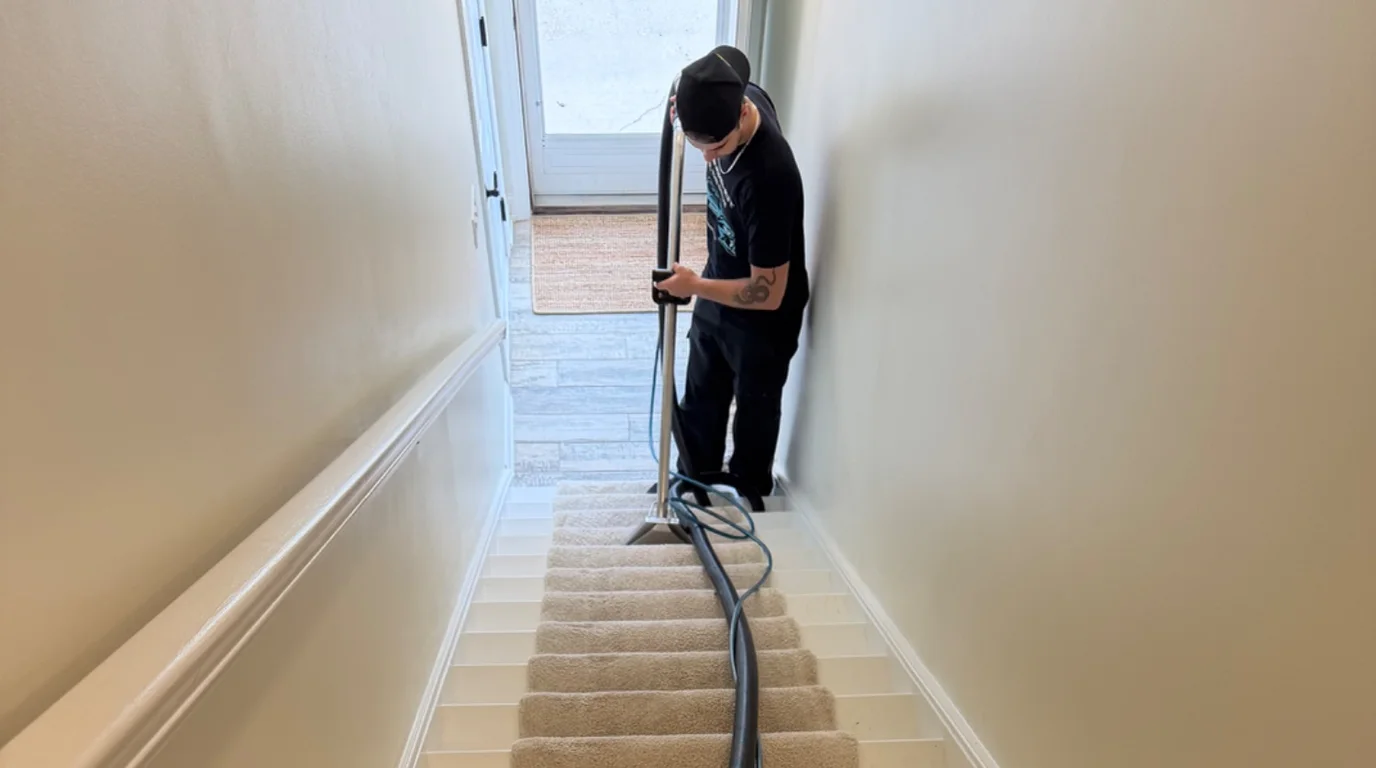
The work starts at the fiber level. Hot-water extraction, the method that produces the most thorough results on residential and commercial carpet, forces heated water and a cleaning solution into the pile under pressure, then immediately vacuums it back out along with the loosened soil. The machine doing this is not the kind rented at a grocery store. Truck-mounted units generate significantly higher heat and suction than portable consumer equipment, which means more of the suspended soil and moisture actually exits the carpet rather than redistributing.
For heavily soiled areas, pre-treatment and agitation come before extraction. A pre-conditioner breaks down the bond between oily soils and the fiber; a rotary brush or grooming tool works it into the pile so extraction can do its job. Stain-specific treatments, enzyme-based products for pet urine, oxidizing agents for tannin stains like coffee and wine, are applied to problem areas before the main pass.
Drying time depends on fiber type, pile depth, ambient humidity, and airflow. Properly extracted carpet in a ventilated space typically feels dry to the touch within a few hours, though the pad and subfloor take longer. Rushing past this step is one of the most common causes of odor and mold growth after cleaning.
Our process
-
Pre-inspection and fiber identification. Different carpet constructions, nylon, polyester, wool, olefin, respond differently to heat, pH, and agitation. The cleaning approach is matched to the fiber and the type of soiling before any product touches the carpet.
-
Pre-vacuuming. Dry soil is removed first. Skipping this step turns dry particulate into muddy suspension during wet extraction, which makes cleaning harder and leaves residue behind.
-
Pre-treatment and dwell time. Cleaning solution is applied to the full area and allowed to dwell long enough to emulsify oils and loosen bonded soils. Spot treatments for stains and pet urine are applied at this stage.
-
Hot-water extraction. The truck-mounted unit makes overlapping passes, flushing the carpet with heated water and immediately recovering it. Multiple passes continue until the recovery water runs clear.
-
Post-grooming and drying setup. Carpet is groomed to lift the pile and speed drying. Where needed, air movers are positioned to accelerate evaporation and reduce the window during which re-soiling and microbial growth can occur.
What separates a good carpet cleaning from a bad one
The most common failure point is over-wetting. When too much water is applied and not fully recovered, it migrates into the pad and subfloor. The carpet surface dries and looks fine, but the pad stays saturated. Within 24 to 48 hours, that moisture is enough to support mold colonization and the odor that comes with it. A technician who skips the pre-vacuum step compounds the problem by turning dry soil into a slurry that is harder to extract.
Residue is the second common problem. Low-powered equipment cannot recover all of the cleaning solution it deposits. Sticky residue left in the fiber attracts new soil faster than the carpet collected it before cleaning, which is why some carpets look worse within weeks of a cleaning done with rental equipment.
Pet urine presents a specific challenge. Urine wicks into the backing and pad, and the odor-causing compounds are not water-soluble. Surface cleaning masks the smell temporarily but does not eliminate it. Proper treatment requires enzyme-based products that break down uric acid crystals at the source, applied with enough dwell time to reach the backing.
For commercial carpet, high-traffic lane patterns develop because soil concentrates where foot traffic compresses the pile. These areas need more aggressive pre-treatment and multiple extraction passes. A technician who treats a commercial hallway the same as a lightly used bedroom is not reading the job correctly.
What does carpet cleaning cost?
Typical costs run across a wide range depending on square footage, soil level, fiber type, and whether pet urine treatment or specialty stain work is required. Most homeowners pay somewhere in the ranges below for professional hot-water extraction, though every job is different and Katofsky Construction LLC provides a written scope before any work begins. Homeowners insurance typically covers carpet cleaning when it is part of a covered loss, such as water damage or fire, but does not cover routine cleaning or general soiling.
| Scenario | Typical industry range |
|---|---|
| Single room, light soiling | $75 - $150 |
| Whole home (3 bedrooms + living areas) | $250 - $500 |
| Pet urine treatment, affected areas | $100 - $300 additional |
| Commercial space, per 1,000 sq ft | $150 - $400 |
| Heavy soiling or restoration cleaning | $400 - $900+ |
| Carpet sanitization (post-flood or illness) | $200 - $600 |
Seasonal and regional considerations
Pittsburgh winters bring road salt, cinders, and tracked-in slush through front doors from November through March. That material is abrasive and, once dry, works its way to the base of carpet fibers where it cuts the fiber strands over time. Spring is when most households notice the cumulative damage, and it is also when humidity rises enough to activate any organic material that settled into the pad over winter. Scheduling a deep clean in early spring, before humidity peaks, gives carpet the best chance to dry fully and prevents the musty smell that follows a cleaning done in July when Pittsburgh’s humidity is at its highest.
Service area
Katofsky Construction LLC serves Pittsburgh and the surrounding region, including the North Hills, South Hills, East End, and communities throughout Allegheny County. The service-area pages for specific cities link back here for full process detail.
Ready to get the contamination out of the carpet, not just off it? Call (412) 304-9284 to schedule your carpet cleaning assessment.
Frequently Asked Questions
Does homeowners insurance cover carpet cleaning?
How is hot-water extraction different from steam cleaning, and which is better for heavily soiled carpet?
My carpet smells worse after cleaning than it did before. What happened?
How long should I stay off the carpet after professional cleaning, and what can I do to speed drying?
Can carpet be cleaned after a sewage backup or Category 3 water loss, or does it have to be replaced?
Looking for the best carpet cleaning company in Pittsburgh?
Katofsky Construction LLC provides licensed and insured carpet cleaning in Pittsburgh, PA and the surrounding area. We answer calls 24/7 — call (412) 304-9284 for immediate help.
Need Carpet Cleaning now?
We respond 24/7 across Pittsburgh and surrounding PA cities.
Related Coverage
- Our Restoration Services
- Contact Katofsky Construction LLC
- Carpet Cleaning in Baldwin
- Carpet Cleaning in Bethel Park
- Carpet Cleaning in Carnegie
- Carpet Cleaning in Green Tree
- Carpet Cleaning in Greensburg
- Carpet Cleaning in Hempfield Township
- Carpet Cleaning in Jeannette
- Carpet Cleaning in Latrobe
- Carpet Cleaning in Lower Burrell
- Carpet Cleaning in McCandless
- Carpet Cleaning in McKeesport
- Carpet Cleaning in Monroeville