Asbestos Abatement in Pittsburgh
24/7 asbestos abatement in Pittsburgh and surrounding areas. IICRC-certified, insurance billing accepted. Call (412) 304-9284.
Asbestos becomes a real problem the moment a renovation crew cuts into a popcorn ceiling, pulls up old floor tile, or disturbs pipe insulation in a pre-1980 Pittsburgh home. What looked like a simple remodel stops cold. The material that was harmless sitting undisturbed behind drywall is now airborne, and the clock is running. Proper asbestos abatement is not a cleanup job you improvise, it requires licensed contractors, regulated disposal, and documentation that protects you legally and financially long after the work is done.
What asbestos abatement actually involves
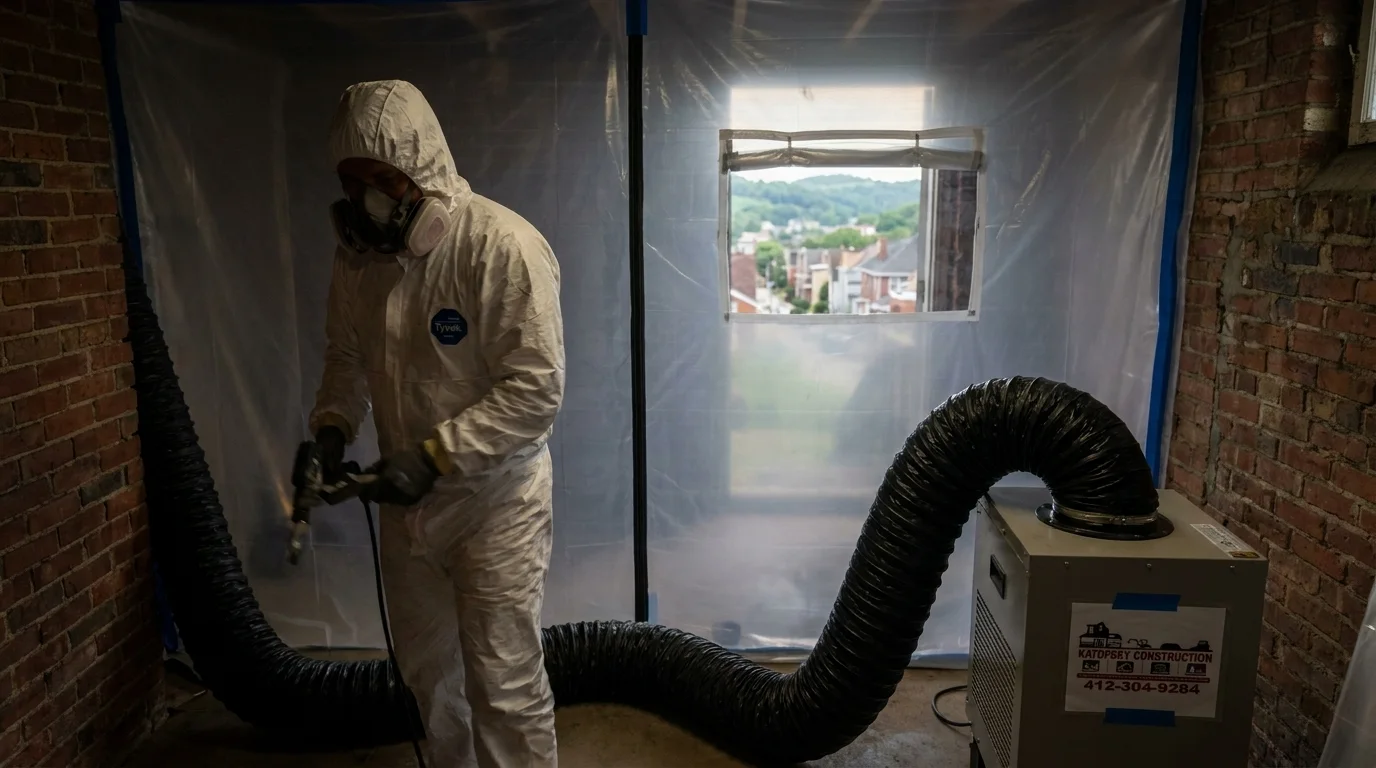
Abatement is the controlled removal or encapsulation of asbestos-containing materials (ACMs) so they can no longer release fibers into the air. The work is slow and deliberate by design. Crews seal the work area with heavy-gauge polyethylene sheeting and negative air pressure units before a single piece of material is disturbed. Every surface that could carry fiber migration is addressed before the ACM itself is touched.
Common materials in Pittsburgh-area homes include textured “popcorn” ceiling coatings applied before 1978, 9-inch and 12-inch vinyl floor tiles and their mastics, pipe and duct insulation (often a gray or white wrap on older steam systems), roofing felts, and joint compound in plaster walls. Homes built between roughly 1940 and 1980 are the highest-risk bracket, and Pittsburgh’s housing stock skews older than most American cities, row houses in Lawrenceville, bungalows in Mt. Washington, and brick doubles in Brookline were built in exactly that window.
The abatement itself uses wet methods (wetting ACMs before removal to suppress fiber release), HEPA-filtered negative air machines, and full-face respirators with supplied air or high-efficiency cartridges. Removed material is double-bagged in 6-mil poly, labeled per EPA requirements, and transported to a licensed disposal facility. A third-party air clearance test confirms fiber counts are below regulatory thresholds before containment comes down.
Our process
-
Asbestos inspection and bulk sampling. Before any work begins, a certified inspector collects bulk samples from suspect materials and submits them to an accredited laboratory. Results typically return within 24 to 72 hours. This step determines what is actually present, where it is, and whether it is friable (crumbles easily, highest risk) or non-friable.
-
Abatement scope and regulatory notification. For projects above the regulatory threshold, the Pennsylvania Department of Environmental Protection requires advance written notification before abatement begins. Katofsky Construction LLC handles this paperwork, including the required project details, start date, and disposal site information.
-
Containment setup and negative air pressure. The work area is isolated with critical and full containment barriers. HEPA-filtered air scrubbers run continuously, exhausting to the exterior and maintaining negative pressure so any disturbed fibers move toward the machine rather than into the rest of the building.
-
Controlled removal or encapsulation. ACMs are wetted with amended water, carefully removed intact where possible, and sealed immediately into labeled waste bags. In some cases, encapsulation (applying a sealant that binds fibers in place) is the appropriate alternative to removal, the inspector’s report and your project scope will specify which approach applies to each material.
-
Third-party air clearance testing. After waste is removed and surfaces are HEPA-vacuumed and wet-wiped, an independent industrial hygienist collects air samples. Clearance is only declared when fiber counts meet the standard. The containment does not come down until that result is in hand.
What separates a good abatement response from a bad one
The most common failure point is skipping or rushing the pre-abatement inspection. Some contractors assume that because a material looks like asbestos-containing tile or popcorn ceiling, they know what they are dealing with. Bulk sampling is not optional, it determines the regulatory pathway, the disposal classification, and your liability exposure if the project is ever audited.
A second failure is inadequate containment. Negative air pressure is not just a best practice; it is the mechanism that keeps fibers from migrating to adjacent rooms. Containment that leaks at seams or lacks a decontamination chamber means fibers can travel on workers’ clothing and shoes into unaffected areas of the home.
Insurance adjusters and industrial hygienists reviewing abatement projects look specifically at the chain of documentation: the lab-certified bulk sample results, the DEP notification number, the waste manifests, and the third-party clearance report. A project without a complete paper trail creates problems at resale, during insurance claims, and if a future renovation disturbs the same area. Every Katofsky Construction LLC project produces a complete documentation package.
What does asbestos abatement cost?
Typical costs vary significantly based on the type and quantity of material, accessibility, and whether the project triggers DEP notification requirements. Most homeowners pay somewhere in the following ranges for common scenarios:
| Scenario | Typical industry range |
|---|---|
| Single room popcorn ceiling removal (up to 200 sq ft) | $1,500 – $3,500 |
| Whole-house popcorn ceiling removal | $3,500 – $10,000 |
| Vinyl floor tile removal (per room) | $1,000 – $3,000 |
| Pipe and duct insulation removal | $2,000 – $6,000 |
| Asbestos inspection and bulk sampling only | $400 – $900 |
| Full abatement with third-party clearance testing | $5,000 – $20,000+ |
These are typical industry figures based on national and regional data, not Katofsky Construction LLC quotes. Every loss is different, and Katofsky Construction LLC provides a written scope of work before any project begins. Homeowners insurance coverage for asbestos abatement varies widely: policies that cover sudden and accidental losses (such as a pipe burst that disturbs insulation) are more likely to include abatement costs than policies that treat asbestos as a pre-existing condition or maintenance issue. Reviewing your policy’s pollution and environmental exclusions before filing is worth doing.
Seasonal and regional considerations
Pittsburgh’s freeze-thaw cycle drives a significant share of abatement work. When pipes burst in January and February, water mitigation crews pulling out insulation or ceiling material in older homes regularly uncover suspect ACMs mid-project. Having an abatement contractor who can respond promptly and coordinate with your water damage remediation timeline prevents a weeks-long project delay. Spring renovation season is the other peak window: homeowners planning kitchen and bathroom updates in older neighborhoods often discover asbestos-containing materials once demolition begins.
Service area
Katofsky Construction LLC serves Pittsburgh and the surrounding region, including the North Shore, South Hills, East End, and communities throughout Allegheny County. The city-specific service pages for neighborhoods and nearby municipalities link back here for full process and technical detail.
If you have found or suspect asbestos-containing material in your home or commercial property, the next step is a confirmed bulk sample test, not a guess. Call (412) 304-9284 to schedule your asbestos inspection and get a written scope before any renovation or abatement work begins.
Frequently Asked Questions
Does homeowners insurance cover asbestos abatement?
What is the difference between asbestos removal and asbestos encapsulation, and how do I know which one I need?
How long does asbestos abatement take from inspection to clearance?
Is popcorn ceiling texture always asbestos, and do I need a test before I paint or skim-coat over it?
What Pennsylvania regulations apply to residential asbestos abatement projects?
Looking for the best asbestos abatement company in Pittsburgh?
Katofsky Construction LLC provides licensed and insured asbestos abatement in Pittsburgh, PA and the surrounding area. We answer calls 24/7 — call (412) 304-9284 for immediate help.
Need Asbestos Abatement now?
We respond 24/7 across Pittsburgh and surrounding PA cities.
Related Coverage
- Our Restoration Services
- Contact Katofsky Construction LLC
- Asbestos Abatement in Baldwin
- Asbestos Abatement in Bethel Park
- Asbestos Abatement in Carnegie
- Asbestos Abatement in Green Tree
- Asbestos Abatement in Greensburg
- Asbestos Abatement in Hempfield Township
- Asbestos Abatement in Jeannette
- Asbestos Abatement in Latrobe
- Asbestos Abatement in Lower Burrell
- Asbestos Abatement in McCandless
- Asbestos Abatement in McKeesport
- Asbestos Abatement in Monroeville